Learnlets

Secondary

Clark Quinn’s Learnings about Learning

Search Results for: align

Organizational terms

26 September 2017 by Clark Leave a Comment

Listening to a talk last week led me to ponder the different terms for what it is I lobby for.  The goal is to make organizations accomplish their goals, and to continue to be able to do so.  In the course of my inquiry, I explored and uncovered several different ‘organizational’ terms.  I thought I should lay them out here for my (and your) thoughts.

For one, it seemed to be about organizational  effectiveness. That is, the goal is to make organizations not just efficient, but capable of optimal levels of performance.  When you look at the Wikipedia definition, you find that they’re about “achieving the outcomes the organization intends to produce”.  They do this through alignment, increasing tradeoffs, and facilitating capacity building.  The definition also discusses improvements in decision making, learning, group work, and tapping into the strictures of self-organizing and adaptive systems, all of which sound right.

Interesting, most of the discussion seems to focus on not-for-profit organizations. While I agree on their importance, and have done considerable work with such organizations, I guess I’d like to see a broader focus. Also, and this is purely my subjective opinion, the newer thoughts seem grafted on, and the core still seems to be about producing good numbers. Any time you use the phrase ‘human capital’, I am leery.

Organizational engineering is a phrase that popped to mind (similar to learning engineering). Here, Wikipedia defines it as an offshoot of org development, with a focus on information processing. And, coming from cognitive psychology, that sounds good, with a caveat.  The reality is, we’re flawed as ideal thinkers. And in the definition it also talks about ‘styles’, which are a problem all on their own. Overall, this appears to be more a proprietary suite of approaches under a label. While it uses nice sounding terms, the reality (again, my inferences here) is that it may be designed for an audience that doesn’t exist.

The final candidate is organizational development. Here the definition touts “implementing effective change”. The field is defined as interdisciplinary and drawing on psych, sociology, and more.  In addition to systems thinking and and decision-making, there’s an emphasis on organizational learning and on coaching, so it appears more human-focused. The core values also talk about human beings being valued for themselves, not as resources, and looking at the complex picture.  Overall this approach resonates with me more, not just philosophically, but pragmatically.

As I look at what’s emerging from the scientific study of people and organizations, as summed up in a variety of books I’ve touted here, there are some very clear  lessons. For, one, people respond when you treat the as meaningful parts of a worthwhile endeavor. When you value people’s input and trust them to apply their talents to the goals, things get done. Caring enough to develop them in ways that are supportive, not punitive, and not just your goals but theirs’ too, retains their interest and commitment. And when you provide them with an environment to succeed and improve, you get the best organizational outcomes.

There’s more about how to get started.  Small steps, such as working in a small group (*cough* L&D? *cough* ;), and developing the practices and the infrastructure, then spreading, has been shown to be better than a top-down initiative. Experimenting and reviewing the outcomes, and continually tweaking likewise.  Ensuring that it’s coaching, not ‘managing’ (managers are the primary reason people leave companies).  Etc.

All this shouldn’t be a surprise, but it’s not trivial to do but takes persistence.  And, it flies in the face of much of management and HR practices.  I don’t really care what we label it, I just want to find a way to talk about things that makes it easy for people to know what I’m talking about.  There are goals to achieve, so my main question is how do we get there?  Anyone want to get started?
Transparency

20 September 2017 by Clark Leave a Comment

I believe that transparency is a good thing. It builds trust, as it makes it hard to hide things.  And trust is important. So, in the spirit of transparency, it occurred to me to share a little bit about me and this blog. Here I lay out who I am, why I write it, and what I write about.

You can find out more via the ‘about Clark Quinn’ link in the right column, but in brief, I saw the connection between computing and learning as an undergraduate, and it’s been my career ever since. It’s not just my vocation, but it’s my avocation: I  enjoy exploring cognition and technology. And while I’ve done the science and track it, what I revel in (and have demonstrable capability for), is applying cognitive and learning science to create new approaches and fine-tune existing ones.  Learning engineering, if you will.

And, for a variety of reasons, I do this as a consultant. I make my living providing strategic guidance for clients.  I speak at events, and write books, but my main income is from consulting. Which means you  should hire me.  I assist organizations to improve their processes and products, both tactically and strategically. My clients have been happy, and find it’s good value. What you get are unique ideas that are practical and yet effective. Ideas you aren’t likely to have come up with, but are valuable. I really do Quinnovate! Check out the Quinnovation site for more.    Of course, I do have to live in the real world, and so I need to find ways to do this that are mutually beneficial.

Yet generating business isn’t why I write this blog.  I started writing this blog as an experiment and originally tried to write 5 days a week (but was happy if that ended up being 2-3 times a week).  My commitment now is 2 per week (which rarely yields 1 or 3).  And I haven’t monetized it: there’s no advertising, and while I occasionally talk about where I’m speaking or the like, I haven’t used this as a way to sell things. Hopefully that can continue.

So, the reason I write is to think ‘out loud’.  It’s largely for me: it makes me think. I’m just always curious!  I’ve previously recounted the story about how I was on a panel answering questions from the audience, and one of my fellow panelists commented that I had an answer for everything. And the reason is in the ongoing attempt to populate the blog, I’ve looked at lots of things. As my client engagements have been in many different areas, I also have wide-ranging experience to draw upon.  And I just naturally reflect, but getting concrete: diagramming and/or writing, provides additional benefits.

Thus, the process of continually writing (for over 10 years now) means I’m looking at lots of things, reflecting on them, and sharing my thoughts. I also make a point to look at related fields, and look for connections. I also look at what’s happening with technology. In general, I look with a critical eye, as I was trained as a scientist.  I think that’s valuable as well, because there still is a lot of nonsense trotted out, and there’s always some new buzzword that’s being loosely tossed about. Blogging’s given me cause to continue to tune my thinking, and at least some folks have commented that they’ve found it useful.

Mostly I write about things related to technology, learning, and individual and organizational implications. It includes diversions to innovation, design, wisdom, performance support, and the like, because they’ve implications for practice. In many ways I see approaches that aren’t well aligned with how we think, work, and learn, and that strikes me as both a shame, and an opportunity to improve. And that’s what I enjoy, finding ways to improve what we do.

So that’s it: I blog to facilitate my understanding, because cognitive science and technology  is my passion. It isn’t a direct business move.  I do need to make a living, and prefer to do it in the area of my passion, and fortunately have been successful so far.  (Which isn’t to say you shouldn’t find a reason to use me, there are never enough opportunities to assist in improvement, and I’m not a sales person ;).  And yes, this life is a learning experience all in itself!  I hope this is clear, but in the interests of transparency I welcome your inquiries and comments. Stay curious, my friends.


Patty McCord Litmos Keynote Mindmap

19 September 2017 by Clark Leave a Comment

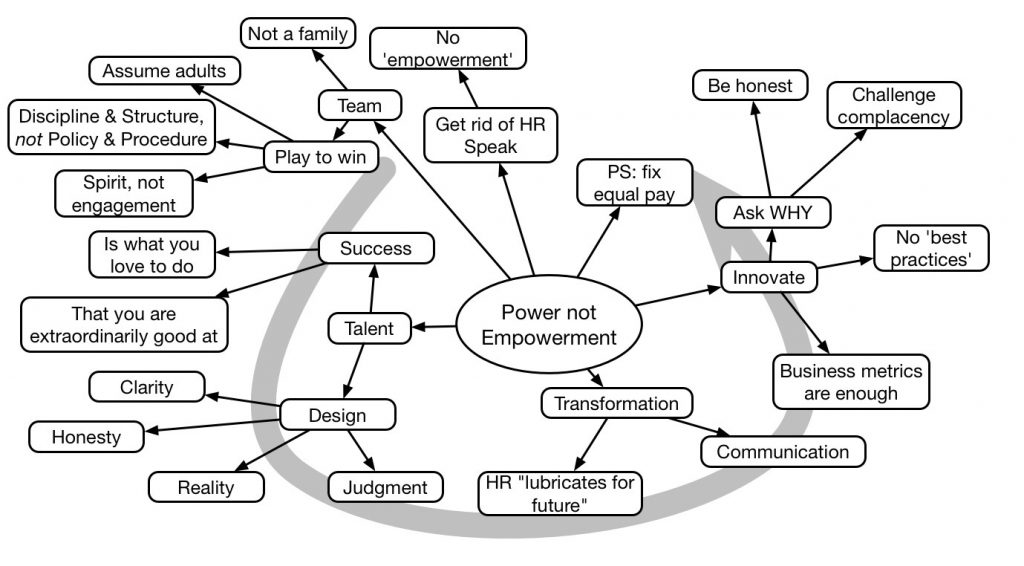
Patty McCord, famous for the Netflix Culture Deck, spoke on culture. She talked about sharing the stage with sports coaching legends, and how they were personal but focused. Her stories of the early days of Netflix and how they made tough but fair decisions were peppered with important lessons.

Keynote mindmap

Mark Kelly C3 Keynote Mindmap

19 September 2017 by Clark Leave a Comment

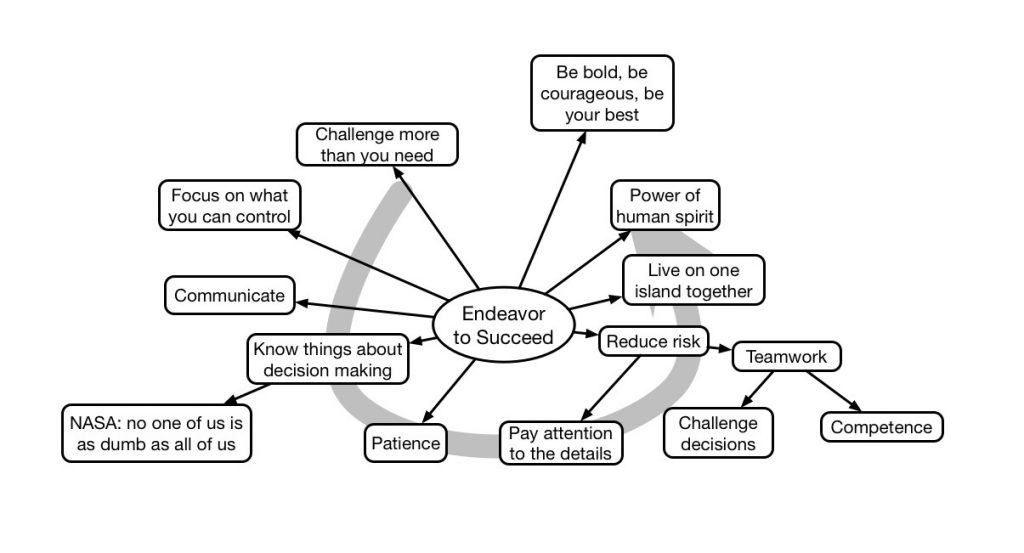
Astronaut Mark Kelly gave a warm, funny, and inspiring talk.  He used stories from his youth, learning to fly, becoming an astronaut, and being husband to Gabby Gifford to emphasize key success factors.

(I confess that owing to his style of elocution, punctuating stories with very pithy comments, I may have missed a point or two at the beginning until I picked up on it.)


Why AR

13 September 2017 by Clark Leave a Comment

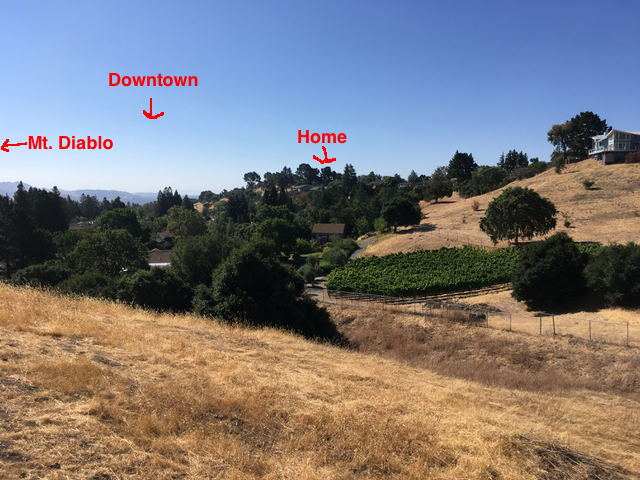
Perhaps inspired by Apple’s focus on Augmented Reality (AR), I thought I’d take a stab at conveying the types of things that could be done to support both learning and performance. I took a sample of some of my photos and marked them up.  I’m sure there’s lots more that  could be done (there were some great games), but I’m focusing on simple information that I would like to see. It’s mocked up (so the arrows are hand drawn), so understand I’m talking concept here, not execution!

Magnolia

Here, I’m starting small. This is a photo I took of a flower on a walk. This is the type of information I might want while viewing the flower through the screen (or glasses).  The system could tell me it’s a tree, not a bush, technically (thanks to my flora-wise better half).  It could also illustrate how large it is.  Finally, the view could indicate that what I’m viewing is a magnolia (which I wouldn’t have known), and show me off to the right the flower bud stage.

The point is that we can get information around the particular thing we’re viewing. I might not actually care about the flower bud, so that might be filtered out, and it might instead talk about any medicinal uses.  Also, it could be dynamic, animating the process of going from bud to flower and falling off. It could also talk about the types of animals (bees, hummingbirds, ?) that interact with it, and how. It would be dependent on what  I  want to learn.  And, perhaps, with some additional incidental information on the periphery of my interests, for serendipity.

Neighborhood viewGoing wider, here I’m looking out at a landscape, and the overlay is providing directions. Downtown is straight ahead, my house is over that ridge, and infamous Mt. Diablo is off to the left of the picture. It could do more, pointing out that the green ridges are grapes, provide the name of the neighborhood that’s in the foreground (I call it Stepford Downs, after the movie ;).

Dynamically, of course, if I moved the camera to the left, Mt. Diablo would get identified when it sprung into view.  As we moved around, we’d point to the neighboring towns in view, and in the direction of further towns blocked by mountain ranges.  We should or could also identify the river flowing past to the north.  And we could instead focus on other information: infrastructure (pipes and electricity), government boundaries, whatever’s relevant could be filtered in or out.

Road picAnd in this final example, taken from the car on a trip, AR might indicate some natural features. Here I’ve pointed to the clouds (and indicated the likelihood of rain). Similarly, I’ve identified the rock and the mechanism of shaping. (These are all made up, they could be wrong; Mt Faux definitely is!)  We might even be able to touch on a label and have it expand.

Similarly, as we moved, information would change as we viewed different areas. We might even animate what the area looked like hundreds of thousands of years ago and how it’s changed.  Or we could illustrate coming changes. It could instead show boundaries of counties or parks, types of animals, or other relevant information.

The point here is that annotating the world, a capability AR has, can be an amazing learning tool. If I can specify my interests, we can capitalize on them to develop. And this is as an adult. Think about doing this for kids, layering on information in their Zone of Proximal Development  and  interests!  I know VR’s cool, and has real learning potential, but there you have to  create the context. Here we’re taking advantage of it. That may be harder, but it’s going to have some real upsides when it can be done ubiquitously.

Metaphors for L&D

5 September 2017 by Clark 4 Comments

What do you see the role of L&D being in the organization?  Metaphors are important, as they form a basis for inferences of what fits. We frame  our conversations by the metaphors we use, and these frames guide what’s allowed conversation and what’s not.  To put it another way, metaphors are the basis for mental models that explain and predict what happens.  But metaphors and models simplify things, making certain things ‘invisible’.  Thus, our metaphors can keep us from seeing things that might be relevant.

LEARNING & development

Thus, we should examine the metaphors we’re using in L&D.  We can start, of course, even with the term L&D: Learning & Development.  Typically, it’s the ‘learning’ part that dominates: we’re talking about helping people learn. And this metaphor implies: courses. Yet, we know that formal learning is only part of the picture of full development of capability. So the ‘development’ part should play a role, including coaching and the choice of assignments. Perhaps also meta-learning.  Though I’d suggest that these latter bits aren’t prominent, because learning  can  be a mechanism for development, and therefore the following steps lag. Which is why movements like 70:20:10 can be helpful in awakening a broader emphasis.

However, there’s more. In  Revolutionize Learning & Development, I argued that we should switch the term to  P&D, Performance & Development. Here I was trying to recognize that our learning has a goal: the ability to perform. Also, there are other paths to performance, including performance support.  I still wanted development, including formal learning, but we also want to develop the ability for the organization to continue to learn: innovation.  And I’m not claiming that this can break the problem with learning, as P&D might end up only emphasizing on performance, as L&D ends up only emphasizing learning.

The point being is that we need to have a perspective that doesn’t limit our vision. It’s the case that L&D  could be just about courses, but I want to suggest that’s not optimal.  A ‘course’ perspective allows the focus to be on the delivery, not on the outcome. With more ability for individuals to learn on their own, traditional courses are likely to wither.  I think it’s a path to irrelevance.

I’ll suggest that we want to be thinking about all the ways that an organization can facilitate doing, and increasing the ability to do. Then we should figure out what parts we can contribute to. If, as I suggest, we want to be professional about understanding learning, then we have a basis to be the best people to guide all of it.

So I don’t know the best metaphor.  What I do believe is that ‘course’, and even ‘learning’ can be limiting. (I’ve also thought that ‘talent development’ is not sufficient.) I’ve suggested P&D, but perhaps it’s organic and about organizational growth. Or perhaps it’s about performance and increasing. So, now, it’s over to you: what do you think would be a helpful way to look at it. Do we need a rebranding, and if so, to what?

Evidence-based L&D

31 August 2017 by Clark Leave a Comment

Conducting ScienceEarlier this year, I wrote that L&D was a ‘Field of Dreams‘ industry, running on a belief that “if you build it, it is good”.  There’s strong evidence that we’re not delivering on the needs of the organization. So what  is a good basis for finding ways to support people in the moment  and develop them over time?  We want to look to what research and theory tell us .  In short, I think L&D should be evidence-based.

What  does  the evidence say?  There are a number of places where we can look, but first we have to figure out what we  can (and should) be doing.  I suggest that L&D isn’t doing near what it could and should, and what it  is doing, it is doing badly.  So let’s start with that latter.

One thing L&D should be doing is making learning experiences that have organizational impact.  There’s evidence that organizations that measure impact, do better. There’s also evidence that there are principles on which to design learning that leads to better outcomes.  Yet, despite signups for the eLearning Manifesto, there’s still evidence that organizations aren’t following those principles, if extant elearning is any indication. Similarly, the number of L&D units actually measuring their impact on organizational metrics seems to be lagging those that, for instance, just use ‘smile sheets‘. And even those are done badly.

There’s also an argument that L&D could and should be considering performance support as well. There are certainly instances where, as I’ve heard it said (and I’m paraphrasing, I can’t find the original quote): “inside every course there’s a lean job aid waiting to get out”. Certainly, performance can improve with a job aid instead of training (c.f. Atul Gawande’s  Checklist Manifesto).

Further actions by L&D include facilitating communication and collaboration. Again, organizations that become learning organizations succeed better than those that don’t. The elements of a learning organization include the skills around working together and a culture where doing so can flourish.  We know what makes brainstorming work, and more.

In short, there’s a vast body of evidence about how to do things right. It’s time to become professionals, and pay attention. In that sense, we’re organizational learning engineers. While there may be a lack of evidence about the linkage between individual learning and organizational learning, we do know a lot about facilitating each.  And we should.  Are you ready?


3 E’s of Learning: why Engagement

16 August 2017 by Clark 1 Comment

Letter EWhen you’re creating learning experiences, you want to worry about the outcomes, but there’s more to it than that.  I think there are 3 major components for learning as a practical matter, and I lump these under the E’s: Effectiveness, Efficiency, & Engagement. The latter may be more of a stretch, but I’ll make the case .

When you typically talk about learning, you talk about two goals: retention over time, and transfer to all appropriate (and no inappropriate) situations.  That’s learning effectiveness: it’s about ensuring that you achieve the outcomes you need.  To test retention and transfer, you have to measure more than performance at the end of the learning experience. (That is, unless your experience definition naturally includes this feedback as well.) Let alone just asking learners if they  thought it was valuable.  You have to see if the learning has persisted later, and is being used as needed.

However, you don’t have unlimited resources to do this, you need to balance your investment in creating the experience with the impact on the individual and/or organization.  That’s  efficiency. The investment is rewarded with a multiplier on the cost.  This is just good business.

Let’s be clear: investing without evaluating the impact is an act of faith that isn’t scrutable.  Similarly, achieving the outcome at an inappropriate expense isn’t sustainable.  Ultimately, you need to achieve reasonable changes to behavior under a viable expenditure.

A few of us have noticed problems sufficient to advocate quality in what we do.  While things may be trending upward (fingers crossed), I think there’s still ways to go when we’re still hearing about ‘rapid’ elearning instead of ‘outcomes’.  And I’ve argued that the necessary changes produce a cost differential that is marginal, and yet yields outcomes more than marginal.   There’s an obvious case for effectiveness  and efficiency.

But why engagement? Is that necessary? People tout it as desirable. To be fair, most of the time they’re talking about design aesthetics, media embellishment, and even ‘gamification‘ instead of intrinsic engagement.  And I will maintain that there’s a lot more possible. There’s an open question, however: is it worth it?

My answer is yes. Tapping into intrinsic interest has several upsides that are worth the effort.  The good news is that you likely don’t need to achieve a situation where people are willing to pay money to attend your learning. Instead, you have the resources on hand to make this happen.

So, if you make your learning – and here in particular I mean your introductions, examples, and practice – engaging, you’re addressing motivation, anxiety, and potentially optimizing the learning experience.

  • If your introduction helps learners connect to their own desires to be an agent of good, you’re increasing the likelihood that they’ll persist  and  that the learning will ‘stick’.
  • If your examples are stories that illustrate situations the learner recognizes as important, and unpack the thinking that led to success, you’re increasing their comprehension and their knowledge.
  • Most importantly, if your practice tasks are situated in contexts that are meaningful to learners both because they’re real  and important, you’ll be developing their skills in ways closest to how they’ll perform.  And if the challenge in the progression of tasks is right, you’ll also accelerate them at the optimal speed (and increase engagement).

Engagement is a fine-tuning, and learner’s opinions on the experience aren’t the most important thing.  Instead, the improvement in learning outcomes is the rationale.  It takes some understanding and practice to get systematically good at doing this. Further, you can make learning engaging, it is an acquired capability.

So, is your learning engaging intrinsic interest, and making the learning persist? It’s an approach that affects effectiveness in a big way and efficiency in a small way. And that’s the way you want to go, right? Engage!

Innovative Work Spaces

15 August 2017 by Clark Leave a Comment

working togetherI recently read that Apple’s new office plan is receiving bad press. This surprises me, given that Apple usually has their handle on the latest in ideas.  Yet, upon investigation, it’s clear that they appear to not be particularly innovative in their approach to work spaces.  Here’s why.

The report  I saw says that Apple is intending to use an open office plan. This is where all the tables are out in the open, or at best there are cubicles. The perceived benefits are open communication.  And this is plausible when folks like Stan McChrystal in  Team of Teams are arguing for ‘radical transparency’.  The thought is that everyone will know what’s going on and it will streamline communication. Coupled with delegation, this should yield innovation, at the expense of some efficiency.

However, research hasn’t backed that up. Open space office plans can even drive folks away, as Apple’s hearing. When you want to engage with your colleagues and stay on top of what they’re doing, it’s good.  However, the lack of privacy means folks can’t focus when they’re doing heavy mental work. While it sounds good in theory, it doesn’t work in practice.

When I was keynoting at the Learning@Work conference in Sydney back in 2015, a major topic was about flexible work spaces. The concept here is to have a mix of office types: some open plan, some private offices, some small conference rooms. The view is that you take the type of space you need when you need it. Nothing’s fixed, so you travel with your laptop from place to place, but you can have the type of environment you need. Time alone, time with colleagues, time collaborating. And this was being touted both on principled and practical grounds with positive outcomes.

(Note that in McChrystal’s view, you needed to break down silos. He would strategically insert a person from one area with others, and have representatives engaged around all activities.  So even in the open space you’d want people mixed up, but most folks still tend to put groups together. Which undermines the principle.)

As Jay Cross let us know in his landmark  Informal Learning,  even the design of workspaces can facilitate innovation. Jay cited practices like having informal spaces to converse, and putting the mail room and coffee room together to facilitate casual conversation.  Where you work matters as well as how, and open plan has upsides but also downsides that can be mitigated.

Innovation is about culture, practices, beliefs,  and   technology.  Putting it all together in a practical approach takes time and knowledge to figure out where to start, and how to scale.  As Sutton and Rao tell us, it’s a ground war, but the benefits are not just desirable, but increasingly necessary. Innovation is the key to transcending survival to thrival. Are you ready to (Qu)innovate?

L&D Tuneup

8 August 2017 by Clark Leave a Comment

auto engineIn my youth, owing to my father’s tutelage and my desire for wheels, I learned how to work on cars. While not the master he was, I could rebuild a carburetor, gap points and sparkplugs, as well as adjust the timing. In short, I could do a tuneup on the car.  And I think that’s what Learning & Development (L&D) needs, a tuneup.

Cars have changed, and my mechanic skills are no longer relevant. What used to be done mechanically – adjusting to altitude, adapting through the stages of the engine warming up, and handling acceleration requests – are now done electronically. The air-fuel mixture and the spark advance are under the control of the fuel injection and electronic ignition systems (respectively) now.  With numerous sensors, we can optimize fuel efficiency and performance.

And that’s the thing: L&D is too often still operating in the old, mechanical, model. We have the view of a hierarchical model where a few plan and prepare and train folks to execute. We stick with face-to-face training or maybe elearning, putting everything in the head, when science shows that we often function better from information in the world or even in other people’s heads!  And this old approach no longer works.

As has been noted broadly and frequently, the world is changing faster and the pressure is on organizations to adapt more quickly. With widely disparate paths    pointing in the same direction, it’s easy to see that there’s something fundamental going on. In short, we need to move, as Jon Husband puts it, from hierarchy to wirearchy.  We need agility: experimentation, review, and reflection, iteratively and collectively. And in that move, there’s a central role for L&D.

The move may not be imminent, but it is unavoidable. Even staid and secure organizations are facing the consequences of increasing rates of change and new technology innovations. AI, networks, 3D printing, there are ramifications. Even traditional government agencies are facing change. Yet, this is all about people and learning.

As Harold Jarche tells us, work is learning and learning is the work. That means learning is moving from the classroom to the workplace and on the go. L&D needs a modern workplace learning approach, as Jane Hart lets us know. This new model is one where L&D moves from fount of knowledge to learning facilitator (or advisor, as she terms it).  People need to develop those communication and collaboration, but it won’t come from classes, but from coaching and more.

And, to return to the metaphor, I view this as an L&D tuneup. It’s not about throwing out what you’re doing (unless that’s the fastest path ;), but instead augmenting it. Shifts don’t happen overnight, but instead it means taking on some internal changes, and then working that outwards with stakeholders, reengineering the organizational relationships. It’s a journey, not an event. But like with a tuneup, it’s about figuring out what your new model should be, and then adjusting until you achieve it. It’s over a more extended period of time, but it’s still a tuning operation. You have to work through the stages to a new revolutionary way of working. So, are you ready for a tuneup?

« Previous Page
Next Page »

Clark Quinn

The Company

Search

Feedblitz (email) signup

Never miss a post
Your email address:*
Please wait...
Please enter all required fields Click to hide
Correct invalid entries Click to hide

Pages

  • About Learnlets and Quinnovation

The Serious eLearning Manifesto

Manifesto badge

Categories

  • design
  • games
  • meta-learning
  • mindmap
  • mobile
  • social
  • strategy
  • technology
  • Uncategorized
  • virtual worlds

License

Previous Posts

  • March 2026
  • February 2026
  • January 2026
  • December 2025
  • November 2025
  • October 2025
  • September 2025
  • August 2025
  • July 2025
  • June 2025
  • May 2025
  • April 2025
  • March 2025
  • February 2025
  • January 2025
  • December 2024
  • November 2024
  • October 2024
  • September 2024
  • August 2024
  • July 2024
  • June 2024
  • May 2024
  • April 2024
  • March 2024
  • February 2024
  • January 2024
  • December 2023
  • November 2023
  • October 2023
  • September 2023
  • August 2023
  • July 2023
  • June 2023
  • May 2023
  • April 2023
  • March 2023
  • February 2023
  • January 2023
  • December 2022
  • November 2022
  • October 2022
  • September 2022
  • August 2022
  • July 2022
  • June 2022
  • May 2022
  • April 2022
  • March 2022
  • February 2022
  • January 2022
  • December 2021
  • November 2021
  • October 2021
  • September 2021
  • August 2021
  • July 2021
  • June 2021
  • May 2021
  • April 2021
  • March 2021
  • February 2021
  • January 2021
  • December 2020
  • November 2020
  • October 2020
  • September 2020
  • August 2020
  • July 2020
  • June 2020
  • May 2020
  • April 2020
  • March 2020
  • February 2020
  • January 2020
  • December 2019
  • November 2019
  • October 2019
  • September 2019
  • August 2019
  • July 2019
  • June 2019
  • May 2019
  • April 2019
  • March 2019
  • February 2019
  • January 2019
  • December 2018
  • November 2018
  • October 2018
  • September 2018
  • August 2018
  • July 2018
  • June 2018
  • May 2018
  • April 2018
  • March 2018
  • February 2018
  • January 2018
  • December 2017
  • November 2017
  • October 2017
  • September 2017
  • August 2017
  • July 2017
  • June 2017
  • May 2017
  • April 2017
  • March 2017
  • February 2017
  • January 2017
  • December 2016
  • November 2016
  • October 2016
  • September 2016
  • August 2016
  • July 2016
  • June 2016
  • May 2016
  • April 2016
  • March 2016
  • February 2016
  • January 2016
  • December 2015
  • November 2015
  • October 2015
  • September 2015
  • August 2015
  • July 2015
  • June 2015
  • May 2015
  • April 2015
  • March 2015
  • February 2015
  • January 2015
  • December 2014
  • November 2014
  • October 2014
  • September 2014
  • August 2014
  • July 2014
  • June 2014
  • May 2014
  • April 2014
  • March 2014
  • February 2014
  • January 2014
  • December 2013
  • November 2013
  • October 2013
  • September 2013
  • August 2013
  • July 2013
  • June 2013
  • May 2013
  • April 2013
  • March 2013
  • February 2013
  • January 2013
  • December 2012
  • November 2012
  • October 2012
  • September 2012
  • August 2012
  • July 2012
  • June 2012
  • May 2012
  • April 2012
  • March 2012
  • February 2012
  • January 2012
  • December 2011
  • November 2011
  • October 2011
  • September 2011
  • August 2011
  • July 2011
  • June 2011
  • May 2011
  • April 2011
  • March 2011
  • February 2011
  • January 2011
  • December 2010
  • November 2010
  • October 2010
  • September 2010
  • August 2010
  • July 2010
  • June 2010
  • May 2010
  • April 2010
  • March 2010
  • February 2010
  • January 2010
  • December 2009
  • November 2009
  • October 2009
  • September 2009
  • August 2009
  • July 2009
  • June 2009
  • May 2009
  • April 2009
  • March 2009
  • February 2009
  • January 2009
  • December 2008
  • November 2008
  • October 2008
  • September 2008
  • August 2008
  • July 2008
  • June 2008
  • May 2008
  • April 2008
  • March 2008
  • February 2008
  • January 2008
  • December 2007
  • November 2007
  • October 2007
  • September 2007
  • August 2007
  • July 2007
  • June 2007
  • May 2007
  • April 2007
  • March 2007
  • February 2007
  • January 2007
  • December 2006
  • November 2006
  • October 2006
  • September 2006
  • August 2006
  • July 2006
  • June 2006
  • May 2006
  • April 2006
  • March 2006
  • February 2006
  • January 2006

Amazon Affiliate

Required to announce that, as an Amazon Associate, I earn from qualifying purchases. Mostly book links. Full disclosure.

We use cookies to ensure that we give you the best experience on our website. If you continue to use this site we will assume that you are happy with it.