Learnlets

Secondary

Clark Quinn’s Learnings about Learning

Search Results for: align

Learning Tools

22 March 2010 by Clark 2 Comments

Owing to sins in my past, I not only am speaking on mobile learning at the eLearning Guild’s Learning Solutions conference e-Learning Foundations Intensive session, but also introduced the tools section.   The tools will be covered by smart folks like Patti Shank, Harry Mellon, Steve Foreman, and Karen Hyder, but I was supposed to set the context.

Now, I talked about a number of things, including vendors, total cost of ownership, tradeoffs, and the development process, but I also included the following diagram attempting to capture the layers of systems that support tools, and both formal and informal. In some ways the distinctions I make are arbitrary (not to say abstract :), but still, I intended this to be a useful characterization of the space:

The point here is that on top of the hardware and systems are applications. There are assets (with media tools) you create that can (and should) be managed, and then they’re aggregated into content whether courses or resources, that are accessible through synchronous or asynchronous courses or games, portals or feeds, and managed whether through an LMS or a Social Networking System.

The graphic was hard to see on the screen (mea culpa), so I’ve reproduced it here.   Does this make sense?
The GPS and EPSS

20 March 2010 by Clark Leave a Comment

It’s not unknown for me to enter my name into a drawing for something, if I don’t mind what they’re doing with it.   It’s almost unknown, however, for me to actually win, but that’s actually the case a month or so ago when I put a comment on a blog prior to the MacWorld show, and won a copy of Navigon turn-by-turn navigation software for my iPhone.   I’d thought a dedicated one might be better, though I’d have to carry two devices, but if I moved from an iPhone to Droid or Pre I’d suffer. But for free…

When I used to travel more (and that’s starting again), I’ve usually managed to get by with Google Maps: put in my desired location (so glad they finally put copy/paste in, such a no-brainer rather than have to write it elsewhere and type it on, or remember, usually imperfectly).   In general, maps are a great cognitive augment, a tool we’ve developed to be very useful.   And I’m pretty good with directions (thankfully), so when a trip went awry it wasn’t too bad.   (Though upper New Jersey…well, it can get scary.)   Still, I’d been thinking seriously about getting a GPS, and then I won one!

And I’m happy to report that Navigon is pretty darn cool.   At first the audio was too faint, but then I found out that upping the iPod volume (?) worked.   (And then it didn’t the last time, at all, with no explanation I can find.   Wish it used the darn volume buttons. We’ll see next time. ) However, it does a fabulous job of displaying where you are, what’s coming up, and recalculating if you’ve made a mistake.   It’s a battery hog, keeping the device on all the time, but that’s why we have charging holders (which I’d already acquired for long trips and music).   It also takes up memory, keeping the maps onboard the device (handy if you’re in an area with bad network coverage), but that’s not a problem for me.

However, my point here is not to extol the virtues of a GPS, but instead to use them as a model for some optimum performance support, as an EPSS (Electronic Performance Support System).   There’s a problem with maps in a real-time performance situation. This goes back to my contention that the major role of mlearning is accessorizing our brain.   Memorizing a map of a strange place is not something our brains do well.   We can point to the right address, and in familiar places choose between good roads, but the cognitive overhead is too high for a path of many turns in unfamiliar territories.   To augment the challenge, the task is ‘real time’, in that you’re driving and have to make decisions within a limited window of recognition.   Also, your attention has to be largely outside the vehicle, directed towards the environment. And to cap it all of, the conditions can be dark, and visibility obscured by inclement weather.   All told, navigation can be challenging.

While the optimal solution is a map-equipped partner sitting ‘shot-gun’, a GPS has been designed to be the next best thing (and in some ways superior).   It has the maps, knows the goal, and often more about certain peculiarities of the environment than a map-equipped but similarly novice partner.   A GPS also typically does not get it’s attention distracted when it should be navigating.   It can provide voice assistance while you’re driving, so you don’t need to look at the device when your attention needs to be on the road, but at safe moments it can display useful guidance about lanes to be in (and avoid) visually, without requiring much screen real estate.

And that’s a powerful model to generalize from: what is the task, what are our strengths and limitations, and what is the right distribution of task between device and individual?   What information can a device glean from the immediate and networked environment, from the user, and then provide the user, either onboard or networked?   How can it adapt to a changing state, and continue to guide performance?

Many years ago, Don Norman talked about how you could sit in pretty much any car and know how to drive it, since the interface had time to evolve to a standard.   The GPS has similarly evolved in capabilities to a useful standard.   However, the more we know about how our brains work, the more we can predetermine what sort of support is likely to be useful.   Which isn’t to say that we still won’t need to trial and refine, and use good principles of design across the board, interface, information architecture, minimalism, and more.   We can, and should, be thinking about meeting organizational performance, not just learning needs.   Memorizing maps isn’t necessarily going to be as useful as having a map, and knowing how to read it.   What is the right breakdown between human and tool in your world, for the individuals you want to perform to their best?   What’s their EPSS?

And on a personal note, it’s nice to have the mobile learning manuscript draft put to bed, and be able to get back into blogging and more. A touch of the flu has delayed my ability to think again, but now I’m ready to go.   And off I go to the Learning Solutions conference in Orlando, to talk mobile, deeper learning, and more.   The conference will both interfere with blogging and provide fodder as well.   If you’re there, please do say hello.

iLust? Changing the game

29 January 2010 by Clark 5 Comments

Yesterday, in case you’ve been living under a rock, Apple released their take on the tablet computer, the iPad.   Steve Jobs has been quoted as saying it’s “the most important thing I’ve ever done.”   And that’s saying a lot.   Like him or not, he’s changed the face of our digital lives several times: popularizing the GUI interface with the Macintosh, changing the music market with the iPod, and upending the mobile market with the iPhone.

Briefly, it’s a network-enabled thin touchscreen midway in size between the iPhone and a laptop (e.g. netbook in size).   It’s been equipped with a bookstore to complement the iPhone Store (media and apps), will play movies, music, and apps.   It’s got a moderate suite of PIM, including contacts, calendar, and notes (no ToDos, ahem), and a microphone. No camera, no phone, but does have a soft keyboard and an optional hard keyboard (would that the iPhone had one!).   It’s really just a big iTouch.   The device itself isn’t a game-changer.   Which isn’t to say it isn’t quite cool in it’s way with some mlearning opportunities.

I have several reflections on the device, from different perspectives.   The overall question is whether the iPad, too, is a game-changer.   Personally, the obvious question is: “do I have to have one?”   Which naturally leads to the performance support perspective of the device (or vice versa).   And, given my predilictions, there’s also the mlearning question.

Bill Brandon of the eLearning Guild has already opined about the mlearning potential of the iPad. He notes that it’s oriented towards content delivery, and could be a replacement for textbooks.   That, alone, is a big win, though not unique to the iPad (cf Amazon’s Kindle).   Without a camera, he notes, it’s only usable for voice or text chatting.   The form factor is nice, but it’s kind of large to slip in a pocket, and it’s really too large for elementary kids’ hands.   I still think a camera-equipped iTouch is a better form-factor for K-6.

From there, we start looking beyond content delivery to more interactive apps.   Here’s where we start seeing some real opportunity: we can start putting simulations on the device, not just content.   Interactivity is key, to me, and that’s what the iPad has over the Kindle or the Nook (tho’ Amazon has now opened up the Kindle’s Software Developers Kit, it’s still lacking color).   the possibility of running meaningful learning games is a real opportunity.   With network connectivity, it can be social as well; in addition to the internet browser there are also already dedicated FaceBook and LinkedIn apps for the iPhone.

Of course, a second opportunity is to start using the device as a way to take notes and share thinking. With email and web access, you can collaborate with others.   Can you use it to create representations to share?   Apple is coming out with iPad versions of Numbers, Pages, and Keynote (spreadsheet, word processing, and presentation software, respectively). This is, to me, a major win (with a caveat).

The ability to use the device not just for consumption, but for creation, is where we start turning this from an entertainment & learning platform into a productivity platform. If you want to not carry a laptop (or even a MacBook Air or a netbook if you’re a Windows person, both seriously worth considering), this has to have certain characteristics.   I, personally, wouldn’t need the 3G connection (meaning you have connectivity wherever you can get a cell-phone signal, not just a wi-fi hotpot), as I’m fine using my iPhone for the always-on connection.   However, I need to write.   The additional keyboard is extra weight, but the capability would be worth it (nice if it folded for travel, however).   The ability to create presentations is also a big win.

One thing is missing, however.   I diagram.   A lot (as I illustrate here).   Keynote has shapes, but it’s not a diagramming tool as yet (I checked, there’s no palette of shapes I can keep open). I don’t know if that will be remedied in the iPad specific version (with a multi-touch interface), but what would really be nice is an OmniGraffle (or Visio, for you Windows folks) for the iPad. Short of that, I’m not sure it’ll meet my needs. Which answers the question about whether I’d get one. Not without diagramming (and Brushes seems more a paint app than a diagramming, that’s not what I need).   I don’t consume a lot of music and movies. I do outline, write, and diagram.

Still, this is a significant move, for none of the above reasons.   I’ve written before about the new dynamics for the publishing industry (specifically, educational publishers).   The story is similar for other forms of publication: magazines, newspapers, and books.   eBook readers are changing that market, but only the mechanics, not the inherent nature of the experience.   It’s still about ‘reading’, not about information.   Amazon, Barnes & Noble, and now Apple, are creating a new market for the old product.   However, Apple has changed the market for a new version of the product. They’re creating the opportunity for those providers to elaborate their content with dynamic media such as video and audio, and interactive media: modifiable graphs, and of course simulations and games.

Now it’s not only possible for a publisher to create a richer, more fully information, even educational experience, but there is also a new direct channel for that endeavor.   It doesn’t have to be based on individual subscriptions to a site, but it can be arranged through a single broadly available channel.   It will, however, require the concomitant components I suggested were necessary: an understanding of user experience and content models.

I think the iPad is flawed in several ways: lack of camera & multi-tasking (and the form-factor limiting HD movie screen formats), and as yet a dearth of critical software.   However, it’s a platform, and consequently those can come in either hardware or software updates.   What it has made possible, however, is a change in business models, and that’s a more significant outcome.   Whether it succeeds is another issue, but I think the groundwork is there to make the change.   Who’s up for trying to lift their game into the new model?

Accessorize your brain

26 January 2010 by Clark 3 Comments

It flashed on me last night.   Jeopardy-style, the answer to the question “why do/will smartphones rule” is “because ‘there’s an app for that'”.

Let me explain. First, you have to be clear on what a smartphone is.   David Pogue has tried to call the converged mobile platform which can be customized with applications the “app phone”, because he considers a smartphone to be a phone that can check email. Or, can surf the web, is data-enabled.   Well, Bob Sanregret told me that there hasn’t been a cellphone sold in the past 2 years that didn’t have a web browser.   Sorry, that’s not a smartphone, to me.

So I’m going to reserve smartphone for those augmented phones that are platforms: they have an OS that others can develop for and release applications on.   BTW, it wasn’t the iPhone that was the first in the space; the Treo had a lively market around PalmOS.

So why do I think this is the killer market?   Because these devices do two things: they are platforms, and they are convergent. They are increasingly providing the most potent and portable convergent devices imaginable, integrating a variety of sensors, forms of connectivity, and rich input and output into a handheld device.   And they are providing this on a platform: a device that developers can integrate these capabilities to meet new and customized needs.

It so happens that the barriers to produce these applications are coming down, as well. Web technologies increasingly underpin the opportunities to develop on platforms, making the technical skills required quite accessible.   It’s little more than creating a web page, which is increasingly available to all, and that makes it easy for tools to simplify even further.

What this means is that anyone can pretty much get pretty much anything they need.   You can follow interests in popular media, including music, movies, television, books, comics, and more.   You can access information for shopping, transportation, dining, or even just people to meet.   You can perform magical tasks like calculating each person’s tab and tip, converting Farenheit to Celsius, or track the stars (astronomical and astrological, if you roll like that).   The limits are no longer the technology, the limits are between our ears.   If you can dream it, you can do it.   I’ve quoted Arthur C. Clarke before “any truly advanced technology is truly indistinguishable from magic”.   We’ll, we’re pretty much there.   We’ve got the Star Trek tricorder in our mitts.

And that, to me, is the deal-clincher.   When you can accessorize your brain the same way you do your bod, when you can augment your capabilities, not just your appearance, you’re suddenly capable of being the person you want to be.   You’re a superhero!   And all at the price of buying a customizable, personal platform.   Who wouldn’t?*

*OK, I slipped off into hyperbole.   I’m well aware that there are many people who can’t, or don’t (I live in the real world most of the time). But I’m predicting they will.   And they’re already doing it, through SMS because they don’t yet have smartphones, they only have cellphones.   But that will change, and as I mentioned earlier, I hope we don’t keep so obsessed with progress that we don’t take time to bring along everyone, not just those coming from fortunate backgrounds.

How I became a learning experience designer

25 January 2010 by Clark 9 Comments

Not meaning this to be a sudden spate of reflectiveness, given my last post on my experience with the web, but Cammy Bean has asked when folks became instructional designers, and it occurs to me to capture my rather twisted path with a hope of clarifying the filters I bring in thinking about design.

It starts as a kid; as Cammy relates, I didn’t grow up thinking I wanted to be a learning designer.   Besides a serious several years being enchanted with submarines (still am, in theory, but realized I probably wouldn’t get along with the Navy for my own flaws), I always wanted to have a big desk covered with cool technology, exploring new ideas.     I wasn’t a computer geek back then (the computer club in high school sent off programs to the central office to run and received the printout a day or so later), but rather a science geek, reading Popular Science and spending hours on the floor looking at the explanatory diagrams in the World Book (I’m pretty clearly a visual conceptual learner :).   And reading science fiction. I did have a bit of an applied bent, however, with a father who was an engineer and could fix anything, who helped my brother and I work on our cars and things.

When I got to UCSD (just the right distance from home, and near the beach), my ambition to be a marine biologist was extinguished as the bio courses were both rote-memorization and cut-throat pre-med, neither of which inspired me (my mom was an emergency room nurse, and I realized early on that I wasn’t cut out for blood and gore).   I took some computer science classes with a buddy and found I could do the thinking (what with, er, distractions, I wasn’t the most diligent student, but I still managed to get pretty good grades).   I also got a job tutoring calculus, physics, and chemistry with the campus office for some extra cash, and took some learning classes. I also got interested in artificial intelligence, too, and was a bit of a groupie around how we think, and really cool applications of technology.

I somehow got the job of computer support for the tutoring office, and that’s when a light went on about the possibilities of computers supporting learning.   There wasn’t a degree program in place, but I found out my college allowed you to specify your own major and I convinced Provost Stewart and two advisors (Mehan & Levin) to let me create my own program.   Fortunately, I was able to leverage the education classes I’d taken for tutoring, the computer science classes I’d also taken, and actually got out faster than any program I’d already dabbled in! (And got to do that cool ’email for classroom discussion’ project with my advisors, in 1979!)

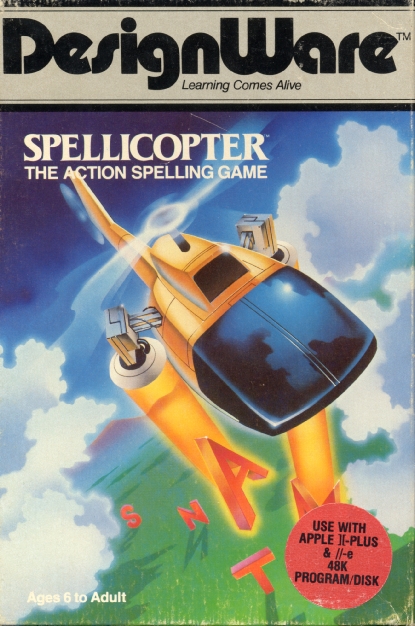
After calling around the country trying to find someone who needed a person interesting in computers for learning, I finally got hooked up with Jim Schuyler, who had just started a company doing computer games to go along with textbook publisher’s offerings.   I eventually managed to hook DesignWare up with Spinnaker to do a couple of home games for them before Jim had DesignWare start producing it’s own home games (I got to do two cool ones, FaceMaker and Spellicopter as well as several others).

However, I had a hankering to go back to graduate school and get an advanced degree.   As I wrestled with how to design the interfaces for games, I read an article calling for a ‘cognitive engineering’, and contacted the author about where I might study this.   Donald Norman ended up letting me study with him.

The group was largely focused on human-computer interaction, but I maintained my passion for learning solutions.   I did a relatively mainstream PhD but while focusing on the general cognitive skill of analogical reasoning, I also attempted an intervention to improve the reasoning.

Though it was a cognitive group, I was eclectic, and looked at every form of learning.   In addition to the cognitive theories that were in abundance, I took and TA’d for the behavioral learning courses.   David Merrill was visiting nearby, and graciously allowed me to visit him for a discussion (as well as reading Reigeluth’s edited overview of instructional design theories).   Michael Cole was a big fan of Vygotsky, and I was steeped in the social learning theories thereby.   David Rumelhart and Jay McClelland were doing the connectionist/PDP work while I was a student, so I got that indoctrination as well.   And, as an AI groupie, I even looked at machine learning!

I subsequently did a postdoc at the University of Pittsburgh’s Learning Research & Development Center, where I was further steeped in cognitive learning theory, before heading off to UNSW to teach interaction design and start doing my own research, which ended up being very much applied, essentially an action- or design-research approach.   My subsequent activities have also been very much applications of a broad integration of learning theory into practical yet innovative design.

The point being, I never formally considered myself an instructional designer so much as a learning designer.   Having worked on non-formal education in many ways, as well as teaching in higher education, my applications have crossed formal instruction and informal learning.   As the interface design field was very much exploring   subjective experiences at the time I was a graduate student, and from my game design experience, I very naturally internalized a focus on engaging learning, believing that learning can, and should, be hard fun.

I’ve synthesized the eclectic frameworks into a coherent learning design model that I can apply across technologies, and strongly believe that a solid grounding in conceptual frameworks combined with experiences that span a range of technologies and learning outcomes is the best preparation for a flexible ability to design experiences that are effective and engaging. Passionate as I am about learning, I do think we could do a better job of providing the education that’s needed to help make that happen, and still look for ways to try to help others learn (one of my employees once said that working with me was like going to grad school, and I do try to educate clients, in addition to running workshops and continuing to speak).

And, I’ve ended up, as I dreamed of, with a desk covered with cool technology and I get to explore new ideas: designing solutions that integrate the cutting edge of devices, tools, models, frameworks, all to help people achieve their goals.   I continue to think ahead about what new possibilities are out there, and work to improve what’s happening.     I love learning experience design (and the associated strategic thinking to make it work), believe there’s at least some evidence that I do it pretty well, and hope to keep doing it myself and helping others do it better.   Who’s up for some hard fun?

Kapp & Driscoll nail Learning in 3D

13 January 2010 by Clark 2 Comments

Karl Kapp and Tony O‘Driscoll have launched the age of virtual worlds in organizational learning by providing a thorough overview in their new book Learning in 3D. This is a comprehensive and eloquent book, covering the emerging opportunity in virtual worlds.   Replete with conceptual models to provide structure to the discussion as well as pragmatic guidance to how to design and implement learning solutions, this book will help those trying to both get their minds around the possibilities and those who are ready to get their hands dirty.

Learning in 3D Blog Stop badgeTheir enthusiasm for the opportunities is palpable, and helps bolster the reader through some initial heady material. The book is eloquently written, as you‘d expect from two academics, but both also play in the real world, so it‘s not too esoteric in language or concept.   It‘s just that the concepts are complex, and they don‘t pander with overly simplistic presentations. They get it, and want you to, too.

Their opening chapters make a solid argument for social learning.   They take us through the changes society is going through and the technology transformations of the internet to help us understand why social learning, formal and informal, is a powerful case.   They point out the problems with existing formal learning, and identify how these can be addressed in virtual worlds.

What follows is a serious statement of the essential components of a virtual world for organizational learning, a series of models that attempt to capture and categorize learning in a 3D world.   They similarly develop a series of useful ‘use cases‘ (they term them “archetypes”), and place them in context.   Overall, it‘s a well thought out characterization of the space.

Coupled with the conceptual overviews are pragmatic support.   There are a number of carefully detailed examples that help learners understand the business need and the outcomes as well as the design.   There are war stories from a number of pioneers in the space.   There is a systematic guide to design that should provide valuable support to readers who are eager to experiment, and the advice on vendors, adoption, and implementation is very practical and valuable.

The book is not without flaws: they set up a ‘straw man‘ contrast to virtual world learning.   While all too representative of corporate elearning, the contrast of good pedagogy versus bad pedagogy undermines the unique affordances of the virtual world.       I note that their principles for virtual world learning design are not unique to virtual worlds, and are essentially no different (except socially) from those in Engaging Learning.     And their 7 sensibilities doesn‘t seem quite as conceptually accurate as my own take on virtual world affordances.   But these are small concerns in the larger picture of communicating the opportunities.

This is a valuable book for those who want to understand what all the excitement is about in virtual worlds.   I‘ve been watching the space for a number of years now, and as the technology has matured have moved from thinking that the overhead was too high to where I believe that it is a valuable tool in the learning arsenal and only going to be more so. This book is the guide you need to being ready to capitalize on this opportunity.   You can get a 20% discount purchasing it directly from Amazon.   Recommended.

Happy Holidays!

25 December 2009 by Clark Leave a Comment

Holiday09

Wishing you and yours the best for the new year!

Future of the training department

12 December 2009 by Clark 7 Comments

Entreprise Collaborative, a cross-cultural endeavor bridging English and French to provide a jumping off point on organizational collective intelligence (and co-led by my Internet Time Alliance colleague Harold Jarche), is launching a blog carnival.   The first topic is: the future of the training department in the Collaborative Enterprise.

NetworkProgression

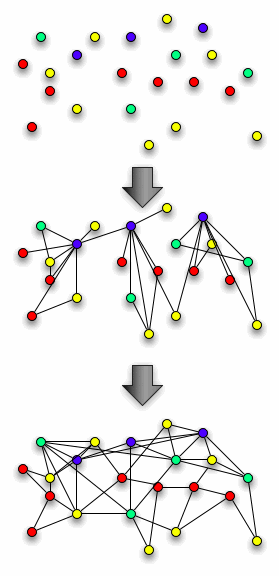
I’ve written before about the changes I see coming for organizations (e.g. here), and they’re driven by the changes I am seeing in business and in society.   Things are moving faster, and this has all sorts of consequences: it means that change is occurring more frequently, information is doubling, our competition is more aggressive, and more.   Really, we’re unmasking the chaos that we’ve been able to cover with observed patterns, and explain away the excepti0ns. Well, now the patterns are changing fast enough that we can’t expect to be able to plan, prepare and execute to succeed. We have to be more nimble, more agile.   In short, we have to move away from depending on formal learning to be able to cope, and we need a new solution.

The solution is to empower individuals so that they’re pulling together.   No longer can a few do the thinking for everyone, as we see in a hierarchical organization. Instead, we need to make sure everyone understands what the overall goal is, and have them work together to achieve it.   We need to tap into the collective intelligence of the entire organization. This is a redefinition of learning as performance, incorporating problem-solving, innovation, creativity, design, research, and more.

That means a number of things: we need to be explicit about goals, transparent about processes, supportive about collaborative skills, and proactive in creating a culture that fosters and nurtures the necessary approaches.   This doesn’t come for free.   Who is responsible for ensuring this works?

In some organizations it’s the information services group, or the knowledge management group.   And they certainly should be on board; ideally you don’t want a hodgepodge of different systems to do the same thing, you want a coordinated environment that supports lessons learned in one area to be easily shareable elsewhere in the organization.   At core, however, I believe that folks who understand learning have to be part of the picture.   They may not own it, but they need to be actively facilitating across the organization.

And this, to me, defines the future of   the training department.   It can no longer be just about courses.   It’s got to include performance support, and informal learning. It’s got to be about culture, and learning together skills, and facilitating productive information interchange and productive interactions. We have technologies now to empower user-generated content, collaboration and more, but the associated skills are being assumed, which is a mistake.   The ability to use these tools will continually need updating and support.

This should not be threatening or anxiety-inducing!   Training used to be important, as skilled workers were critical.   As we’ve automated more work and started developing training for more knowledge work without adapting our methods (and, consequently, making generally dreadful learning experiences), the training role is less and less seen as worthwhile. The opportunity to reestablish a strategic role in the organization should be viewed with excitement, and taken up as the gift it is!

So, I see the future of the training department being as learning facilitators, and the path there to be to take on more and more of that role.   In the future, I reckon, learning facilitators will be partners with the technology infrastructure units in providing an innovation infrastructure, a performance ecosystem.   These facilitators will be (virtually) distributed across the enterprise just as the technology infrastructure is.   Yes, there’s likely some re-skilling involved, but it beats irrelevancy, or worse.   Here’s to redefinition!

Blurring boundaries

7 December 2009 by Clark Leave a Comment

I just downloaded a couple of new apps onto my iPhone. Okay, so one was a free trial of a game, but the other was a really interesting offering, and it led to some thoughts about organizational silos and new functionality.

The app was a new release by ATT called Mark the Spot, that lets you report the occurrence and location of a problem with your coverage.   This is a new way to interact with customers, allowing them to serve as a agent of “can you hear me now”-style coverage evaluation.   Given that they’ve just turned up as the lowest rated carrier of the major four here in the US, according to leading consumer champion Consumer Reports, it’s a step in the right direction.

Now this is an instance of considering a broader reach of engagement in our conversations tapping into collective intelligence. As I’ve been learning with my colleagues in the Internet Time Alliance, tapping into collective intelligence goes beyond conversations internally to include partners and customers.     It’s also a broader interpretation of learning, in the senses that I argue we need to consider, including problem-solving, innovation, etc.   And it’s mobile.

So here’s the question I pondered: is this tech support?   Marketing?   And what occurred to me is that it just isn’t really easy to categorize.   It’s a dialog with the customer, gathering data about coverage, which could be seen as market research.   They can also extend it via a call into a issue resolution exercise (ok, so the app doesn’t really make the call for you but could and should: “click to send the data and be connected to a representative”) .   You could even bake in some trouble-shooting support as a performance support exercise.

The approach, and the potential, crosses boundaries in terms of the benefits and how it must be supported organizationally.   We’re beginning to see a new notion of mashup that combines functionalities that might normally be seen in separate organizational areas, but from a customer perspective, they’re linked. And   we’re seeing a hybrid of communication capabilities, linking the data capabilities of an app with voice, and even media files (e.g. some trouble-shooting information).

Around 1999, the CEO of Cisco, John Chambers, opined that elearning was going to be so big that email would seem like a rounding error.   I think that it’s not just about education over the internet, but it’s really about the broader picture of learning including performance support, social learning, and it’s not just the desktop internet, but it’s mobile apps, and more.   The full performance ecosystem isn’t just within the organization, but it’s external as well. It’s what your company builds for you, what your ‘providers’ build for you (device, service, etc), and, ultimately, how you integrate that into your personal learning network.

The implications are huge.   How to organizations realign to make meaningful information environments for their employees, partners, and customers?   How do we skill up society to take advantage and shape this environment for the benefit of all?   And how do we develop ourselves to manage and optimize the environment to help us achieve our goals?

I think we are seeing an inflection point that will trump email, but it’s not about education, it’s about the broad intersection between people’s goals and our technology infrastructure.   And our role in that, as designers of learning experiences and performance ecosystems.   We have a fair bit of understanding of cognition and social interaction, and increasing experience with different technology capabilities.   Now it’s time to put that all to work to start creating meaningful new opportunities. Who’s game?

The Augmented Performer

2 December 2009 by Clark 4 Comments

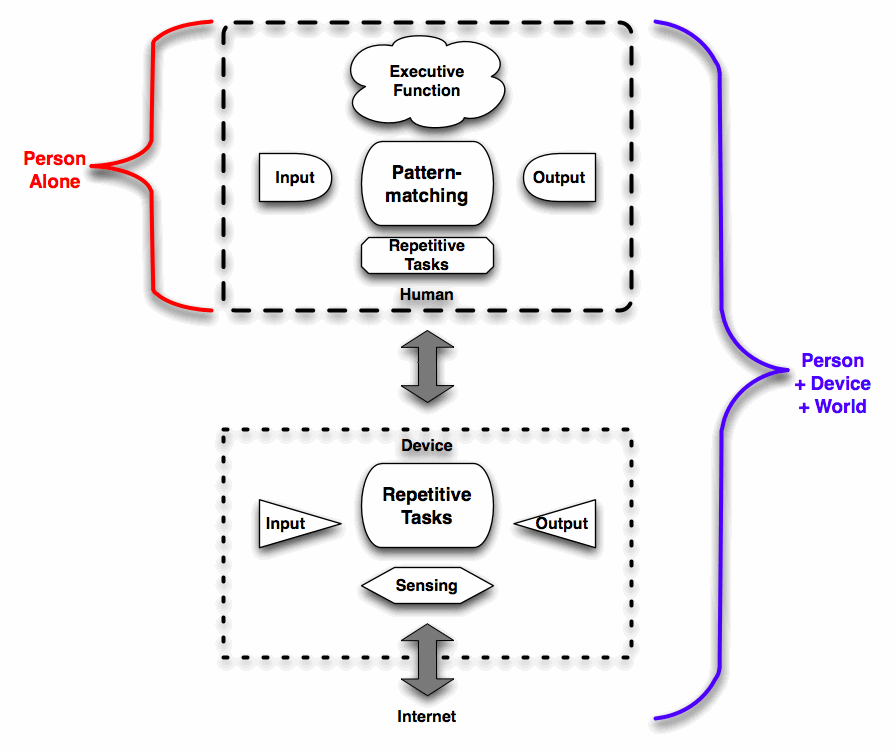
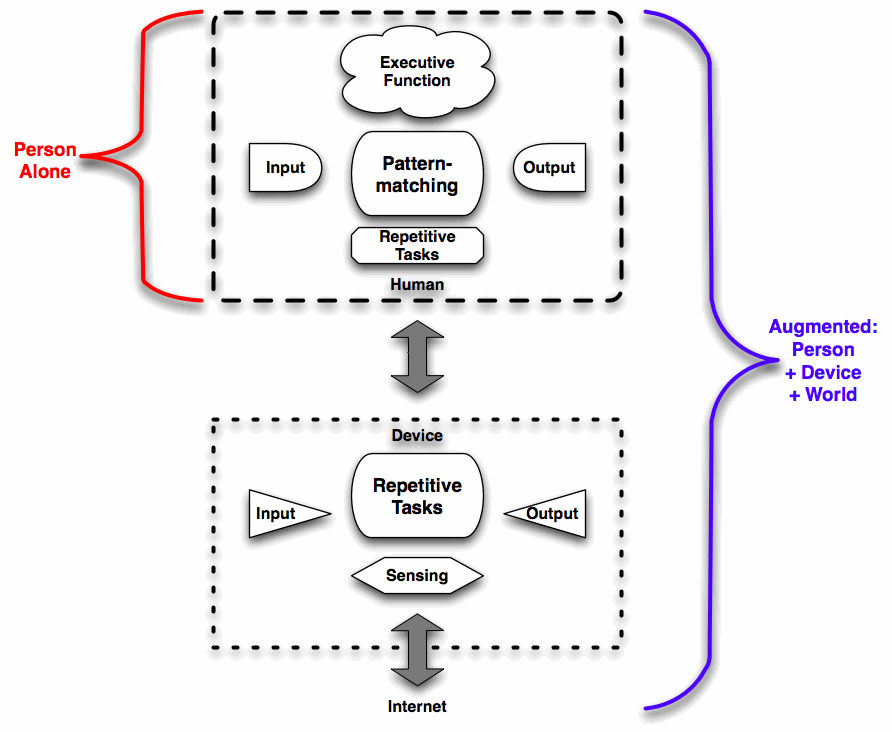
The post I did yesterday on Distributed Cognition also triggered another thought, about the augmented learner.   The cited post talked about how design doesn’t recognize the augmented performer, and this is a point I’ve made elsewhere, but I wanted to capture it in a richer representation.   Naturally, I made a diagram:

DistributedCognitionIf we look at our human capabilities, we’re very good pattern matchers, but pretty bad at exercising rote performance.   So we can identify problems, and strategize about solutions, but when it comes to executing rote tasks, like calculation, we’re slow and error prone.   From the point of the view of a problem we’re trying to solve, we’re not as effective as we could be.

However, when we augment our intellect, say with a networked device (read: mobile), we’re augmenting our problem-solving and executive capability with some really powerful calculations capability, and also some sensors we’re typically not equipped with (e.g. GPS, compass), as well as access to a ridiculously huge amount of potential information through the internet, as well as our colleagues.   From the point of view of the problem, we’re suddenly a much more awesome opponent.

And that is the real power of technology: wherever and whenever we are, and whatever we’re trying to do, there’s an app for that.   Or could be.   Are you empowering your performers to be awesome problem-solvers?

« Previous Page
Next Page »

Clark Quinn

The Company

Search

Feedblitz (email) signup

Never miss a post
Your email address:*
Please wait...
Please enter all required fields Click to hide
Correct invalid entries Click to hide

Pages

  • About Learnlets and Quinnovation

The Serious eLearning Manifesto

Manifesto badge

Categories

  • design
  • games
  • meta-learning
  • mindmap
  • mobile
  • social
  • strategy
  • technology
  • Uncategorized
  • virtual worlds

License

Previous Posts

  • March 2026
  • February 2026
  • January 2026
  • December 2025
  • November 2025
  • October 2025
  • September 2025
  • August 2025
  • July 2025
  • June 2025
  • May 2025
  • April 2025
  • March 2025
  • February 2025
  • January 2025
  • December 2024
  • November 2024
  • October 2024
  • September 2024
  • August 2024
  • July 2024
  • June 2024
  • May 2024
  • April 2024
  • March 2024
  • February 2024
  • January 2024
  • December 2023
  • November 2023
  • October 2023
  • September 2023
  • August 2023
  • July 2023
  • June 2023
  • May 2023
  • April 2023
  • March 2023
  • February 2023
  • January 2023
  • December 2022
  • November 2022
  • October 2022
  • September 2022
  • August 2022
  • July 2022
  • June 2022
  • May 2022
  • April 2022
  • March 2022
  • February 2022
  • January 2022
  • December 2021
  • November 2021
  • October 2021
  • September 2021
  • August 2021
  • July 2021
  • June 2021
  • May 2021
  • April 2021
  • March 2021
  • February 2021
  • January 2021
  • December 2020
  • November 2020
  • October 2020
  • September 2020
  • August 2020
  • July 2020
  • June 2020
  • May 2020
  • April 2020
  • March 2020
  • February 2020
  • January 2020
  • December 2019
  • November 2019
  • October 2019
  • September 2019
  • August 2019
  • July 2019
  • June 2019
  • May 2019
  • April 2019
  • March 2019
  • February 2019
  • January 2019
  • December 2018
  • November 2018
  • October 2018
  • September 2018
  • August 2018
  • July 2018
  • June 2018
  • May 2018
  • April 2018
  • March 2018
  • February 2018
  • January 2018
  • December 2017
  • November 2017
  • October 2017
  • September 2017
  • August 2017
  • July 2017
  • June 2017
  • May 2017
  • April 2017
  • March 2017
  • February 2017
  • January 2017
  • December 2016
  • November 2016
  • October 2016
  • September 2016
  • August 2016
  • July 2016
  • June 2016
  • May 2016
  • April 2016
  • March 2016
  • February 2016
  • January 2016
  • December 2015
  • November 2015
  • October 2015
  • September 2015
  • August 2015
  • July 2015
  • June 2015
  • May 2015
  • April 2015
  • March 2015
  • February 2015
  • January 2015
  • December 2014
  • November 2014
  • October 2014
  • September 2014
  • August 2014
  • July 2014
  • June 2014
  • May 2014
  • April 2014
  • March 2014
  • February 2014
  • January 2014
  • December 2013
  • November 2013
  • October 2013
  • September 2013
  • August 2013
  • July 2013
  • June 2013
  • May 2013
  • April 2013
  • March 2013
  • February 2013
  • January 2013
  • December 2012
  • November 2012
  • October 2012
  • September 2012
  • August 2012
  • July 2012
  • June 2012
  • May 2012
  • April 2012
  • March 2012
  • February 2012
  • January 2012
  • December 2011
  • November 2011
  • October 2011
  • September 2011
  • August 2011
  • July 2011
  • June 2011
  • May 2011
  • April 2011
  • March 2011
  • February 2011
  • January 2011
  • December 2010
  • November 2010
  • October 2010
  • September 2010
  • August 2010
  • July 2010
  • June 2010
  • May 2010
  • April 2010
  • March 2010
  • February 2010
  • January 2010
  • December 2009
  • November 2009
  • October 2009
  • September 2009
  • August 2009
  • July 2009
  • June 2009
  • May 2009
  • April 2009
  • March 2009
  • February 2009
  • January 2009
  • December 2008
  • November 2008
  • October 2008
  • September 2008
  • August 2008
  • July 2008
  • June 2008
  • May 2008
  • April 2008
  • March 2008
  • February 2008
  • January 2008
  • December 2007
  • November 2007
  • October 2007
  • September 2007
  • August 2007
  • July 2007
  • June 2007
  • May 2007
  • April 2007
  • March 2007
  • February 2007
  • January 2007
  • December 2006
  • November 2006
  • October 2006
  • September 2006
  • August 2006
  • July 2006
  • June 2006
  • May 2006
  • April 2006
  • March 2006
  • February 2006
  • January 2006

Amazon Affiliate

Required to announce that, as an Amazon Associate, I earn from qualifying purchases. Mostly book links. Full disclosure.

We use cookies to ensure that we give you the best experience on our website. If you continue to use this site we will assume that you are happy with it.