Learnlets

Secondary

Clark Quinn’s Learnings about Learning

Search Results for: engagement

Looking into 2026

6 January 2026 by Clark Leave a Comment

First, of course, happy new year! Relatively arbitrary deadline, but signification matters, and marking a new year is also a new chance. So, what’s happening? Here are some of the things I’m thinking about, looking into 2026!

So, first, a brief look back to set the stage. This was a year without any sustained engagements for Quinnovation, so that meant being a bit more agile. Not a problem, I was on lots of podcasts about a variety of things, and of course engaged with clients. I did spend considerable time and effort, however, in my side gigs.

For one, the Learning Development Accelerator (LDA) had a variety of things going on: conferences, books, webinars, podcasts, and more. Plus, they’re great people to work with! I think it’s a worthwhile investment of my time, focusing on helping people get more exposed to evidence-informed design.There are signs that we’re moving more that way (though it is a small case of two steps forward, one step back; learning styles and other myths still haunt our industry; there’s a continuing need!). I’ve also done some ‘free’ consulting to our platinum members, and that seems to be valuable for them, and I find it really rewarding!

I also continued to spend time with the Elevator 9 (E9) folks. They’re now ready for prime time (check ’em out!), but there’s been lots of work along the way. That includes developing a real platform, and I’m continuing to learn heaps about what goes into a startup. And why I haven’t been the one to do it! It’s been great, however, to be in association with folks who really do want to care about learning science; all too rare in the learning technology space (sadly).

Of course, my association with both continues.

With LDA, we’re already planning this coming year. We’re deep into thinking about what to do with the spring conference, and potential series for blog posts, and more. We already have our first Meet the Author on the schedule, and more are in the works.  There are some changes afoot, so stay tuned!

With E9, I will be using them again for my next mini-scenario workshop (with LDA) as a followon. Did it last year, as a trial, and it worked. Always room to improve, of course. Still, if you’re running a live event, and not following it up to extend the learning, why? There are other solutions – e.g. coaching – but please be doing something! There are worse solutions than E9, including nothing.

Of course, I’ll be doing more. I’ve been working on a couple of short books, likely eBooks (too short for print). I don’t want to go live yet about them, as they’re still in process. Of course they’d be with LDA Press. Besides online, I may be running a workshop or two live, too. As to conferences, well, I never say ‘never’, but right now there’s nothing I’m particularly excited about. We’ll see. And, of course, I’m always keen to help organizations, so do reach out if there are any ways I can be of assistance.

As you might expect, ideas continue to percolate. I’m always exploring more about technology, design, engagement, and more, and of course about learning. As always, you’ll probably hear about them here first, as this is where I learn ‘out loud’. There’re breadcrumbs from the past pointing forward, so it’s time to be looking into 2026. What are you seeing? In the meantime, stay curious my friends.
Thinking about motivation

18 November 2025 by Clark Leave a Comment

So, I haven’t been a big Self-Determination Theory (SDT) person, simply because I hadn’t really known about it. I learned about it enough to mention in my most recent tome (highlighting the importance of motivation in learning), but that’s about it. However, it’s been popping up more and more (not least with the Motivation Summit the LDA’s putting on; the live sessions will be past, but you can still register to watch the presentations and recordings thereof). And, I am increasingly thinking that there’s some real ‘there’ there, so here’s some thinking about motivation.

SDT posits, quite simply, that there are three consistent elements that contribute to motivation. They are:

  • Competence: the ability to do something, maybe with support, but also development to get better
  • Relatedness: other people who are there believing similarly and supporting you
  • Autonomy: the ability to be who you are

(These are my definitions, by the way, not the official ones, which are no doubt better.) Importantly, they’ve been verified by research across cultures, age ranges, and every other demographic difference. It’s pretty much a human universal. Also importantly, they have practical implications for how you do things.

Quite simply, motivation plays a role in pretty much everything we do! Our motivations include exercising, eating, and sleep; work tasks and job environment; and for us, intent to learn. It’s that latter I was tapping into for designing games, lo those many decades ago. I didn’t at the time know about the SDT framework (in fact, it hadn’t really emerged yet ;), but I was tapping into the elements when I was talking about goals, appropriate challenge, relevance, and more. So when I write about the education/engagement alignment, SDT is a higher-level framework. Simple alignment would have challenge = competence, goals = autonomy, relevance = relatedness. Social learning, too.

Increasingly, as ‘leadership’ becomes a topic, it plays a role as well. I’ve been interested in culture and social for many years as a function for L&D. Leadership is how you create a culture, by how you are socially. How well do you support those elements? I’m not a leadership expert, but I’m increasingly seeing those factors, crossed by types of situations being faced. For instance, in a crisis you have to make a decision, which reduces autonomy for others, but then you should rebuild it. Importantly, I’m finding out that efforts are yielding valuable outcomes, which alone is a reason to pay attention!

So, I’m looking more into it, as an aspect of making a good environment, organizationally and societally. If we’re thinking about motivation, we can start being wise about it. That is, not just for me, and you, but for others. Not just short term, but also long-term. And, explicitly considering our values. Which may be the most important part of it! I think the values that empirically lead to the best for all is a good basis. What say you?

Creativity and rigor

30 September 2025 by Clark Leave a Comment

As I’m wont to do, I was thinking in the middle of the night. About creativity, in this case.  Specifically, that I have repeatedly demonstrated the ability to integrate creativity and learning science. And, I tend to forget about it. (Which means you may, too!) Of course, I push the rigor of the cognitive and learning sciences, and advocate for the integration of emotion. However, it’s been decades since I’ve really emphasized my portfolio of work on games and engagement. Maybe since my first book on engagement? So, maybe it’s time to talk about creativity and rigor.

To be clear, I believe it’s important to get both learning and engagement right. Sure, pure computer games are fun (heck, I play them!). And, many have stories that are actually relevant, too. But serious games, ones that actually achieve an outcome, require integrating learning science with engagement. Which isn’t necessarily easy! But, it’s something I’ve reliably done, and I don’t want to forget it!

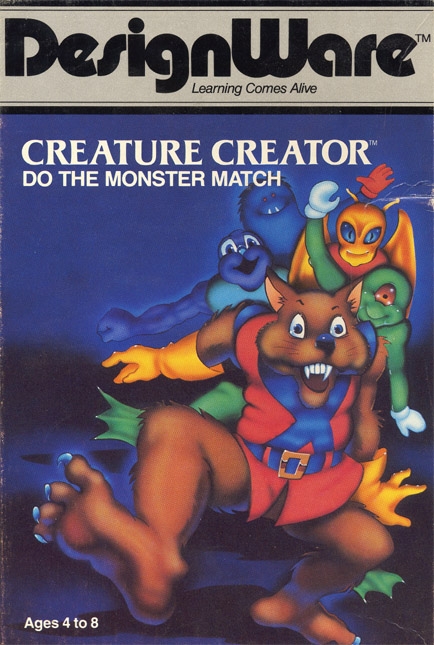
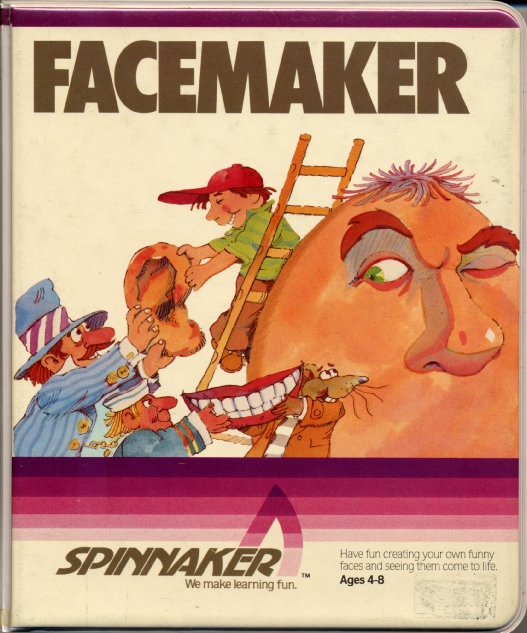
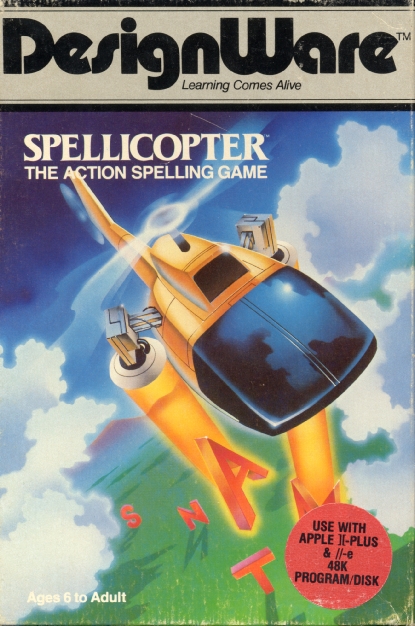
So, fresh out of college, my first real job was designing and programming educational computer games. (This was for Jim Schuyler at DesignWare.) I created Micro Discovery, a set of games based upon the Computer Discovery series but with my own little set. I then went on to FaceMaker for Spinnaker, before coding Spellicopter and Creature Creator for ourselves. (All before I headed off to grad school.) They weren’t great, as we only had 48K and were targeting the home market, but they were notable. Both FaceMaker and Creature Creator had graphic designers who assisted my lack of visual design capability!

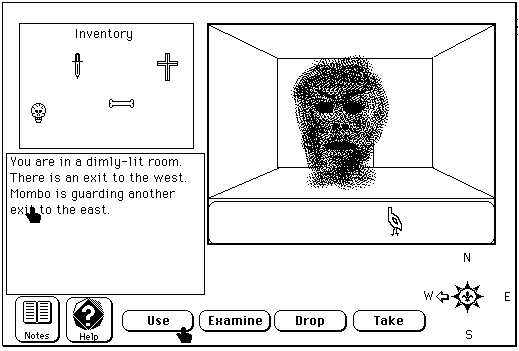
From my graduate work on analogical reasoning, during my post-doc I built a game that required using the stories to solve problems, with a coherent theme. I even published a paper about Voodoo Adventure!  This was all on my own, and the graphics weren’t great, but they were ‘good enough’. Hey, two kids at an open house played it all the way through and won (many others tried it out and gave up, to be fair).

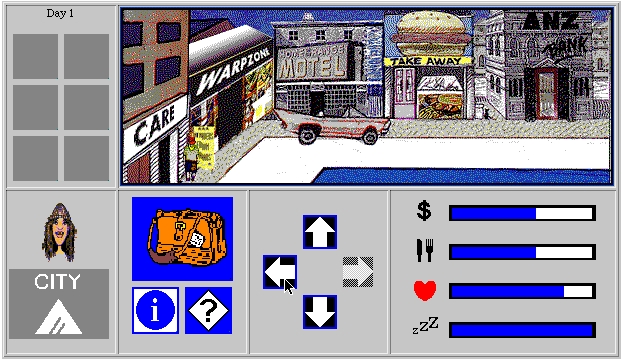
At my first teaching position post-grad, I was asked to build a game that helps kids survive on the streets. Quest achieved many things: it achieved the goal of engaging the audience and driving them to important conversations with their counselors; it made it onto the local science program; it sparked a journal article that’s led to my subsequent books, Engaging Learning and then Make It Meaningful; and it’s still arguably the most rewarding professional thing I’ve ever done. It was assisted first by a talented student in programming, and then by graphic talents who addressed the look and feel.

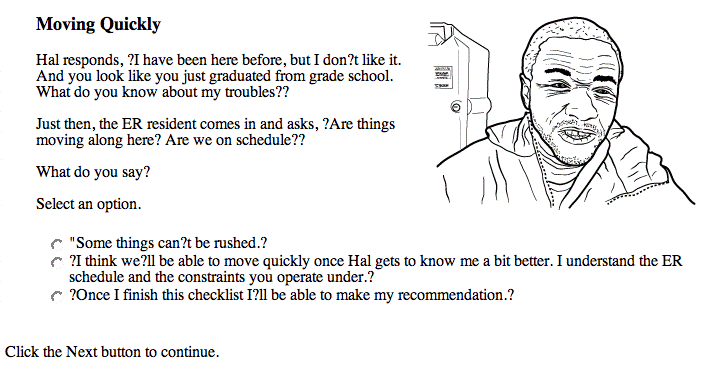
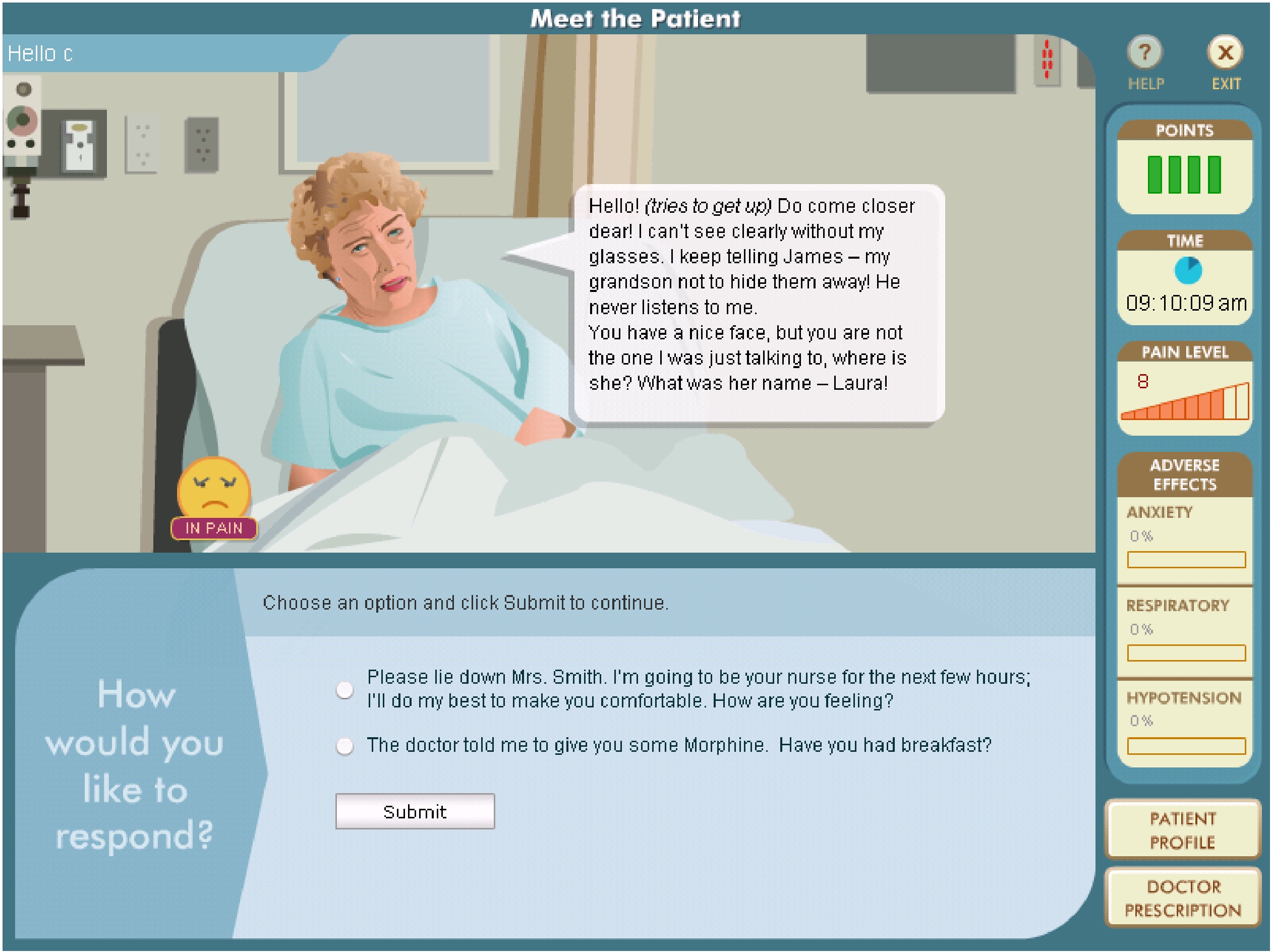
I went on to build first a linear scenario and then a full game on project management (for non-project managers) for a major government organization. This was in conjunction with a team of graphic artists and a software engineer (a bit of that story is also here). I also led design of scenarios for psychiatric nursing. Then I went on and designed a demo game to go with textbooks.

Ok, so I also designed a course that used comics to start off each section, ran a web competition for school kids, did a compelling demo of how to do a good course on the cheap with Learnovators, created mobile games for a NASA test, and…have designed workshops on game design and more. I’m sure there’s more, but that’s off the top of my head. I have regularly combined creativity and rigor, it’s just hard to remember sometimes. And, if you can think of a useful way for me to continue, I welcome hearing!

Learning science on tap

11 September 2025 by Clark Leave a Comment

In the interest of the continuation of Quinnovation, Learnlets, and me, this is a solicitation post. If it’s not for you, kindly ignore. However, it may be for your boss; if so, please pass it on! 

Do you run an L&D department, or make L&D decisions, and don’t have sufficient learning science background? You know, you get asked to make decisions that involve learning – responding to vendors, stakeholders asking “why”, etc – and you’re not sure how to respond. That’s not uncommon! While you know how to select technologies, design solutions, create strategies, etc in other areas, you don’t necessarily know how to do that with an enlightened view of how we think, work, and learn. L&D is unique because it deals with learning – skills, social, informal, and more. And your school experience is not a good guide. How do you cope? Learning science on tap!

Let me offer this solution, specifically Clark Quinn, Ph.D., on tap. There are reasons why: I’ve been recognized for my depth of knowledge and breadth of experience in translating learning science into practical terms. That includes writing books, keynoting, awards, and, of course, consulting.  I’ve applied that background for literally decades in the design of solutions: games, mobile, strategy, processes, policies, and more. So, that’s available. For instance, you could send me something that needs a learning science perspective – an RFP, a memo, an organizational initiative, and I’ll break it down from a learning science perspective, and provide you with same. Or we can talk on a call. What’s more, as I’m wont to do, I’ll provide the underlying thinking. That is, you learn as you go, too! (Just how I roll.)

Of course, you don’t have to take my advice. You’ll have it, and can factor it into your thinking. And, I can adapt my thinking to specific constraints. I am known to come up with better ideas than had been proposed initially. But it’s up to you. I’ll give you my feedback, and you can do with it as you will. This service is for those that can’t come up with that advice on their own, and it’s an important perspective. What I’ll suggest as recommendations will be grounded in evidence-based approaches. I’ll research anything I need to know and don’t (no extra charge), so I learn too. But I have been involved in thinking at most levels and areas of an organization, in a multitude of roles. 

I won’t be an employee (nor want to become one). And, I’m not generating new things (that’s a different engagement, we can talk about it), but I’ll review and opine, to your needs. So, I won’t write an RFP or a whitepaper for you; I won’t design a learning experience; nor will I read an article and summarize it for you. Those’d be different engagements. But I’ll review an RFP or whitepaper (incoming or outgoing) for the necessary learning science. I will review the rules and practices around such a design.  If someone sends you an article and asks your opinion, I’ll give you the perspective on that. In particular, I’ll help evaluate any claims that you’re faced with, again either coming from inside or outside.

In short, I’m your learning science advisor. Anything you need. Of course you’ll also get any other thoughts my experience provides: how to deal with issues or people, possible solutions, and more. Comes with the territory.

I also know to respect confidentiality. Heck, my IP has been used to train LLMs, and that doesn’t sit well with me. I will also likely want to write up any learning I attain. I can anonymize it or profile you, your choice. Obviously, I won’t share anything proprietary. And my advice is yours, and you can choose to acknowledge me or keep my participation out of it; I really don’t care. 

I’ve, over time, learned to be efficient. One of the benefits of knowing how our minds work is that I know what we’re not good at, and have developed practices to ensure that I don’t fall down on commitments. I have my own project management approach, which, coupled with my natural “just do it” inclination, means that you won’t be waiting weeks for a response. I’ll commit to 48 hours max on anything less than ebook length, and as folks who are using me in other ways (*cough* LDA and Elevator 9 *cough*) will tell you, I tend to do things in a matter of hours if it’s not too long. 

So, what would such an engagement entail? I’d like to keep it simple and fair. I reckon there’s anywhere from 3 to 10 such things a month. Some will be short, some will be longer. Some months more, some less. My initial ask is $1K per month, and an initial $500 retainer (just to make sure payment systems work, and that’ll cover a call to set the context). If you want to sign up for a year, it’s $10K (9999.99 if necessary to stay under a cutoff ;). Either of us can terminate at any time; in the case of a year purchase, I’ll prorate. What I do for you is yours, what I know and learn is mine. I’ll prod you weekly to remind you to take advantage, and you don’t have to. (Heck, you can always think of it as supporting your friendly neighborhood research translator!)

This may not be you, but if it is, think through the tradeoffs. No overhead – taxes, benefits, etc – the cost is the cost. What you get is yours and your department’s. It’s an investment in learning, for that matter, because you will have the opportunity to improve your understanding as we go. My goal in this (and every) engagement is to remove the need for me in the loop, and learning about learning isn’t just for those developing learning, it’s a good practice for everyone. It’s even a competitive advantage.

Oh, one other thing. I reckon, what with my other commitments, I can only take on 10 such relationships. So, first come, first served. Learning science on tap. Your move! You can reach out here.

We now return you to your regularly scheduled day, already in progress.

Small changes with big impact

8 April 2025 by Clark 4 Comments

In the reality stakes, I recognize that people aren’t likely to throw their whole approach out. Instead, they make the small changes with big impact. Then, of course, they should use success to leverage the opportunity to do more. You can bring in a full evaluation of everything you do by the latest fad, but those tend to be expensive and out of date by the time they’re done.  Wherever you are, there’s room for improvement. How do you get there? By understanding how we think, work, and learn.

So, one of the things I’ve done, repeatedly across clients, is look at what they’re doing (including outputs and process). I have tended to do this in a lightweight approach, because I know most folks are sensitive to costs, and want to get the biggest bang for the buck. I’ve done so for content, for design practices, for market opportunities, and more.

To do so means I go through materials, whether products, processes, or plans, to understand the experience and look for ways to improve it. Then, we prioritize those potential opportunities. I then bring my independent observations together for a discussion on what’s useful and necessary. Of course, we always find things that don’t meet those criteria. My concluding reports typically state the goals, the current context, the applicable principles, and recommendations. I’m also happy to work with folks to see how it works out and what tweaks may be of use. Which isn’t every engagement, but it’s not infrequent.

One of the robust outcomes, for what it’s worth, is that folks get insights they (and I) didn’t expect! That may be because I’ve been an interdisciplinary mongrel, with interests in many things, or possibly because the cognitive foundations provide a basis to address most anything. Regardless, I’ve found opportunities to improve in pretty much all situations. These are at every level from how to implement a field to collect information to an assessment of the viability of a go-to-market strategy.

In short, looking at things from the perspective of how our brains work provides insights into ways in which we’ve violated that alignment. Further, it’s a reliable phenomena that pretty much everything we do has opportunities to improve. Sure, not all such moves will be worth the effort, or may conflict with what folks have learned to live with. Still, there’s a pretty-much guaranteed to be valuable changes that can be made. At least, that’s been my experience, and my clients.

What I’m really doing is a cognitive/learning audit. Basically, it’s about going through the cognitive processing cycle repeatedly through an experience. That experience can be the learner’s, the designer’s, purchaser’s, or more. Usually, all of the above! However, what you want to do is to minimize the barriers, and maximize the value. What’re the users goals, what’s  perceived, what’s considered, what’s processed, and what happens next.

There are benefits to having been actively investigating our minds for a number of decades now. I know the principles, I know how to apply them, and I also work in the real world. Also, perhaps against my own self-interest, I look to find ways to do it as easily and inexpensively as possible. I know organizations have limitations. Still, pretty much everyone benefits when you look for small changes with big impact. How about you?

Uniqueness

17 December 2024 by Clark 2 Comments

In a conversation yesterday, we were talking about what works in presenting yourself (in this case, for a job). I mentioned that in the US you have to perhaps overpromise, whereas my experience in Oz (coloured, as it is, by its Brit origins ;), was that you underpromise. The latter worked well for me, because I believe I tend to err on the side of quiet; I don’t like boasts. I was suggesting, in this case, that you needed what made one unique to a particular situation. Thinking further, I think I do value what is uniqueness. What do I mean?

So, to get a (proper?) Ph.D., you are expected make a unique contribution to understanding. Consider our knowledge as a giant ball, and what a thesis does is push out one tiny bump. The goal is something no one else has done. For instance, for my Ph.D., I broke analogy up into a different set of steps, and measured performance. My specification of steps was unique, but that wasn’t the contribution (in my mind, at least). What I also did was try training to improve those processes (four of the six, for reasons), and it did impact a couple, with good reasons not to have impacted the others. It wasn’t earth-shattering, by any means (I suspect no one cites my thesis!), but it was a contribution. (And, of course, it grounded me in the literature and practices.)

When I think of folks I respect, in many cases it’s because they have made a unique contribution. By the way, I suppose I should be clear: unique isn’t enough, it has to be a positive contribution (which can include ruling out things). It’s like innovation: not just an idea, but a good one!  So, for instance, Will Thalheimer’s been a proponent of evidence-informed practices, but his unique contribution is LTEM. So too with Patti Shank and multiple choice questions, Michael Allen with SAM, Harold Jarche with PKM, etc. I’m kind of thinking right now that Julie Dirksen’s new book is what’s really new!  I am inclined to think that new syntheses are also valuable.

For instance, my own books on myths and learning science are really syntheses, not new ideas. (Maybe my mobile books too?) Reflecting, I think that the three books that I wanted to publish, my first on games, my fourth on L&D strategy, and my most recent on engagement (channeling the core from the first book), are more unique contributions.  Though I will self-servingly and possibly wrongly suggest my way of thinking about contexts, models, and more are innovations. Like Allen’s CCAF (Context – Challenge – Activity – Feedback), perhaps.

Which isn’t to say syntheses that organize things into new and more comprehensible ways isn’t also a contribution. In addition to (immodestly) my afore-mentioned books in that category, I think of folks like Connie Malamed, Christy Tucker, Matthew Richter, Ruth Clark, Jane Bozarth, etc. These folks do a great job of taking received wisdom and collating and organizing it so as to be comprehensible. And I could be providing too short a shrift in some cases.

My stance is that I don’t see enough ‘uniqueness’. Original ideas are few and far between. Which may be expected, but we have to be careful. There are a lot more touted ideas than there are good ones. What really is different? What’s worth paying attention to? It’s not an easy question, and I may be too harsh. There is a role for providing different perspectives on existing things, to increase the likelihood that people hear of it. But those should be new perspectives. I’m not interested in hearing the same ideas from different folks. So, does this make sense, or am I being too harsh?

By the way, I suspect that there are more ideas than we actually hear about. I know people can be hesitant about sharing them for a variety of reasons. If you’ve got an idea, share it with someone! If they get excited, it may well be new and worthwhile. Take a chance, we may all benefit.

The enemy of the good

10 December 2024 by Clark Leave a Comment

We frequently hear that ‘perfection is the enemy of the good’. And that may well be true. However, I want to suggest that there’s another enemy that plagues us as learning experience designers. We may be trying to do good, but there are barriers. These are worthy of explicit discussion.

You also hear about the holy trinity of engineering: cheap, fast, or good; pick two. We have real world pressures that want us to do things efficiently. For instance, we have lots of claims that generative AI will allow us to generate more learning faster. Thus, we can do more with less. Which isn’t a bad thing…if what we produce is good enough. If we’re doing good, I’ll suggest, then we can worry about fast and cheap. But doing bad faster and cheaper isn’t a good thing! Which brings us to the second issue.

What is our definition of ‘good’? It appears that, too often, good is if people ‘like’ it. Which isn’t a bad thing, it’s even the first level in the Kirkpatrick-Katzell model: asking what people think of the experience. One small problem: the correlation between what people think of an experience, and it’s actual impact, is .09 (Salas, et al, 2012). That’s zero with a rounding error! What it means is that people’s evaluation of what they think of it, and the actual impact, isn’t correlated at all. It could be highly rated and not be effective, or highly rated and be effective. Etc. At core, you can’t tell by the rating.

What should be ‘good’? The general intent of a learning intervention (or any intervention, really) is to have an impact! If we’re providing learning, it should yield a new ability to ‘do’. There are a multitude of problems here. For one, we don’t evaluate performance, so how would we know if our intervention is having an impact? Have learners acquired new abilities that are persisting in the workplace and leading to the necessary organizational change? Who knows? For another, folks don’t have realistic expectations about what it takes to have an impact. We’ve devolved to a state where if we build it, it must be good. Which isn’t a sound basis for determining outcomes.

There is, of course, a perfectly good reason to evaluate people’s affective experience of the learning. If we’re designing experiences, having it be ‘hard fun’ means we’ve optimized the engagement. This is fine, but only after, we’ve established efficacy. If we’re not having a learning impact in terms of new abilities to perform, what people think about it isn’t of use.

Look, I’d prefer us to be in the situation where perfection to be the enemy of the good! That’d mean we’re actually doing good. Yet, in our industry, too often we don’t have any idea whether we are or not. We’re not measuring ‘good’, so we’re not designing for it. If we measured impact first, then experience, we could get overly focused on perfection. That’d be a good problem to have, I reckon. Right now, however, we’re only focused on fast and cheap. We won’t get ‘good’ until we insist upon it from and for ourselves. So, let’s shall we?

Top 10 Tools for Learning 2024

27 August 2024 by Clark 2 Comments

Once again, the inimitable Jane Hart is running her Top 10 Tools for Learning survey. The insights are valuable, not least because it points out how much of our learning comes from other than formal learning. So, here are my Top 10 Tools for Learning 2024, in no particular order:

Google Docs. I write, a lot. And, increasingly, I want others to weigh in. I am cranky that I have to choose a tool instead of just going to one place to collaborate,  and I struggle with the file structure of Drive, but the feature set within Docs is good enough to support collaborative writing. And collaborative work in general is something I strongly advocate for. Collective intelligence, as Nigel Paine refers to it. For myself, however, – articles, books –  I still use…

Microsoft Word. I’m not a big fan of the parent company (they have glommed on to the current plan for subscriptions, which makes financial sense but is a bad customer experience), and it’s not the writing tool that Scrivener is, but I’m so familiar with it (started using circa 1988) and the outlining is industrial strength (a feature I love and need). It’s the start of most of my writing.

Apple Freeform.  I still use Omnigraffle, but I’m keen to support free tools, and this one’s proprietary format isn’t any worse than any others. I could use Google Draw, I suppose, particularly when collaborating, but somehow folks don’t seem to collaborate as much around diagrams. Hmm…

WordPress. This is the tool I use to write these blog posts. It’s a way for me to organize my thinking. Yes, it’s writing too, but it’s for different types of writing (shorter, more ‘in the moment’ thoughts). While the comments here are fewer, they still do come. Announcements get auto-posted to LinkedIn, Mastodon, & Bluesky.

LinkedIn. This is where I get more comments than, these days, I do on my blog. Plus, we use it to write and talk about the Learning Development Accelerator and Elevator 9. I follow some folks, and connect with lots. It remains my primary business networking tool. Feel free to connect with me (if you’re in L&D strategy ;).

Mastodon & Bluesky. Yes, this counts as two, but I use them very similarly. Since the demise of Twitter (eX), I’ve looked for an alternative, and regularly stay with these two. They’re (slightly) different; Mastodon seems a bit more thoughtful, Bluesky is more dynamic, but they’re both ways to stay in touch with what people are thinking, largely outside the L&D space. Still haven’t found all my peeps there, but I’m Quinnovator (of course) on both.

News Apps/Sites. I’m also learning via news apps, again staying up with what’s happening in the larger world. So, I get Yahoo News because one email is there. Also, I check some sites regularly: ABC (Australia, not US), BBC, and Apple News (because it’s on my iPad). I’m counting this as one because otherwise it’d overwhelm my count.

Apple Mail. I subscribe to a few newsletters, mostly on learning science, and some blogs. They come in email (directly or via Feedblitz). This is all part of Harold Jarche’s Personal Knowledge Mastery elements of Seek – Sense – Share, and these are updated regularly but are part of the seek. Some of the writing I do is the sharing. Making sense is the above writing, diagramming, and…

Apple Keynote. Creating presentations for webinars, workshops, speaking engagements such as keynotes, and the like is another way I make sense of the world. So, having a good tool to create them is critical, and Keynote works more the way I think than PowerPoint does.

So that’s it, my 10. It may not work for Jane’s categorization (sorry!), but it captures the way I think about it. Please do share yours, too! (There are more ways than writing a post, so find the one that works for you.)


Emotions

30 July 2024 by Clark 2 Comments

Emotion matters. Yes, largely it’s a cultural construct, as Lisa Feldman Barrett tells us. Still, they can help or hinder learning. When designing games or creating meaningful learning, they matter. But they also affect us in our daily activities.

So, my previous post, on misinformation, is personal. I’ve frustration that family members are buying into some of it. I try to maintain a calm demeanor, but it’s challenging. Still, it’s a battle I’ve not yet given up on. Yet, I’m also not immune to the larger effects of emotion.

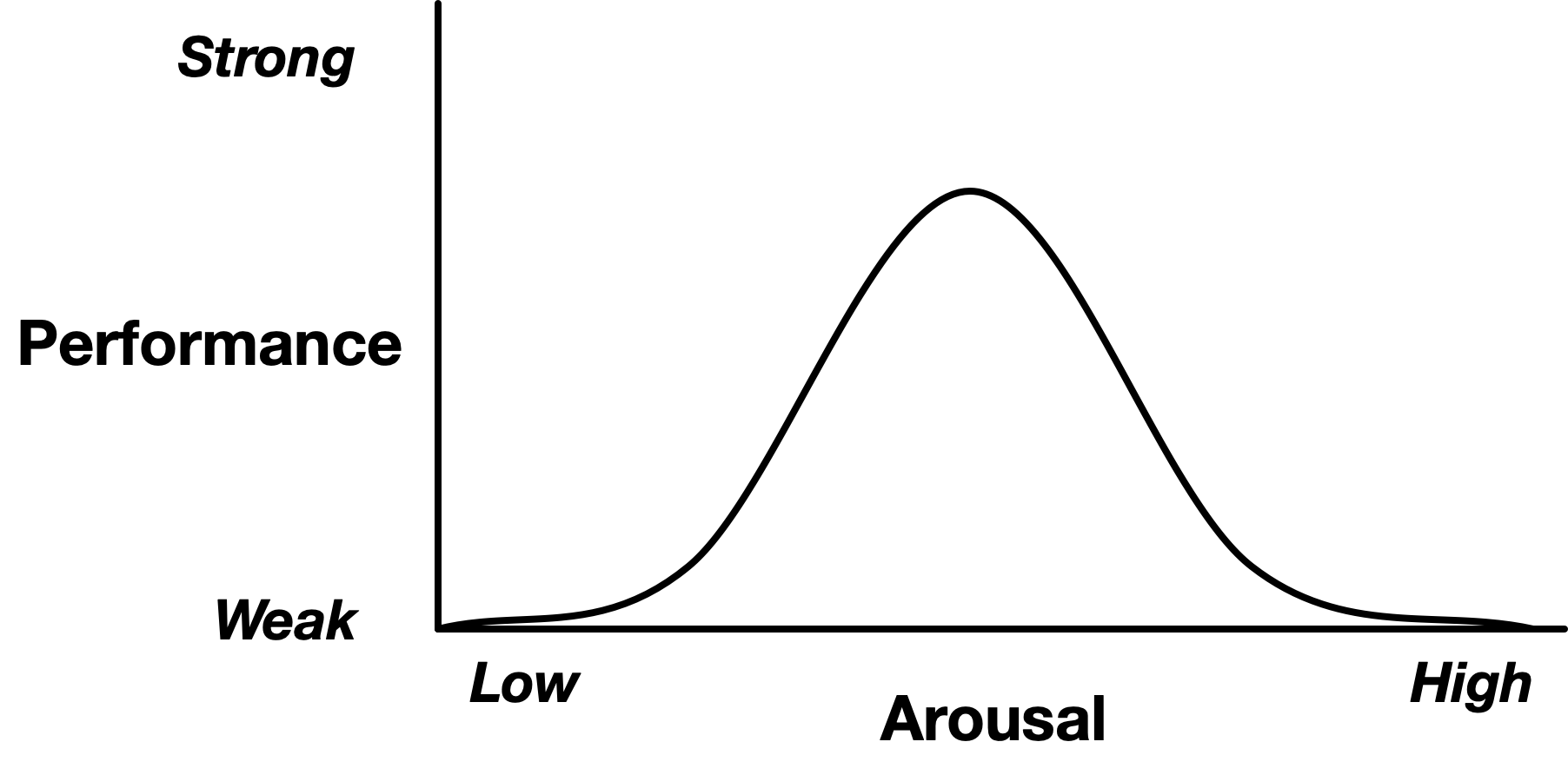
A curve showing low performance for low and high arousal, but a peak of performance in between.What we know, from the Yerkes-Dodson Curve, is that a little bit of arousal (read: emotion) can help, but too much can hurt. What isn’t clear from my conceptual rendering is what amount is the ‘right’ amount of arousal for optimal performance. I’ll suggest that for learning, it’s pretty low, as learning is stressful (another synonym for arousal). And I do suggest we manipulate emotions (which I admit is shorthand for motivation, anxiety, and confidence, which aren’t the regular definition) to successfully achieve learning outcomes.

However, even general functioning gets difficult when things are stressful. When I look at the design of casinos, for instance, (a way to cope with the too many times I have to go to Vegas for conferences), I note that they deliberately have low information, lights, no clocks, as an information-sparse environment. It is deliberate, so that you’re more focused on the enticements. They want you confused because you’re then more vulnerable to predations.

I fear that there’s a bit of this in our culture. For instance, fear sells: more alarmist headlines lead to more engagement. Which is good for the news business, but perhaps bad for us in several ways. For one, there’s a vested interest in focus on the alarming, not the bigger picture. Similarly, twisting stories to get emotional engagement isn’t unknown. That can be entertaining, but when it’s the information we depend on is manipulated, it’s problematic. Reducing support for education similarly reduces the intelligence people can apply to analysis.

I struggled to focus to find a topic this week, and I realize it’s because of the informational turmoil that’s currently in play. So, I thought I’d write about it (for better or worse ;).  Exaggeration of issues for the sake of clicks and sales, I’ll suggest isn’t a good thing. I’m willing to be wrong, but I worry that we’re over-excited. Our emotions are being played on, for purposes that are not completely benign. That’s a worry. That’s what’s worrying me, what about you?

Break it down!

2 July 2024 by Clark 2 Comments

jigsaw puzzle piecesIn our LDA Forum, someone posted a question asking about taking Cathy Moore’s Action Mapping for soft skills, like improving team dynamics. Now, they’re specifically asking about a) people with experience, and b) in the context of not-for-profits, so…I’m not a good candidate to respond. However, what it does raise is a more common problem: how do you train things that are more ephemeral. Like, for instance, leadership, or communication? My short answer is “break it down”. What do I mean? Here’re some thoughts, and I welcome feedback!

Many moons ago, I co-wrote a paper on evaluating social media impacts. There are the usual metrics, like ‘engagement’. That is, are people using the system? Of course, for companies charging for their platform, this could be as infrequent as a person accessing it once a month. More practically, however, it should be a person hitting it at least several times a week, or even several times a day! If you’re communicating, cooperating, and collaborating, you really should be interacting at a fair frequency.

I, on the other hand, argued for more detailed implications. If you’re putting it into a sales team, you should expect not only messages, but more success on sales, shorter sales cycles, etc. So you can get more detailed. These days, you can do even more, and have the system actually tag what the messages are about and count them. You can go deeper.

Which is what I think is the answer here. What skills do you want? For an innovation demo with Upside Learning, I argued we should break it down. That includes how to work out loud, and how to provide feedback, and how to run group meetings. (I’m just reading Alex Edman’s May Contain Lies, and it contains a lot of details about how to consider data and evidence.) We can look for more granular evidence. Even for skills like team dynamics, you should be looking at what makes good dynamics. So, things like making it safe yet accountable, providing feedback on behavior not on the person, valuing diversity, etc. There should be specific skills you want to develop, and assess. These, then, become the skills you design your learning to accomplish. You are, basically, creating a curriculum of the various skills that comprise the aggregated topic.

It may be that you assess a priori, and discover that only some are missing in your teams. That upfront analysis should happen regardless, but is too infrequent. The interlocutor here also mentioned the audience complaining about the time for analysis. Yep, that’s a problem. Reckon you have to sell the whole package: analyzing, designing, and evaluating for impact on performance, not just some improvement. Yet, compared to throwing money away? Seems like targeting intervention efforts should be a logical sell. If only we lived in a rational world, eh?

Still, overall, I think that these broad programs break down into specific skills that can be targeted and developed. And, we should. Let’s not get away with vague intentions, explanations, and consequently no outcomes. Let’s do the work, break it down, and develop actual skills. That, at least, is my take, I welcome hearing yours!

« Previous Page
Next Page »

Clark Quinn

The Company

Search

Feedblitz (email) signup

Never miss a post
Your email address:*
Please wait...
Please enter all required fields Click to hide
Correct invalid entries Click to hide

Pages

  • About Learnlets and Quinnovation

The Serious eLearning Manifesto

Manifesto badge

Categories

  • design
  • games
  • meta-learning
  • mindmap
  • mobile
  • social
  • strategy
  • technology
  • Uncategorized
  • virtual worlds

License

Previous Posts

  • March 2026
  • February 2026
  • January 2026
  • December 2025
  • November 2025
  • October 2025
  • September 2025
  • August 2025
  • July 2025
  • June 2025
  • May 2025
  • April 2025
  • March 2025
  • February 2025
  • January 2025
  • December 2024
  • November 2024
  • October 2024
  • September 2024
  • August 2024
  • July 2024
  • June 2024
  • May 2024
  • April 2024
  • March 2024
  • February 2024
  • January 2024
  • December 2023
  • November 2023
  • October 2023
  • September 2023
  • August 2023
  • July 2023
  • June 2023
  • May 2023
  • April 2023
  • March 2023
  • February 2023
  • January 2023
  • December 2022
  • November 2022
  • October 2022
  • September 2022
  • August 2022
  • July 2022
  • June 2022
  • May 2022
  • April 2022
  • March 2022
  • February 2022
  • January 2022
  • December 2021
  • November 2021
  • October 2021
  • September 2021
  • August 2021
  • July 2021
  • June 2021
  • May 2021
  • April 2021
  • March 2021
  • February 2021
  • January 2021
  • December 2020
  • November 2020
  • October 2020
  • September 2020
  • August 2020
  • July 2020
  • June 2020
  • May 2020
  • April 2020
  • March 2020
  • February 2020
  • January 2020
  • December 2019
  • November 2019
  • October 2019
  • September 2019
  • August 2019
  • July 2019
  • June 2019
  • May 2019
  • April 2019
  • March 2019
  • February 2019
  • January 2019
  • December 2018
  • November 2018
  • October 2018
  • September 2018
  • August 2018
  • July 2018
  • June 2018
  • May 2018
  • April 2018
  • March 2018
  • February 2018
  • January 2018
  • December 2017
  • November 2017
  • October 2017
  • September 2017
  • August 2017
  • July 2017
  • June 2017
  • May 2017
  • April 2017
  • March 2017
  • February 2017
  • January 2017
  • December 2016
  • November 2016
  • October 2016
  • September 2016
  • August 2016
  • July 2016
  • June 2016
  • May 2016
  • April 2016
  • March 2016
  • February 2016
  • January 2016
  • December 2015
  • November 2015
  • October 2015
  • September 2015
  • August 2015
  • July 2015
  • June 2015
  • May 2015
  • April 2015
  • March 2015
  • February 2015
  • January 2015
  • December 2014
  • November 2014
  • October 2014
  • September 2014
  • August 2014
  • July 2014
  • June 2014
  • May 2014
  • April 2014
  • March 2014
  • February 2014
  • January 2014
  • December 2013
  • November 2013
  • October 2013
  • September 2013
  • August 2013
  • July 2013
  • June 2013
  • May 2013
  • April 2013
  • March 2013
  • February 2013
  • January 2013
  • December 2012
  • November 2012
  • October 2012
  • September 2012
  • August 2012
  • July 2012
  • June 2012
  • May 2012
  • April 2012
  • March 2012
  • February 2012
  • January 2012
  • December 2011
  • November 2011
  • October 2011
  • September 2011
  • August 2011
  • July 2011
  • June 2011
  • May 2011
  • April 2011
  • March 2011
  • February 2011
  • January 2011
  • December 2010
  • November 2010
  • October 2010
  • September 2010
  • August 2010
  • July 2010
  • June 2010
  • May 2010
  • April 2010
  • March 2010
  • February 2010
  • January 2010
  • December 2009
  • November 2009
  • October 2009
  • September 2009
  • August 2009
  • July 2009
  • June 2009
  • May 2009
  • April 2009
  • March 2009
  • February 2009
  • January 2009
  • December 2008
  • November 2008
  • October 2008
  • September 2008
  • August 2008
  • July 2008
  • June 2008
  • May 2008
  • April 2008
  • March 2008
  • February 2008
  • January 2008
  • December 2007
  • November 2007
  • October 2007
  • September 2007
  • August 2007
  • July 2007
  • June 2007
  • May 2007
  • April 2007
  • March 2007
  • February 2007
  • January 2007
  • December 2006
  • November 2006
  • October 2006
  • September 2006
  • August 2006
  • July 2006
  • June 2006
  • May 2006
  • April 2006
  • March 2006
  • February 2006
  • January 2006

Amazon Affiliate

Required to announce that, as an Amazon Associate, I earn from qualifying purchases. Mostly book links. Full disclosure.

We use cookies to ensure that we give you the best experience on our website. If you continue to use this site we will assume that you are happy with it.