Learnlets

Secondary

Clark Quinn’s Learnings about Learning

Artifacts of reflection

27 June 2009 by Clark 3 Comments

The other day  John Ittelson stopped by for a visit.  I think of him as the guru of video usage in elearning, not least because of the recording studio he built in his house!  He mentioned his use of Flip camcorders, and finally a piece clicked into place that had been floating around in my thoughts.
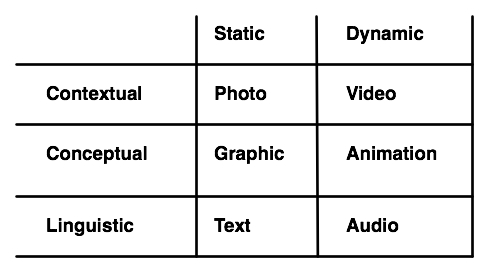
Media PropertiesI’ve had a slight blindspot for photos and video because I peg the ‘conceptual’ meter. I recognize the value, though I don’t play with the files enough (tho’ I took a digital audio/video editing course more than a decade ago, and recently edited home videos for my wife’s birthday).  Photos and videos are really good for contextualizing, and that’s particularly valuable for examples (and practice).

The revelation was about the value of having learners capture information in situ, and sharing this for a variety of reflective opportunities.  The information captured can be performances, products, whatever.  It could also be interviews, or thoughts.

A colleague’s wife used to take an iPod with a microphone to conduct interviews.  Gina Schreck discussed giving groups of employees Flips to make videos of what their business unit does for the org, to share.  John mentioned capturing samples of teaching to share.  Having captures of actual practice is a valuable tool around which to scaffold discussion, and a powerful tool for reflection.  You can capture someone’s stories of best practices, or your own performance to review.

Note that making both other’s and personal captures available opens up the opportunity to learn more with and from others than your own reflective observations will provide, if you can be that open.  As a learning facilitator, you should provide ways for individuals and groups to capture and share thoughts, actions, events, and more.

One of the powerful things in digital performance environments (read: games, er, immersive learning simulations, and virtual worlds as was part of the discussion the other day) is the ability to capture records of action for review, too.  So look at ways to digitally track activity in learning environments (another reason to make the alternative to the right choice to be a reliable misconception!).

Reflection is powerful, and digital tools give us ways to truly leverage that power.  Reflect on that!

Mythconceptions

22 May 2009 by Clark 6 Comments

Several things got up my nose yesterday (and I don’t mean literally :).   I listened in on the Corporate Learning Trends event in the morning, and in the evening participated in #lrnchat.   Don’t get me wrong, both events were great: great presentations organized by Tony Karrer, with examples coordinated by Judy Brown on mobile, Bob Mosher on performance support, Karl Kapp on games & simulations, and Tony on asynchronous elearning (all folks I know and respect); and a great lrnchat session as always with Marcia Conner coordinating fantastic participation by a whole host of great folks.   It’s just that several continuing beliefs surfaced that we’ve really got to address.

The first one was the notion that games and simulations are about tarted up quiz shows.   Let me be clear, these are a last resort!   When you’ve addressed the important decisions, and there’s still some knowledge that absolutely has to be memorized, not looked up, they’re ok.   But they’re not your starting point!   Games should be first thought of as your best practice environment for skills, not knowledge recitation.   What’s going to make a difference in learner (and organizational) performance is not rote knowledge, but meaningful decisions.   That is where games shine.

Ok, as Treena Grevatt pointed out, these ‘frame games’ may serve as the easiest entry point for organizational acceptance, but only if you ‘get it’ really, and are only using them as an entry point to do meaningful stuff.   Otherwise, it’s still lipstick on a pig.

The problem is, we already have a problem with our formal learning being too knowledge focused, and not skill focused, and a tool to make drill and kill easy isn’t going to help us remedy the problem.   So, please: first get that games are really deeply contextualized, immersive, challenging skill practice.   Then, when your analysis has addressed that and there still are knowledge components, bring in the quiz show games.   If you ‘get’ that, then you might use a stealth policy, but only then.

The second problem had to do with mobile learning.   There were still notions that mobile learning could be about courses on a phone   and that there’s not really an audience.   Look, depending on what metrics you pay attention to, the mobile workforce can be anywhere from 20-40% of your workforce.   Sales reps, telecommuters, field engineers, execs, the list goes on. And that doesn’t even tap into the folks who want access for convenience!

And it’s not about courses.   It has been, and can be done, but that’s not the real win.   As an adjunct to a course, absolutely.   Reactivate knowledge (developing learners), update it with podcasts (Chris von Koschembahr had a nice way to interview yourself, controlling the outcome :), review stories, solve problems, review with mentors, etc.

The real win, however (as Judy and Bob both pointed out), is performance support. This can include references, job aids, how to videos, connections to experts, and more.   This is huge, yet people don’t seem to be seeing this opportunity yet.

Mobile is ready for primetime. There are ways to deal with screen sizes, security, and cross-platform differences.   Next to social learning, I reckon it’s the greatest missed opportunity going.

Speaking of performance support, I do have to admit how surprised I was that people were thinking that single sourcing content to populate help systems, manuals, and training was a new idea.   This really isn’t a misconception, it’s just surprising.   I led a project developing such an approach years ago now, and it’s another big opportunity.   Still ahead of the curve, though, more so than the other two.

The point being, the more you tie these together, the greater the synergy: the whole is greater than the sum of the parts. And having been out saying these things for years, it continues to surprise me that the meme hasn’t propagated any further than it has.   And that’s my learning, that changing minds is a tough job.   But still an important one.   Evangelism, anyone?

Predictions for 2009

30 December 2008 by Clark 13 Comments

Over at eLearn Magazine, Lisa Neal Gualtieri gets elearning predictions for 2009, and they’re reliably interesting. Here’re mine:

The ordinary: Mobile will emerge, not as a major upheaval, but quietly infiltrating our learning experiences. We‘ll see more use of games (er, Immersive Learning Simulations) as a powerful learning opportunity, and tools to make it easier to develop. Social networking will become the ‘go to‘ option to drive performance improvements.

The extraordinary: Semantics will arise; we‘ll start realizing the power of consistent tagging, and start being able to meta-process content to do smart things on our behalf.   And we‘ll start seeing cloud-hosting as a new vehicle for learning services.

I’ve been over-optimistic in the past, for example continuing to believe mobile will make it’s appearance (and it is, but not in the big leap I hoped).   It’s quietly appearing, but interest isn’t matching the potential I’ve described in various places.   I’m not sure if that’s due to a lack of awareness of the potential, or perceptions of the barriers: too many platforms, insufficient tools.

I continue to see interest in games, and naturally I’m excited.   There is still a sadly-persistent view that it’s about making it ‘fun’ (e.g. tarted up drill and kill), while the real issue is attaching the features that drive games (challenge, contextualization, focus on important decisions) and lead to better learning.   Still, the awareness is growing, and that’s a good thing.

And I’ve been riffing quite a lot recently about social networking (e.g. here), as my own awareness of the potential has grown (better late than never :).   The whole issues of enabling organizational learning is powerful.   And I’ve also previously opined about elearning 3.0, the semantic web, so I’ll point you there rather than reiterating.

So there you have it, my optimistic predictions. I welcome your thoughts.

Mobile tools

27 October 2008 by Clark 3 Comments

Ok, I’ve had my iPhone a bit now, and some things are very useful, some things are cool, some are way fun, and some things are still irritating.   Note that most of the apps I download are free; I’m cheap and there are great free apps (and games).   I regularly go off to the iTunes store and check out what’s new (particularly the top free apps list).

Let’s get the negative stuff out of the way quickly.   Naturally, my pet peeves haven’t changed (because they haven’t fixed them, ahem): no cut/copy/paste drives me nuts.   For example, I put an address in my calendar, and then can’t cut and paste it into Google Maps to look it up when I’m on the go.   It’s there, but I can’t just carry it across!?!   Frustrating.   Similar with notes and todos.   As I’ve mentioned, if I promise something and it doesn’t get into my phone, we never had the conversation.   However, that’s much harder to do on the iPhone, because I have to email a message to myself!   Frustrating.   Similarly with memos. There already have been times I wanted to put things into a memo to take with me (e.g. a meeting agenda), and I can’t.   Sure, I could use EverNote, but then I’d have to have connectivity, and thanks to ATT’s coverage and hotel policies on wireless, that’s not always the case.

OK, the useful: Google Maps, Yelp, and now UrbanSpoon (finally covers Walnut Creek, my corporate headquarters) are very useful when I’m out and about and need to find some location, or a restaurant, or store, or…   I use them quite a lot, actually.   UrbanSpoon’s interface method of choosing at random is fun enought that it’s almost a ‘cool’.   Weather has been useful when travelling, as is Clock (not least for timing my tea :). Also, I’m all over references. I use the Wikipanion and the Google App.   Occasionally, the various unit converters, calculators, and the like are handy.   I expect to use the translator on occasion as well.   Hey, that’s why we have digital devices, to offload those things our brain’s aren’t great at, like remembering arbitrary data, and leave us to do the strategic and pattern-matching stuff.   The camera’s handy as well.   I haven’t used the voice recorder, though I’m ready.   And a secure password storage app, SplashID. And I got a first-aid reference, a Bart schedule, even the constitution (relevant in several ways).

The fun are the games I’m playing.   I used to play a lot of Risk in college, and then Lux on the computer.   Now there’s a somewhat abbreviated version of Lux on the iPhone.   That, along with Solitaire and Mahjonng are fun.   And of course, the LightSaber app.   Great for entertaining the kids when we’ve got to wait.   I play games for research reasons, er yeah, that’s it…. Oh, and books.   I’ve read a couple including James Fenimore Cooper’s “Pathfinder”, Edgar Rice Burrough’s “Tarzan” (I read as a kid, was re-reading to see if my lad’s ready), and Rudyard Kipling’s “Jungle Book” (hadn’t ever read, amazingly). Lots of free classics available and worth reading.

Finally, the cool.   I just got Google Earth, and that’s way cool.   Just amazing to have it running in the palm of your hand!   Went over and looked at our old house in Australia; they’ve put a tree in the front yard, it appears.   Twittelator lets me tweet and keep up with others’.   I have LinkedIn and FaceBook, though I haven’t used them much.   Midomi will let me hear a song, capture 10 seconds of it, and tell me what it is. Amazing.

By the way, many of these were available on the Palm, and some version of the above may be available on Windows Mobile, RIM’s Blackberry, or forthcoming on Android.   Anyway, it’s about extending your brain, and these apps do it in various ways.   So, what are you finding useful, and what am I missing?

Stories and Tools

21 August 2008 by Clark 2 Comments

BJSchone‘s tweet pointed me to Jay’s business assessment of web 2.0 tools, which somehow I’d missed.   A great little chart.   What got me going was his final entry, on stories.   He says:

memorable, natural way to spread values and goals; more sophisticated than text, oral tradition reinforces meaning

It started me thinking about the research (e.g. Schank, way back when) about our ‘scripts‘ (Schank’s equivalent to Minsky‘s Frames, and Rumelhart‘s Schemas, several co-emergent conceptualizations for thinking from cognitive science).   There’s been lots of recent interest in stories for business and organizations (e.g. Steven Denning), and there are sound reasons to do so.

The point that strikes me about why stories are such a compelling, memorable way to communicate is that our brains are hardwired to process them, they naturally contextualize the message, and (when well-done), help communicate both the solution and the underlying concept.   They can communicate messages about values, as Jay points out, as well as methods.   And they tap into human universals, as this article from Scientific American points out (sent to me after I’d written first draft of this; serendipity).

Which is why I’m a fan of stories in elearning.   They can be used up-front for what I call a motivating example, not a reference example but instead a visceral demonstration of why this knowledge is important.   And, of course, they can be used for reference examples where they link concept to context.   There are some nuances about how to do this that I talk about in my talks about Deeper eLearning (coming to DevLearn) and in my article on the 7 Step Program to better elearning (PDF).   Basically, worked steps, cognitive annotation, and backtracking & repair.   Solid research to back it up.

Of course, podcasts are a great way to use stories.   They are naturally an audio medium.   Then, you can augment stories with images, ala a narrated slideshow, or video. I remember we used to attend a series of travel movies at Carnegie Library in Pittsburgh; the filmmakers themselves would narrate the film live, and it was a very professional, entertaining, and enlightening experience. So vidcasts would also be useful.

And, as I’ve stated before, I think that comics/manga are a great and underexplored way to communicate, as they are stories, with the same ability to exaggerate.   They can take more time to produce but are more visceral (because they add visuals).   They also globalize easily (though may have trouble with accessibility?).   I can’t resist pointing again to Dan Pink’s new manga because it’s both good career advice and a good example!   I’d bet they’d work well on an iPhone, too.   Hmm…

So, look at the tool guide, think stories, and media.   Now, if we could only find a reliable and affordable way to get comics/manga done.

Top 10 Tools

20 August 2008 by Clark Leave a Comment

Jane Hart’s Top Tools list is a great resource, and she reminded me that my list might need updating.   Fortunately, Jay blogged about his list, which reminded me (some mail didn’t make the transition to the new environment, hence the need for a new list, as well as updating).   My list has some changes:

3. Firefox – my Web tool for searching, browsing, surfing: with the new engine, it’s fast, and has great plugins
4. Twitter – I’m using TwitterFox on Firefox, and Twittelator on my iPhone.   A whole new world…
5. Google – their search engine, their maps, their website tracking,…
7. iTunes – how I connect my iPhone to my Mac, download mobile apps, and more.
8. Mail – part of my move to centralize on Mac apps (iCal, Address Book) to accommodate iPhone; I use email a lot (e.g. RSS feeds from Feedblitz), but Mail’s missing some things I liked in Entourage

You’ll see a few changes precipitated by the iPhone (and some ways of rearranging).   Interestingly my top 10 mobile tools list was just pointed to, and I realize it’s out of date too!   I’m still playing with the iPhone, but the tools I use are:

Mail – email on the go

Twittelator – twittering about

Google Maps – location, location, location

Safari – mobile web browsing at it’s best (which still is only so-so :)

Contacts – who’s who?

Photos – easily loaded all my diagrams and portfolio pictures

I’m anticipating using Flashlight (literally), EccoNote (voice memo), AIM (one IM tool, maybe to get around SMS charges), UrbanSpoon (fun way to find restaurants, tho’ not yet here in WC/East Bay SF), Yelp (reviewed places), SplashID (all those passwords, protected), and FaceBook.

I’m cheap, so I’m mostly downloading free apps.   Recommendations?

Hard to cross a chasm with baby steps

18 August 2008 by Clark Leave a Comment

As I indicated, I’m experimenting with Twitter (@Quinnovator).   I’m following a number of people who point to interesting things or make interesting observations.   The benefits I’m finding with Twitter, I note, are random interesting thoughts that juxtapose with my own thinking, in addition to quick answers to questions.   It reminds me of Dave Owens’ long ago system DYK, that randomly gave you some unix tidbits.   It seemed to work, as many times it was irrelevant but every once in a while it was just the right thing.   Same concept as the later ‘tool tips’ you could get on starting up PowerPoint.

This particular reflection was triggered by George Siemens tweeting a response to his presentation: “we’re taking small steps” problem is, small steps=falling behind. need that big leap :).   Mark Oehlert responded with the title of this post.   And it triggered the thought that I’ve heard Jay Cross articulate, that evolution isn’t going to keep pace with the rapid rate of change. (And yes, I’m name dropping, because you too can follow thought leaders through blogs and twitter!)

On the other hand, change is hard, big change exponentially so.   What’s an organization to do?   Yet change is coming faster. One of the ways we’ve thought to address this is an opportunity we’re offering through the Cafe’, getting some high-value external input on major issues in a lightweight way, a jumpstart to out-of-the-box thinking.

What I’ve been assisting organizations to do, and this is definitely a good thing, is to start with setting a long term vision (e.g. performance ecosystem), and making organization-specific short, medium, and long term plans to get there.   However, I’m thinking that, in parallel, what’s needed is doing some ‘out of the box’ exercises where some more disruptive stuff is trialed.   Maybe a ‘tiger team‘ for communication & innovation (and yes, I’m aware of the abuse of the phrase, but in lieu of another quick way to communicate the concept…).

The point is that you can’t just daydream crossing the chasm, and you can’t rethink in increments.   Sometimes you’ve got to take a major rethink, and put it in place and learn from it.   The best advice I recall on this is that you’ve got to have some experiments going on.   A few well-thought out gambles that you’re willing to have fail.   However, it’s not random mutation, but also not intelligent design; rather a hybrid.   Taking a calculated risk.

Like trying out new technologies: the current experimental space is social networking for me, as well as the iPhone.     But you’ve got to keep pushing your personal boundaries to have the awareness for pushing the organizational ones.   So take risks and experiment yourself, and get your organization doing the same.

(Really) Mobile Games

7 August 2008 by Clark 1 Comment

There have been some interesting experiments with location-specific games (see the work David Metcalf talks about), but this article really is interesting, talking about GPS equipped phones.   I recall an early game for the Treo that placed aliens around you virtually (laid the images over your camera image), and you had to pan around with your Treo, spot, and shoot them. This is much more.

Now, imagine the learning potential: games for onboarding that have you and your cohorts running around the campus or plant and solving puzzles; having to try to sell to virtual customers, and tracking their effectiveness in both space and time; the rest are left as an exercise for the reader (I’m on vacation, after all… :) ).   A topic for the Summer Seminar Series next week?

DevLearn ’08

6 August 2008 by Clark 2 Comments

Up in the mountains, there’s lots to reflect on, little time to capture it. However, I do want to note that DevLearn is again on the horizon (November), which will include keynote, preconference sessions, concurrent sessions, and more.

I’m really looking forward to Tim O’Reilly’s keynote, as his description of Web 2.0 is fairly definitive.   I reckon I’ll again be part of the pre-conference sessions on Serious Games, er, Immersive Learning Simulations, and Mobile Learning as well.   I have a concurrent session on deeper instructional design which is stuff I really believe is fundamental yet seemingly not widespread, and fortunately has been well received in a few prior instances.

The real excitement for me is having a chance to catch up with some of the brightest folks in the business, like Tony Karrer, Will Thalheimer, Ruth Clark, Judy Brown, David Metcalf, Mark Oehlert, Brent Schenkler, Frank Nguyen, Lance Dublin, Karen Hyder, Michelle Lentz, and more, as well as the new folks I’ll meet.

The Guild’s conferences have always been a highlight of the year for me, so I hope I’ll see you there!

Going Mobile

3 August 2008 by Clark 3 Comments

I found out that where I’m going this week didn’t have coverage by Sprint. We’d be in the mountains (‘rustic’ cabins) but there is power, and I didn’t want to be completely out of touch as I was a couple of weeks ago.

I’d been waiting a year and half since my two year contract had expired, but wasn’t completely happy with any new mobile phone solutions.   At first I hoped the iPhone was the solution, but it wasn’t quite ready for primetime.   As a Palm fan (simplicity, solidity, great story about it’s design), the Centro was appealing, having full PIM (notes & ToDos as well as contacts and calendar), cut/copy/paste, a real keyboard, lots of apps, etc, but the browser’s weak, and no GPS or wi-fi is kind of a bummer.   The Treo 800W is mighty appealing, except for Windows Mobile.   I just *can’t* go there.   It’s got to be dead reliable.   Blackberry‘s just too closed for me, and Symbian‘s too odd (these are mobile OSs).

So, the iPhone 3G appealed (ok, maybe I’m an Apple fanboy, but I was a grad student in an interface design group when the Mac came out, and you had to love the leadership in user experience which has stayed market leading from then ’til this day), and the fact that ATT does claim to have coverage in the area was the kicker that got me to go wait in line Friday morning.   And, yes, I know that the iPhone 3G does not have full syncing PIM yet, nor copy/paste.   But it’s software upgradeable, and all the hooks are there. So, we’ll see.

So far, my experience is mixed.   The screen is simply awesome, and the interface is quite cool. It does sometimes take a lot of work to get to various things. It’s got a non-standard jack, so suddenly all my hands-free wires are worthless (grumble mumble); I may be forced to get a bluetooth headset for driving!   Typing’s OK.   I’ve got music loaded, and photos (but dual copies of the folder I want, and can’t figure how to delete one).   It gets email, but I managed to tap-dance over the push account I’d set up, and one of my accounts keeps complaining about connection ( I got one message only on the phone, not on my computer, and can’t forward it #$%^&!)

So, something (else) to keep me busy in the mountains. Besides prepping.   In a week, I fly off to Chicago for the Guild’s summer seminar series on Collaborative Learning, and the one on Immersive Learning Simulations.   I expect to learn heaps in the former, and think we’ve managed to design a great experience for the latter.     I do believe it will be good value, good learning, and good fun.

BTW, my brother and family stopped thru on their way back from the mountains.   Their boys have matured well of late, and it was great to see them and have them here.   Pool, wildlife museum (live fox, owls, raptors, snakes, coyote, all wounded and saved), ultimate frisbee in the park, eating, drinking.   Family is important to us.   I reckon it’s something that’s wired-in, and to be nurtured.   As well as having fun!   Hope your summer is turning out fun too.

« Previous Page
Next Page »

Clark Quinn

The Company

Search

Feedblitz (email) signup

Never miss a post
Your email address:*
Please wait...
Please enter all required fields Click to hide
Correct invalid entries Click to hide

Pages

  • About Learnlets and Quinnovation

The Serious eLearning Manifesto

Manifesto badge

Categories

  • design
  • games
  • meta-learning
  • mindmap
  • mobile
  • social
  • strategy
  • technology
  • Uncategorized
  • virtual worlds

License

Previous Posts

  • February 2026
  • January 2026
  • December 2025
  • November 2025
  • October 2025
  • September 2025
  • August 2025
  • July 2025
  • June 2025
  • May 2025
  • April 2025
  • March 2025
  • February 2025
  • January 2025
  • December 2024
  • November 2024
  • October 2024
  • September 2024
  • August 2024
  • July 2024
  • June 2024
  • May 2024
  • April 2024
  • March 2024
  • February 2024
  • January 2024
  • December 2023
  • November 2023
  • October 2023
  • September 2023
  • August 2023
  • July 2023
  • June 2023
  • May 2023
  • April 2023
  • March 2023
  • February 2023
  • January 2023
  • December 2022
  • November 2022
  • October 2022
  • September 2022
  • August 2022
  • July 2022
  • June 2022
  • May 2022
  • April 2022
  • March 2022
  • February 2022
  • January 2022
  • December 2021
  • November 2021
  • October 2021
  • September 2021
  • August 2021
  • July 2021
  • June 2021
  • May 2021
  • April 2021
  • March 2021
  • February 2021
  • January 2021
  • December 2020
  • November 2020
  • October 2020
  • September 2020
  • August 2020
  • July 2020
  • June 2020
  • May 2020
  • April 2020
  • March 2020
  • February 2020
  • January 2020
  • December 2019
  • November 2019
  • October 2019
  • September 2019
  • August 2019
  • July 2019
  • June 2019
  • May 2019
  • April 2019
  • March 2019
  • February 2019
  • January 2019
  • December 2018
  • November 2018
  • October 2018
  • September 2018
  • August 2018
  • July 2018
  • June 2018
  • May 2018
  • April 2018
  • March 2018
  • February 2018
  • January 2018
  • December 2017
  • November 2017
  • October 2017
  • September 2017
  • August 2017
  • July 2017
  • June 2017
  • May 2017
  • April 2017
  • March 2017
  • February 2017
  • January 2017
  • December 2016
  • November 2016
  • October 2016
  • September 2016
  • August 2016
  • July 2016
  • June 2016
  • May 2016
  • April 2016
  • March 2016
  • February 2016
  • January 2016
  • December 2015
  • November 2015
  • October 2015
  • September 2015
  • August 2015
  • July 2015
  • June 2015
  • May 2015
  • April 2015
  • March 2015
  • February 2015
  • January 2015
  • December 2014
  • November 2014
  • October 2014
  • September 2014
  • August 2014
  • July 2014
  • June 2014
  • May 2014
  • April 2014
  • March 2014
  • February 2014
  • January 2014
  • December 2013
  • November 2013
  • October 2013
  • September 2013
  • August 2013
  • July 2013
  • June 2013
  • May 2013
  • April 2013
  • March 2013
  • February 2013
  • January 2013
  • December 2012
  • November 2012
  • October 2012
  • September 2012
  • August 2012
  • July 2012
  • June 2012
  • May 2012
  • April 2012
  • March 2012
  • February 2012
  • January 2012
  • December 2011
  • November 2011
  • October 2011
  • September 2011
  • August 2011
  • July 2011
  • June 2011
  • May 2011
  • April 2011
  • March 2011
  • February 2011
  • January 2011
  • December 2010
  • November 2010
  • October 2010
  • September 2010
  • August 2010
  • July 2010
  • June 2010
  • May 2010
  • April 2010
  • March 2010
  • February 2010
  • January 2010
  • December 2009
  • November 2009
  • October 2009
  • September 2009
  • August 2009
  • July 2009
  • June 2009
  • May 2009
  • April 2009
  • March 2009
  • February 2009
  • January 2009
  • December 2008
  • November 2008
  • October 2008
  • September 2008
  • August 2008
  • July 2008
  • June 2008
  • May 2008
  • April 2008
  • March 2008
  • February 2008
  • January 2008
  • December 2007
  • November 2007
  • October 2007
  • September 2007
  • August 2007
  • July 2007
  • June 2007
  • May 2007
  • April 2007
  • March 2007
  • February 2007
  • January 2007
  • December 2006
  • November 2006
  • October 2006
  • September 2006
  • August 2006
  • July 2006
  • June 2006
  • May 2006
  • April 2006
  • March 2006
  • February 2006
  • January 2006

Amazon Affiliate

Required to announce that, as an Amazon Associate, I earn from qualifying purchases. Mostly book links. Full disclosure.

We use cookies to ensure that we give you the best experience on our website. If you continue to use this site we will assume that you are happy with it.