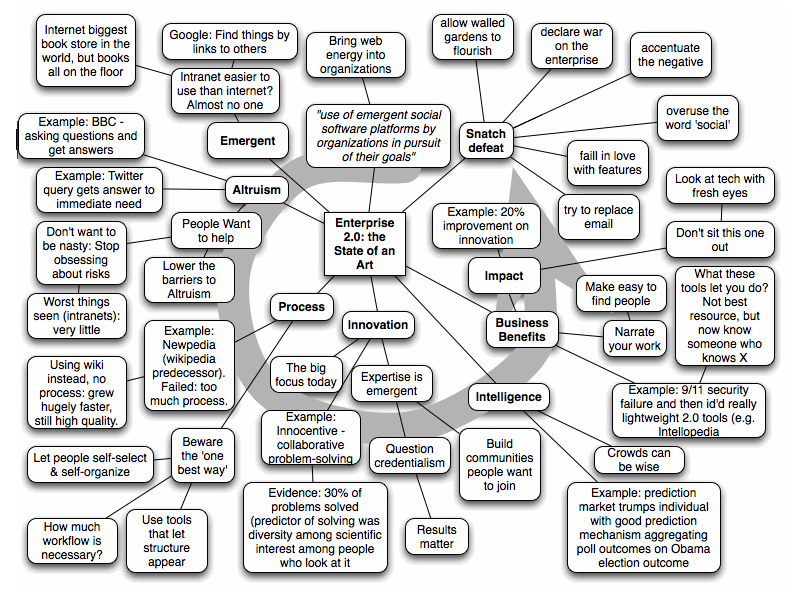
Earlier this month, Charles Jennings, Harold Jarche, Jay Cross and I got together, virtually, to represent the Internet Time Alliance for a discussion around organizations and social media with Xyleme Learning. Dawn Polous elegantly and eloquently hosted us, providing the starting questions and segueing between the comments.
They’ve gathered them up in a series of podcasts, and if you’re curious about what we’re up to, I recommend you go have a listen.
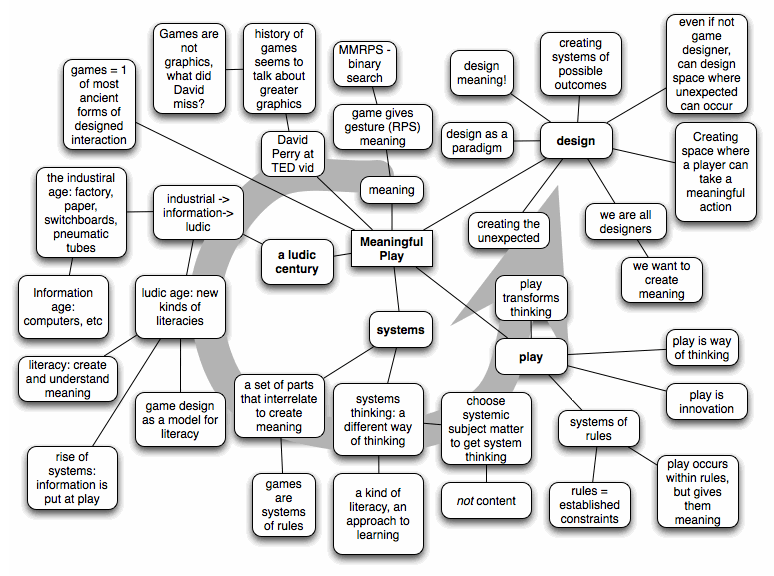
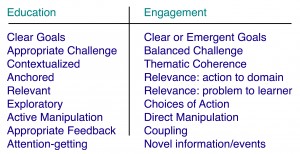 At core was an alignment between what makes effective learning practice, and what makes engaging experiences. Looking across educational theories, repeated elements emerge. Similarly with experience design. It turns that they perfectly align. If you recognize that, and can execute against it, your learning will be greater than the sum of the parts, and will both seriously engage and truly educate. Learning can, and should, be hard fun!
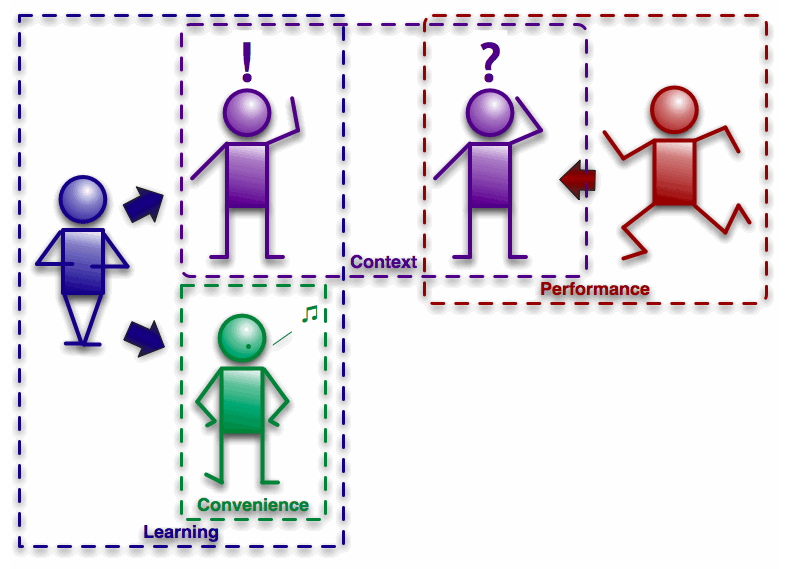 I’ve argued before that mobile is not really about learning, but about performance support. That said, there are roles for mobile in courses, either as a learning augment or even microcourses (but not putting a whole elearning course on a mobile device). In talking about mobile, I distinguish between convenience and context.