Learnlets

Secondary

Clark Quinn’s Learnings about Learning

Search Results for: align

VOTE!

2 November 2008 by Clark Leave a Comment

Ok, this is currently for America, but hopefully it’s relevant to all who prefer and enjoy a democratic or representative government.   Participate!   No excuses.   Don’t take your candidate’s status for granted, please, regardless.   I’m a firm believer in civic duty (and was before I became a board member of the Center for Civic Education).   I liked what Hunter Thompson had to say; if you haven’t participated in the process, you’ve no right to complain.

While I’m talking politics, there’s one thing I fail to understand: the negative association of the phrase “tax and spend”.   To me, that’s just good practice. while the alternatives have some problems.

Let’s take for granted that there has to be some government spending.   On national defense, for example. Infrastructure, like freeways.   Heck, just to have a government, there has to be spending.   Now, I’ll certainly agree that there has been unnecessary spending, and absolutely want to cut the ‘pork’.   And we certainly should make sure that we’re being efficient in the services we spend for.   No bloated bureaucracies, please.   We need to ensure that our money’s being spent wisely, but we do need to spend.   So…

Not to tax and then to spend is fiscally irresponsible.   I mean, if it were a consumer, we’d cut up the credit cards!   To tax and not spend is just mean.   You’re taking money from people and not putting it to work.   Maybe a little budgeting is ok, for the future or tough times.   Finally, not taxing and not spending is fiscally responsible, but remember that base level of spending we need.   So, we can fight about how much to spend or on what, but it seems to me that ‘tax and spend’ isn’t really an insult.   And the best way to agree or disagree with me is, again, to vote.   Take advantage of your privilege!

De Tocqueville, 1840: “The American Republic will endure, until politicians realize they can bribe the people with their own money.”

Coaching in games

15 October 2008 by Clark Leave a Comment

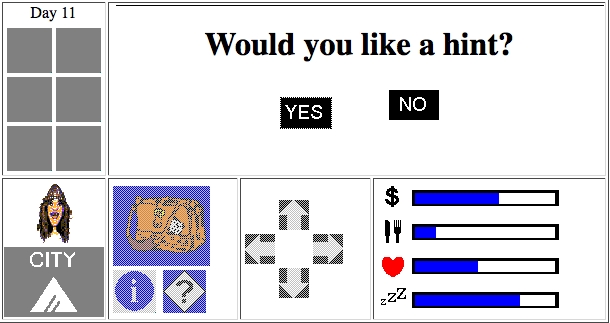
Much of intelligent tutoring system (ITS) work focuses on creating deep domain models of a particular task, creating essentially an expert system, and then coaching students as they navigate that domain.   Valerie Shute and Jeffrey Bonar did something different a number of years ago, building a tutoring model/system that tutored your exploration and experimentation strategies and layered that same model on top of exploratory environments for optics, electric circuits, and economics.

I always thought you could do the same in a game environment.   That is, if you had a game framework that you built games in, with structured representations such as definable maps and actions that could be taken, you could similarly coach learning/research skills instead of the domain.   It’s about looking at how people explore and trial things.   I even tried to get funding to build it, but sadly wasn’t successful for whatever reason (probably several reasons).   We did build a coaching engine into Quest that followed the principles, checking your search, not your domain knowledge (as well as monitoring your levels to give hints), so I knew the approach was viable.

Yesterday, I saw that they were putting ads into video games, and was reminded that we now have the game environments (e.g. Unreal engine) with generic structure to not only to take live feeds into games, but sufficiently generic that a coaching engine could be added.   It’s doable.   It’s far more interesting than putting ads in games!   Who’s, ahem, game?

Planning and panic

13 October 2008 by Clark 1 Comment

All morning, a crew has been systematically demolishing our kitchen (one learning: it’s hard to concentrate with regular sounds of destruction in close proximity).   This is as planned.   We’ve wanted a new kitchen since we had experience with the one that came with the house.   It was on our ‘todo’ list (heck, it was on my wife’s *can’t wait* list), but hadn’t risen to the top until the old refrigerator died.   The space in the cabinets for the old fridge wouldn’t fit any new model, so we were forced into kitchen renovation.   We got a new fridge standing elsewhere in the kitchen, and started planning the project.   By we, I mean my better half. She took this on with zeal, because she’s really wanted it.

One of the first things was finding a kitchen designer.   Now, when we were looking to buy our first house, we talked to lots of realtors.   They’d *listen*, and then show us something completely unlike what we had set as constraints.   It was aggravating!   When we moved back to the US and were looking for a new home, we were connected with a realtor who did listen, and were extremely grateful.   A match is everything. So she was thrilled when she found a designer who listened, looked, asked questions, and asked her/us to consider tradeoffs.   I’m learning that the match between customer and contractor is as important as the match between contractor and task.   Which applies to me and my business as well.

She did a lot of leg work (thankfully), but involved me in crucial decisions.     We’re both researchers, the type who subscribe to and read Consumer Reports, with complementary strengths in concept and detail.   She got the industrial-strength range she wanted by testing with paper cut-outs of her pans to find the smallest that would accommodate her cooking. I like to cook too, but not as elaborately (I’m a fan of ethnic one-pot meals, e.g. jambalaya), and would’ve been happier with less, but her work convinced me.   (I’m reminded of when Don Norman mocked up his new kitchen in cardboard and practiced workflow before settling on a design.)   I managed to secure a reddish wood stain and a dark green countertop, and a light tile that will complement both.   We spent quite a bit of time playing with dishwashers, range hoods, as well as ranges.

The planning is paying off, but there are always more details.   Last night we worked late (we worked all day, and she worked harder than me) clearing out our stuff from the kitchen, as it was more work than we’d expected.   We also were getting things organized for six weeks of eating microwaved meals on disposable tableware. It’s just too hard to figure out how to do dishes in bathroom sinks, bathtub, and toilet.   At least I got paper and not foam. There’s more, as we’re losing two rooms of the house (not only the kitchen, but another to accommodate appliances/cabinets as they wait for installation), so it’s relocating things (putting up new shelves, for instance), moving computers around, etc.   It doesn’t help that we’re both pack rats (every home needs one thrower-outer) and the house doesn’t have enough storage space.   My office is quite, er, cosy right now!

Still, we weren’t quite prepared for the interruption in our lives. It’s only day one, so this first heavy demolition is promised to pass, but there’ve been some adapation on both parts.   They’ve found out that my wife’s a wee bit protective of the front yard landscaping she’s spent weeks on installing, and shouldn’t leave torn out windows on plants, while I’ve discovered that you can put zippers on plastic sheeting!

It’ll be a learning experience for the whole family (the kids left this morning for school before things really got going), and will require some adaptation and flexibility.   We’re looking forward to cooking our first Thanksgiving (US, happy holidays to my Canadian compatriots!) in our new kitchen (fingers crossed).   However, it’s also fascinating, and hopefully we won’t come up with too many surprises (tho’ some are also expected).   It’s a catalyst for lots of changes (new sofa, entry way lighting will be precipitated as well).   I’ll try not to bore you with any but the important learnings, but it will be occupying a bit of my mindspace for the next six weeks or so.   With planning, flexibility, and teamwork, we expect to get through this.   Fingers crossed!

WGU and online learning

23 September 2008 by Clark 1 Comment

Today I had a chance to visit with Western Governors University.   Set up a more than a decade ago, it’s gradually grown to an enrollment of more than 10K students.   It’s purely online, but supported by 20 states, which gives it some interesting opportunities (read: political clout).

At the core of their model is the fact that their curricula are entirely competency-based.   They build their programs around specific outcomes (developed from an industry-based advisory board, whether the industry be IT or education), align assessments, and design the course materials towards those assessments.   It’s a refreshing focus on meaningful outcomes, beyond that which many programs claim, and they’ve been able to get accreditation on that basis (not despite it).   It also allows flexibility in schedule, and testing-out.

They’re also working on developing the social learning around it, both supporting content discussions and learning discussions.   They’ve got a goal of helping learners succeed, and to this end are pretty up-front about what it takes to succeed in a largely self-directed learning environment, despite the mentors. Still, it’s an ongoing learning process (the law of unanticipated consequences).

Which is not to say that they don’t face challenges.   They want to keep costs down, and not become a development house, so they’ve focused on sourcing the learning resources, and have largely been tied to what’s available off the shelf.   The learner experience in terms of the prepared materials could be enhanced from a motivational standpoint.   Also, it’s hard to develop and maintain a focus on higher-level learning objectives.   Further, the technology environment is a moving target that demands continual improvement.   They’re taking systematic steps to address these issues.

Overall, it’s an impressive endeavor, on both principled and practical grounds.   Robert Mendenhall, the President, set out to change the model after many years experience, believing that competencies and technology could provide a viable alternative to existing practices, and WGU is a testimony to his vision and ability to sell and deliver it.   A worthy challenge to the status quo.

eLearning 3.0

22 September 2008 by Clark 4 Comments

In preparing a presentation for an organization on the learning value of Web 2.0, I realized that the development I’m looking forward to is web 3.0 and the learning possibilities.   Don’t get me wrong, I’m very enthusiastic over the 2.0 learning opportunities, as I’ve gotten to know them.   It’s just that the work I was doing years ago now has the technology infrastructure to be brought to life in a viable and ubiquitous way.   What it means is personalized learning wrapped around your life, instead of leaving your day-to-day life to attend an ‘event’ or self-directed searching.

Web 3.0 and beyond

The key here starts with the next generation of the web, the semantic Web.   What this is about, to me, is the use of tags and meta-data to start adding meaning to the information out there.   To date, we’ve separated form from content, but the machine can’t operate on the data independently.   If we had semantics, meaning, through tags and meta-data, the system can start trolling for content. And, of course, we can start auto-tagging based upon content and generation as well as making it part of our habits (e.g. as I try to remember to categorize my blog posts).   The point is, with this information, we can start connecting things.   This isn’t just about search, but about pro-active and opportunistic information delivery, and moving to the distributed learning model I’ve talked about before.

A second opportunity is Web 3.0’s service-oriented architectures (SOA), or rather web-oriented architectures (WOA).   This is where capabilities are separated out into separate network-delivered services with API’s that anyone can tap if they have the proper codes (and authority).   What this does is let you build applications in a light-weight way, cobbling together the capabilities you need into the services you want.

What does this mean for learning?   It means that you can tag learning content and make it available.   Then you can have a system that looks at your learning goals, and your current activity (through a variety of context-sensitive mechanisms), and pull in a small tidbit opportunistically, or connect you with just the right person afterward.   The point is to move from macro courses to micro-learns, where you might be prepped right before an important task, supported in the middle of it, and provided reflection afterwards.   So your performance situations become learning situations.

To do this effectively means linking the meaning of your current activity with the status of your learning goals, and putting together an effective delivery mechanism depending on your technology infrastructure, preferences, etc.   The goal is to make a system that’s like having a personal mentor, but much more affordably.

Now, don’t get me wrong. While this is doable, it’s quite far off, and won’t be easy.   It depends on several developments, such some reasonable work on standardizing on terminology (or a successful implementation of folksonomies) for both content and tasks (and/or a very good mapping process).   It’ll also require some business model that makes it viable for participation on all parties.   Finally, it’ll require some tuning to make a user experience that’s effective without being intrusive.   Still, I think it’s a great future, and would love to have a well-implemented version coaching me!   How about you?

Facebook Apprenticeship

3 September 2008 by Clark 1 Comment

Jay Cross has an interesting post about using Facebook in the organization, and makes a connectionCognitive Apprenticeship I hadn’t seen (and wish I had :).   He’s citing another post on FaceBook and the Enterprise, where JP Rangaswami posits that Facebook can be used to allow individuals to track what their bosses are doing, as role models.   Jay connects this to Cognitive Apprenticeship (my favorite model of learning), where the boss is modeling his thinking processes, and the employee can use that model as a guide to performance.   Modeled performance is one of the components.

This is a great idea, making individuals thought processes visible for others to see, though whether it has to be the boss specifically, or others employees worth tracking (the more experienced practitioner, the expert in a particular area of interest) is an open question.   Likewise, the employee’s actions might be made visible as a basis for coaching/mentoring.

I’m not sure Facebook is the right tool, but a combination of tools might make sense and Facebook’s APIs might make it possible.   As I commented on Jay’s blog:

I‘m reminded of an interview I heard (wish I knew where; time for Evernote?) where this guy talked about how he kept his team on track: his del.ico.us tags, using basecamp, IM, etc left a trail of what he was paying attention to, where everyone was at, letting them work in tight synchrony.

That sort of open process can be quick, informative, and how Web 2.0 might really transform the ways people work, making personal learning a process of looking in the window of other’s working, and vice versa.   Of course, there are other issues, like privacy, and having a culture where sharing is the basis for improvement, not chastisement.

This actually might fit in with Tony Karrer’s post over at the Learning Circuit’s blog about to-learn lists: could we couple learning goals with semantic web to track relevant actions/posts/tags/etc to auto-support to-learn lists?   And this may be one of the answers to Brent Schlenker’s question about what is eLearning 2.0.

JP’s message recalls how his employees actually wanted to see not how he handled the incoming mail, but how he responded; his outgoing mail.   Very interesting.   Somewhere between seeing what someone’s paying attention to, and seeing how they actually communicate, is a very interesting opportunity.   Blogs provide some insight, tweets another.   So do del.ico.us tags (which I don’t use yet, and perhaps should). You can follow the people blazing the paths, at least. I’m happy following blogs and tweets so far, and learning from it.   Are many of you doing that?   And finding it valuable?

Game Development Tools

15 August 2008 by Clark 7 Comments

The last topics in our 2 day game design workshop for the Guild (great group of attendees, great experience) were evaluation, production, and organizational issues.   On the production issue, the perennial topic of tools came up.   In thinking about it, I realized that we needed a map, so I started coming up with one (a diagram, of course :) ).   I ran it past Jeff (Johannigman, my co-conspirator on the workshop) in our taxi to the airport, to his general approval.

gametoolspace

The two dimensions are complexity of the scenario (only covering branching and model-driven), and the power (e.g. complexity) of the tool.   It’s a pretty linear map, and realize that small distances aren’t significant (so the clusters are roughly equivalent).

The impossible dream is that tool that everyone wants that makes it easy to develop model-driven interactions.   Sorry, I’m convinced it can’t exist, because to be flexible enough to cover all the different models that we’d want to represent, it’s got to be so general as to be essentially just a programming language.   QED (Quinn Ephemeral Decision).

This is a first stab, so feedback welcome.   If desired, I can create it in Gliffy and we can collaboratively develop it (though my first effort with that was underwhelming in participation…).   Thoughts?

eLearning 2.0

12 August 2008 by Clark 2 Comments

During the 1st day of Mark and Brent’s Collaboration summer seminar, they got folks active: starting blogs, wikis, webtops, etc.   They’re doing a great job:

c2sss

Naturally, in addition to the tactical questions (“how do I move this tab”?), the conceptual questions started: when do you use a blog versus a wiki, how do you make sense of all the options out there.

Now, as part of my performance ecosystem, I think blogs are a personal reflection or a history (as I told an attendee, it would be great for capturing a ‘war story’), whereas wikis are for collaboration to create a unified view of something (e.g. the way to tune a network).   I don’t think blogs support a rich discussion and aren’t that collaborative.   Also, one of the problems I see is that we often forget old tools in the excitement of new tools: discussion boards are a great way to have an ongoing conversation; you don’t need some new tool for this. Yet wikis are really good for capturing the output of a collaboration.

Also recently I’ve been having conversations with folks about integrating tools to meet larger needs.   Ning is a tool that provides ways for individuals to have profiles, to have forums, to list events, etc.   Increasingly, LMSs also have these capabilities.

The interesting thing is the great spate of tools out there: Google, Central Desktop, Zoho, Wetpaint, PBWiki, an ever growing list. There are suites of web meeting apps, web-based productivity tools, etc. How do you make sense of it? I think there’s another ‘bubble’ with these, and eventually a bunch will fail and out of the ashes a few will persist.   The good thing, I think, is that by getting your hands dirty with a variety of these, you’ll access some generalized skills.   And web apps are not going away.

I believe training anybody on any particular tool (even the seemingly ubiquitous Microsoft Office suite), is the wrong way to go.   Talk to them about the skill (writing, creating presentations, etc), and then give some assignments across a couple of different tools.   This gives you transferrable skills, which will equip you to communicate and collaborate regardless of the latest wave of tools.   And that’s what’s important, in this day of increasing change.

Motivation by Behavior Change

11 August 2008 by Clark Leave a Comment

Clive Shepherd blogs this idea from Richard Middleton, about two possible dimensions that might affect your learning goals: how motivated your learners are, and how ‘big’ the behavior change is:

The quick notion is that if you’ve a small change and high motivation, it can be very lean.   Lower motivation requires more engaging presentation, and once you start having big changes you’ll need lots of practice, and when the learner isn’t interested or is resistant, you’ll really have to ramp up the engagement (tuning it into a game).

There are lots of other dimensions (e.g. maybe it doesn’t even require rapid elearning, but just an information update), but this is certainly a good way to look more richly at the design task and how it might be addressed.   And looking richly at your learning task is where you get more creative learning solutions (read: learning experience designs).

Future of Publishing?

26 July 2008 by Clark Leave a Comment

Based on a strange twist of circumstance, Jay Cross and I will be leading a discussion on the future of publishing in an online era here in the Bay Area next Monday (July 28).   He and I prepared some days ago, and came up with several issues, including who owns IP, new business models, moving from content to experience, increasing rates of change, and more.

The fact of the matter is that the day of the (non-fiction) book is at an inflection point.   That’s not to say we won’t still want to read books from time to time, at least those of us ‘of an age’ ;).   But what, where, when, and how will be our primary sources of information, moving forward?   My book cover

Certainly there are some interesting experiments going on.   On ITFORUM, Bev Ferrell and others have been citing a number of initiatives of self-publishing and open textbooks.   Certainly fodder for thought (particularly when I’m working with publishers on several projects, and have had a book published!).

We aren’t providing answers, but we’ll be with a very knowledgeable cohort and hope to work through to some interesting ideas.   If you’re in the area, and are interested, let me know and I’ll lob coordinates at you.

« Previous Page
Next Page »

Clark Quinn

The Company

Search

Feedblitz (email) signup

Never miss a post
Your email address:*
Please wait...
Please enter all required fields Click to hide
Correct invalid entries Click to hide

Pages

  • About Learnlets and Quinnovation

The Serious eLearning Manifesto

Manifesto badge

Categories

  • design
  • games
  • meta-learning
  • mindmap
  • mobile
  • social
  • strategy
  • technology
  • Uncategorized
  • virtual worlds

License

Previous Posts

  • March 2026
  • February 2026
  • January 2026
  • December 2025
  • November 2025
  • October 2025
  • September 2025
  • August 2025
  • July 2025
  • June 2025
  • May 2025
  • April 2025
  • March 2025
  • February 2025
  • January 2025
  • December 2024
  • November 2024
  • October 2024
  • September 2024
  • August 2024
  • July 2024
  • June 2024
  • May 2024
  • April 2024
  • March 2024
  • February 2024
  • January 2024
  • December 2023
  • November 2023
  • October 2023
  • September 2023
  • August 2023
  • July 2023
  • June 2023
  • May 2023
  • April 2023
  • March 2023
  • February 2023
  • January 2023
  • December 2022
  • November 2022
  • October 2022
  • September 2022
  • August 2022
  • July 2022
  • June 2022
  • May 2022
  • April 2022
  • March 2022
  • February 2022
  • January 2022
  • December 2021
  • November 2021
  • October 2021
  • September 2021
  • August 2021
  • July 2021
  • June 2021
  • May 2021
  • April 2021
  • March 2021
  • February 2021
  • January 2021
  • December 2020
  • November 2020
  • October 2020
  • September 2020
  • August 2020
  • July 2020
  • June 2020
  • May 2020
  • April 2020
  • March 2020
  • February 2020
  • January 2020
  • December 2019
  • November 2019
  • October 2019
  • September 2019
  • August 2019
  • July 2019
  • June 2019
  • May 2019
  • April 2019
  • March 2019
  • February 2019
  • January 2019
  • December 2018
  • November 2018
  • October 2018
  • September 2018
  • August 2018
  • July 2018
  • June 2018
  • May 2018
  • April 2018
  • March 2018
  • February 2018
  • January 2018
  • December 2017
  • November 2017
  • October 2017
  • September 2017
  • August 2017
  • July 2017
  • June 2017
  • May 2017
  • April 2017
  • March 2017
  • February 2017
  • January 2017
  • December 2016
  • November 2016
  • October 2016
  • September 2016
  • August 2016
  • July 2016
  • June 2016
  • May 2016
  • April 2016
  • March 2016
  • February 2016
  • January 2016
  • December 2015
  • November 2015
  • October 2015
  • September 2015
  • August 2015
  • July 2015
  • June 2015
  • May 2015
  • April 2015
  • March 2015
  • February 2015
  • January 2015
  • December 2014
  • November 2014
  • October 2014
  • September 2014
  • August 2014
  • July 2014
  • June 2014
  • May 2014
  • April 2014
  • March 2014
  • February 2014
  • January 2014
  • December 2013
  • November 2013
  • October 2013
  • September 2013
  • August 2013
  • July 2013
  • June 2013
  • May 2013
  • April 2013
  • March 2013
  • February 2013
  • January 2013
  • December 2012
  • November 2012
  • October 2012
  • September 2012
  • August 2012
  • July 2012
  • June 2012
  • May 2012
  • April 2012
  • March 2012
  • February 2012
  • January 2012
  • December 2011
  • November 2011
  • October 2011
  • September 2011
  • August 2011
  • July 2011
  • June 2011
  • May 2011
  • April 2011
  • March 2011
  • February 2011
  • January 2011
  • December 2010
  • November 2010
  • October 2010
  • September 2010
  • August 2010
  • July 2010
  • June 2010
  • May 2010
  • April 2010
  • March 2010
  • February 2010
  • January 2010
  • December 2009
  • November 2009
  • October 2009
  • September 2009
  • August 2009
  • July 2009
  • June 2009
  • May 2009
  • April 2009
  • March 2009
  • February 2009
  • January 2009
  • December 2008
  • November 2008
  • October 2008
  • September 2008
  • August 2008
  • July 2008
  • June 2008
  • May 2008
  • April 2008
  • March 2008
  • February 2008
  • January 2008
  • December 2007
  • November 2007
  • October 2007
  • September 2007
  • August 2007
  • July 2007
  • June 2007
  • May 2007
  • April 2007
  • March 2007
  • February 2007
  • January 2007
  • December 2006
  • November 2006
  • October 2006
  • September 2006
  • August 2006
  • July 2006
  • June 2006
  • May 2006
  • April 2006
  • March 2006
  • February 2006
  • January 2006

Amazon Affiliate

Required to announce that, as an Amazon Associate, I earn from qualifying purchases. Mostly book links. Full disclosure.

We use cookies to ensure that we give you the best experience on our website. If you continue to use this site we will assume that you are happy with it.