Learnlets

Secondary

Clark Quinn’s Learnings about Learning

Search Results for: align

Esther Quinn (1924-2013) RIP

31 August 2013 by Clark 56 Comments

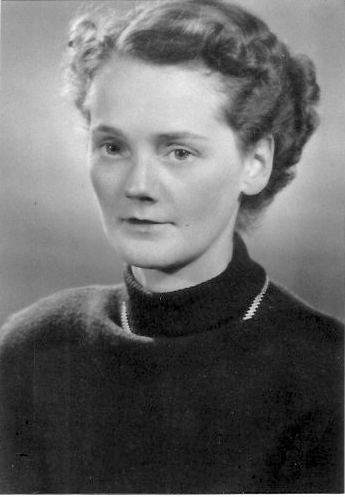
EstherQuinnEarly this morning, my mother died.  She’d been wanting to go;  having lost one leg to bad circulation and with continuing pain in the other for the same reason, her quality of life wasn’t great despite the loving care my brother and family provided.  She needed help to get around, and hated to impose.  She’d already outlived all her siblings, and fortunately her passing was relatively quick and painless.

She had led a most interesting life; she grew up in Germany in a slightly privileged family (with a few servants), including during the time of World War II.  The war was tough on the family; while one of her two twin brothers was lost to leukemia, the other lost his life as a fighter pilot.  Her firm but loving father was briefly imprisoned for not being an ardent proponent of Hitler, but as a community official the local townspeople advocated for his release.  Their house was bombed during the course of the war, but they had escaped to the countryside home of their family friends.  I remember my mom telling me about heading with a friend to that region, and ducking under trees at times to avoid planes machine-gunning the field!

She was anorexic for a time, and so had to spend time in the hills of Czechoslovakia to recuperate, escaping some of the war. She also studied nursing in Switzerland, again avoiding some of the carnage, and felt remorse in both cases.  She was also  embarrassed  about getting credit for not participating in a war-hawking May Day parade because the real reason wasn’t principled objection but instead that she didn’t want her birthday preempted.  For the rest of her life she was always looking to help others.  She was sympathetic to the disabled, as her father had lost his arm in the first world war, yet never let that slow him down.

After the war, she headed to the New York to stay with her aunt, and worked taking care of an elderly lady.  She grew tired of being cold, and headed west by bus. She almost stopped in New Mexico, but ended up continuing on to Los Angeles, where she worked in a hospital, and ended up meeting my father, Nives.  She never regretted leaving her native land and family, though she did miss them.

My folks got married, and she subsequently became a mother to me and then my brother Clif.  With no proximal family of hers, she had to become quite independent, also as my father worked long hours.  She kept us well fed, becoming a good cook and a strong advocate of natural foods long before such became popular.  A good education was also a priority, and she took us to museums regularly as well as advocating for summer school and other activities.  Frugal too (and occasionally penny-wise and pound-foolish, as she’d laughingly admit), our regular vacations were camping except for the occasional trips to Germany to visit her family.  And she was capable: she knitted us sweaters, sewed, gardened, and had a ‘can do’ attitude.

She eventually went back to nursing when we were old enough, and was a revered fixture in the local emergency room for many years (though we had to restrain her from telling injury tales at the dinner table).  She and my father remained active in politics and social efforts; after retirement they did considerable traveling but also volunteered time when home. She was always heading off to go shopping for the abused women’s shelter or to deliver something for somebody in need.   She also was continually restless, courtesy of an overactive thyroid gland, and it was a family joke that she’d say she was finally going to sit and watch a movie, but soon she’d be up making snacks or doing some other thing around the house.

The thing that I grew to recognize and appreciate was how much my mother was a  people person.  Our house regularly had visitors, often from far away.  My mom had the gift of really listening – she loved hearing others’ stories about life –  and the next time she met you she would remember and ask.  And help if she could.  As a consequence, my folks always had invitations to visit, and people they met on their travels were always stopping through on their way elsewhere.

She never thought she was smart or wise, and yet she was both.  She cared and her varied experience and endless curiosity meant she often had something useful to say.  Her brain remained strong long after her body began to fail her.  Despite the travails of infirmities, she continued with good cheer.

She was gentle, kind, thoughtful, and good, and we were very very lucky to have her.  Rest in Peace.
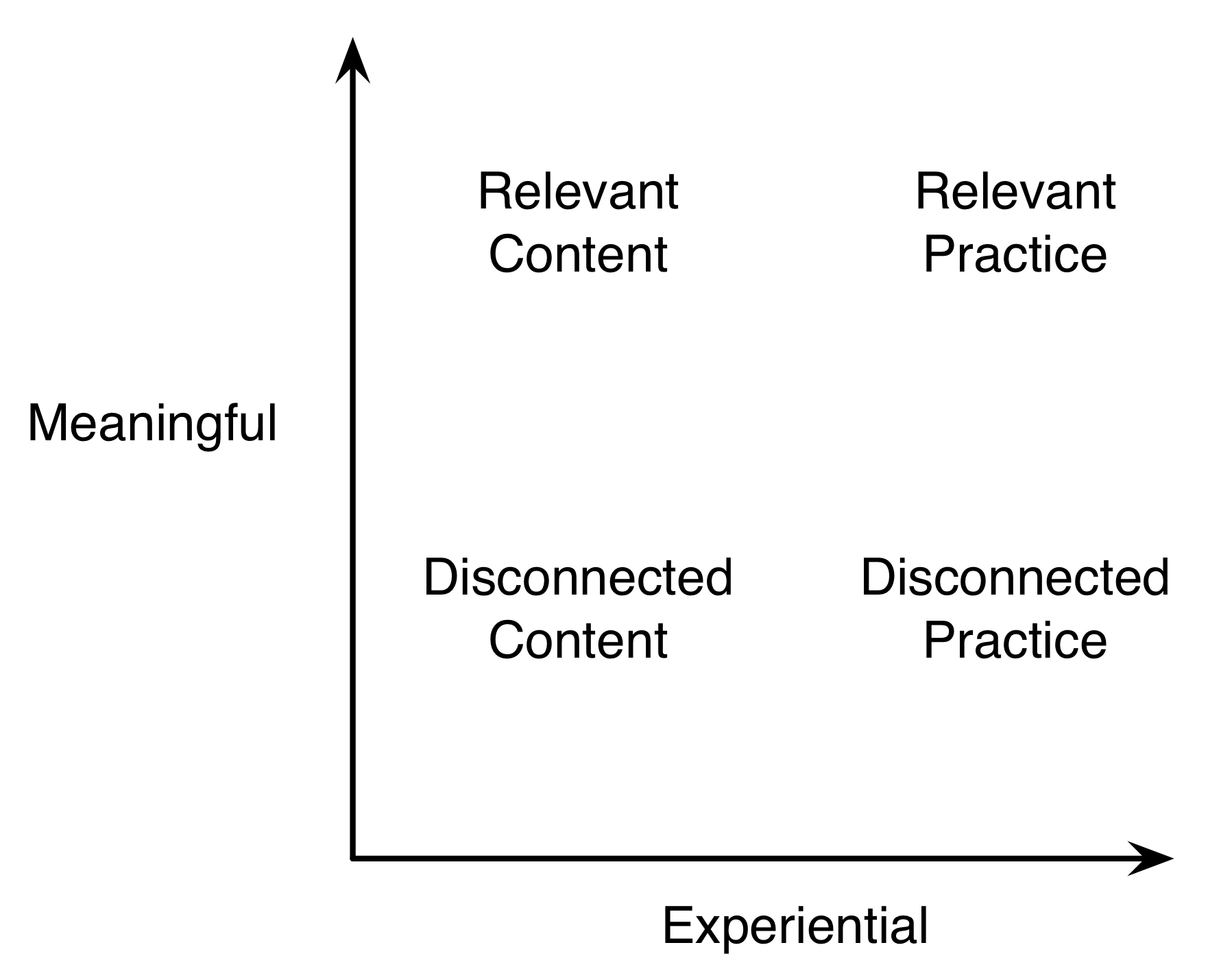
Meaningful and Experiential

6 August 2013 by Clark 1 Comment

At lunch last week with my colleague Jay Cross, we riffed on the most important word was for learning in the organization. I chose ‘meaningful’, he went with ‘experiential’.  They’re both important, but I thought I’d tease them out a bit.

MeaningfulExperientialI take meaningful in two senses: what you’re doing (read: learning) is directly related to what your goals are, and it’s something you care about.  So, for example, in designing serious games, you want to focus on key skills, not on irrelevant material. And, to work as engagingly as possible, you also are also choosing a context that the learner cares about. Taking something relatively abstract like coaching, you could be providing support for developing a coaching model (rather than using an existing one), or you could be figuring out how to help a person separate out person from behavior (commenting on the latter is to be preferred).  Similarly, it could be in the context of being a better accountant (uninteresting  except to accountants), or it could be for sports (which might be of interest to a broader segment).  The point is to be focusing on relevant skills in interesting contexts.

Now, I take experiential to have some overlap, but to be addressing two senses as well: both the context you are learning in, and the nature of the learning experience.  That is, you can be learning away from work, or in the work process, the latter being more ‘experiential’. And you can be learning by doing in either context, learning ‘how’, as opposed to learning ‘about’.  I think there’s overlap here in being contextually relevant , but separate in the sense of personally interesting and the learning being applied.

I mapped it out, with lack of experiential and meaningful being disconnected content (which I see far too much of in workplace learning), or where we start providing knowledge how (not about) to be meaningful, providing activity-based learning to be experiential, and of course the ultimate being the intersection of both.

I’m sure Jay would argue that if it’s experiential, learning through real work experience, it’s inherently meaningful.  And I’d argue that if it’s suitably meaningful, it naturally has to be experiential.  Yet overall I’m happy take either one or both versus neither!

Supporting Work

18 July 2013 by Clark 2 Comments

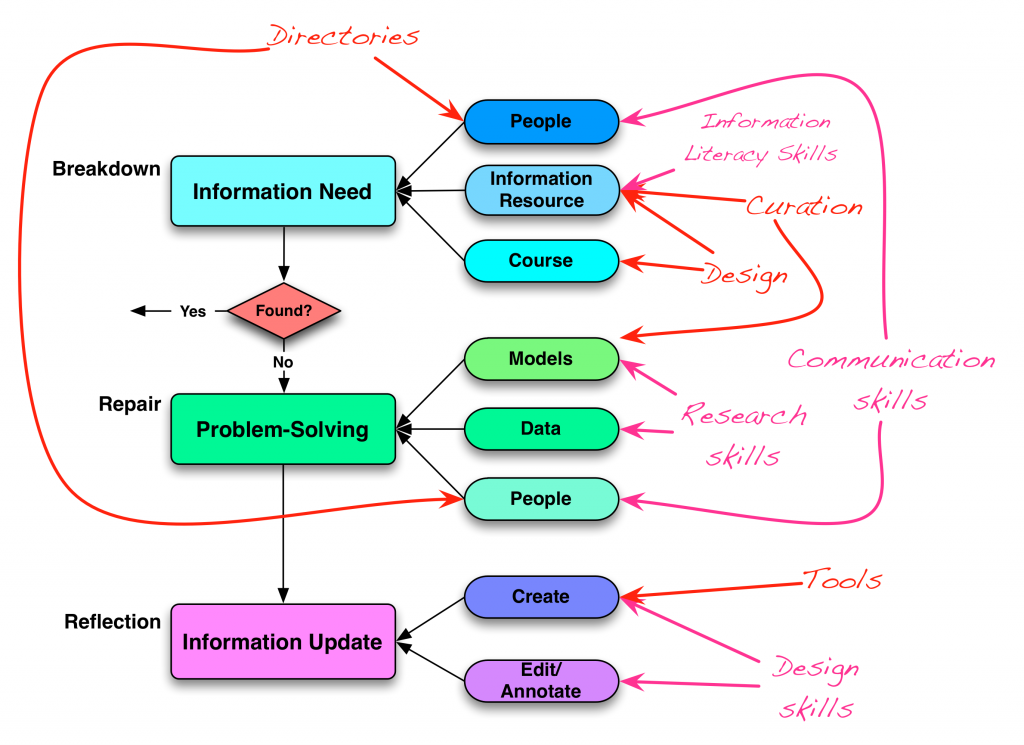
A number of years ago, I discussed a useful model that talks about how we solve problems in the world.  In the piece, I talked about how when we can’t act, we try to find the answer (and if we do, we go back into action).  Then if we can’t find the answer, we have to go into a problem-solving mode: we need to do research, experiment, and generally discover the solution. If we find a solution we should update the resources to help other people find the answer rather than having to rediscover it.

ways to support workI was thinking about this in terms of the ways in which L&D can support this process, and started noting the ways in which we can help  besides courses.  I broke it up into two different forms of support: direct, and supporting the associated skills.

When we have an information need, we might need directories to people with various expertise (associated with Communities of Practice, presumably).  We might design or curate useful information resources (how-to videos, job aids), and occasionally, when a significant skill shift is needed, we might design courses.

There are associated skills here, so communicating successfully with the experts who have the answer, or information literacy to develop the performer’s ability to find the answers themselves.

If the answer doesn’t already exist, then we might support learner with tools about problem solving, and research and problem-solving skills, as well as communication skills again to deal successfully with collaborators.

Finally, when the answer is found,  might have tools to create resources and skills to edit existing resources.

First, this is by no means a complete list, as even in writing this I thought of design to create resources to support problem-solving, and information architecture to go along with information resources, and…you get the idea. The point is two-fold: we need to recognize how people actually act in the world, and we need to then find ways to support all the points of need, not just the ones we can design a course for.  There are  lots of opportunities!

Formal Learning is (or should be) Expensive!

2 July 2013 by Clark 7 Comments

It’s becoming clear to me that we’re making a big mistake in our thinking. We seem to think that formal learning is relatively cost-effective, and may even think that performance support and social are more costly.   Yet we need to realize that formal learning is likely our most costly approach!

To start with, we should be doing sufficient analysis to ensure that the need is indeed a skill shift. If it’s an information problem, it should be solved with a job aid. Courses are more expensive.  And we need to take the time that the skill shift really is needed; it’s not a motivation problem or some other problem. In other words, we need to take the time to identify what business problem this is solving that a course will affect, and the associated metric.  That takes time.

Then we need to design an intervention that will address that skill shift: we need to determine what the change in the workplace behavior needs to be to impact that metric, and then design an objective that reflects that needed behavior change.  This is not trivial: a poorly formed objective about knowledge, not behavior, isn’t going to have an impact on the business.

Then, to do formal learning well, you need appropriate and sufficient practice.   That takes time to design properly, ideally with scenarios or simulation-driven interactions.  And the practice needs to be aligned with the learner; it has to be meaningful to them.  Enough of them. This takes time.

Then we need to create an appropriate model to guide their behavior, and introduce it appropriately. And find meaningful examples that illustrate the concept being applied in context, across sufficient contexts.  This takes time, though no more time (once you determine a course is the answer) than other learning design once you get experienced in this more advanced way of designing.  And it takes development resources.

And, of course, if you’re not doing the above, why are you bothering? It’s not going to hit the mark.  We don’t, frankly, and to the extent we don’t, we undermine the  likelihood  that our interventions will have the desired impact.  The point being that courses should not be our first line of defense!

Rapid elearning is cheap and fast, but it’s not going to have any impact.  Most of what we do doesn’t have any impact. If we want to have impact, we have to do it right, and that’s not a cheap proposition.  We need to worry about measuring more than cost/bum, and worry about hitting the business goal.  Then we can truly determine whether we should go this route, rather than another.  But, seriously, you shouldn’t be throwing formal learning at a problem unless you’re willing to do it right. There are times it  will be the right answer, but right now we’re throwing too much money away.  Let’s stop, and do it right  when  it’s right.  And that will be both expensive  and worth it.


Chuck Martin #mLearnCon Keynote Mindmap

19 June 2013 by Clark 1 Comment

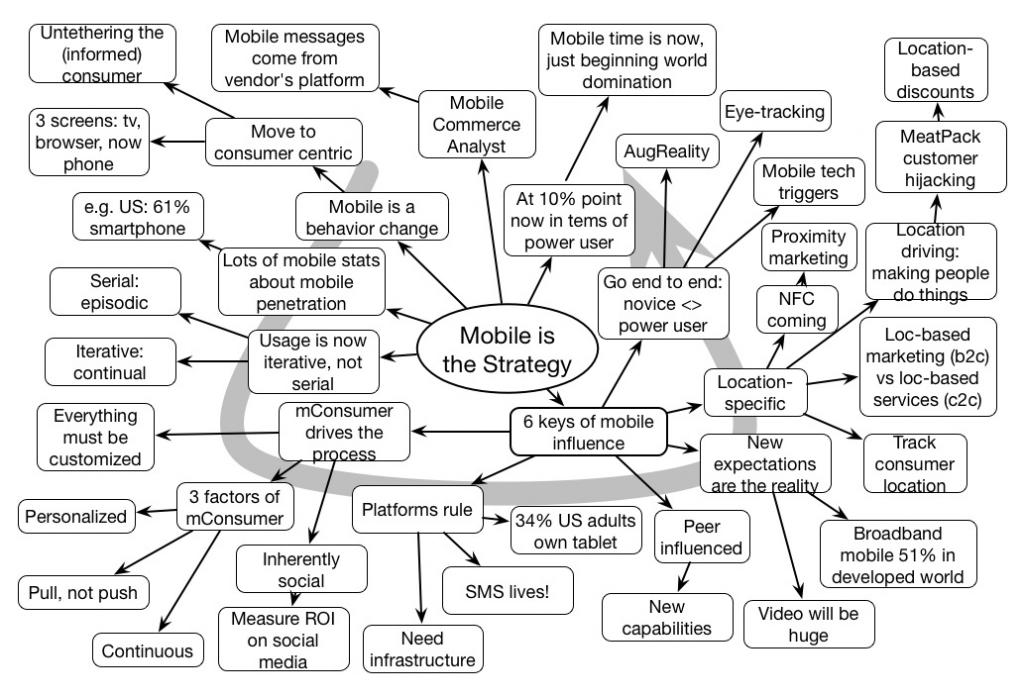
Chuck Martin gave a lively and valuable keynote at #mLearnCon, with stats on mobile growth, and then his key components of what he thinks will be driving mobile.  He illustrated his points with funny and somewhat scary videos of how companies are taking advantage of mobile.

MartinKeynoteMindmap

Christopher Pirie #mlearncon Keynote Mindmap

18 June 2013 by Clark 1 Comment

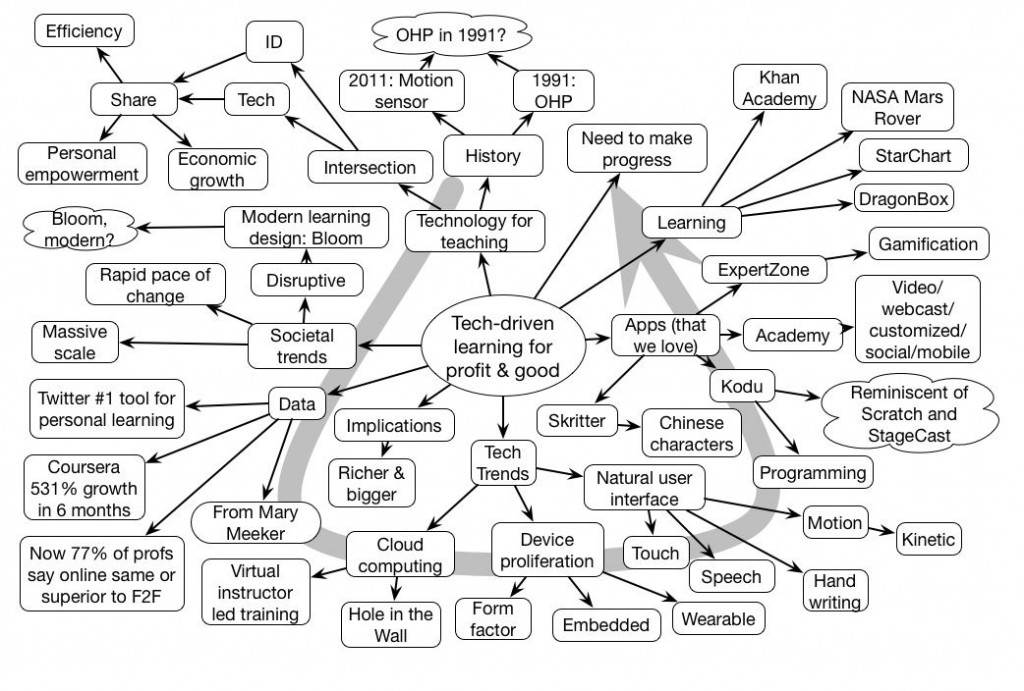
Christopher Pirie opened the eLearning Guild’s mLearnCon mobile learning conference with a fair overview of technology for learning.  He talked about the usual trends, and pointed to some interesting game apps for learning.  Kodu, in particular, is an interesting advancement on things like Scratch and StageCast’s Creator.

I was somewhat surprised by his pointer to Bloom as the turning point to modern learning design, as I’d be inclined to point more to Collins & Brown’s Cognitive Apprenticeship. I also think he should take a look at Donald Clark’s criticisms of Mitra’s Hole in the Wall.  Finally, the characterization between the overhead projector as characteristic of 1991 and the Kinect for 2012 is a bit spurious: in 1991 we also had HyperCard, and in 2012 I don’t see the Kinect in many classrooms yet, but his point is apt about the potential for change we have at our fingertips.

Overall, a nice kickoff for the conference.

PirieKeynoteMindmap

Technology Architecture

11 June 2013 by Clark 1 Comment

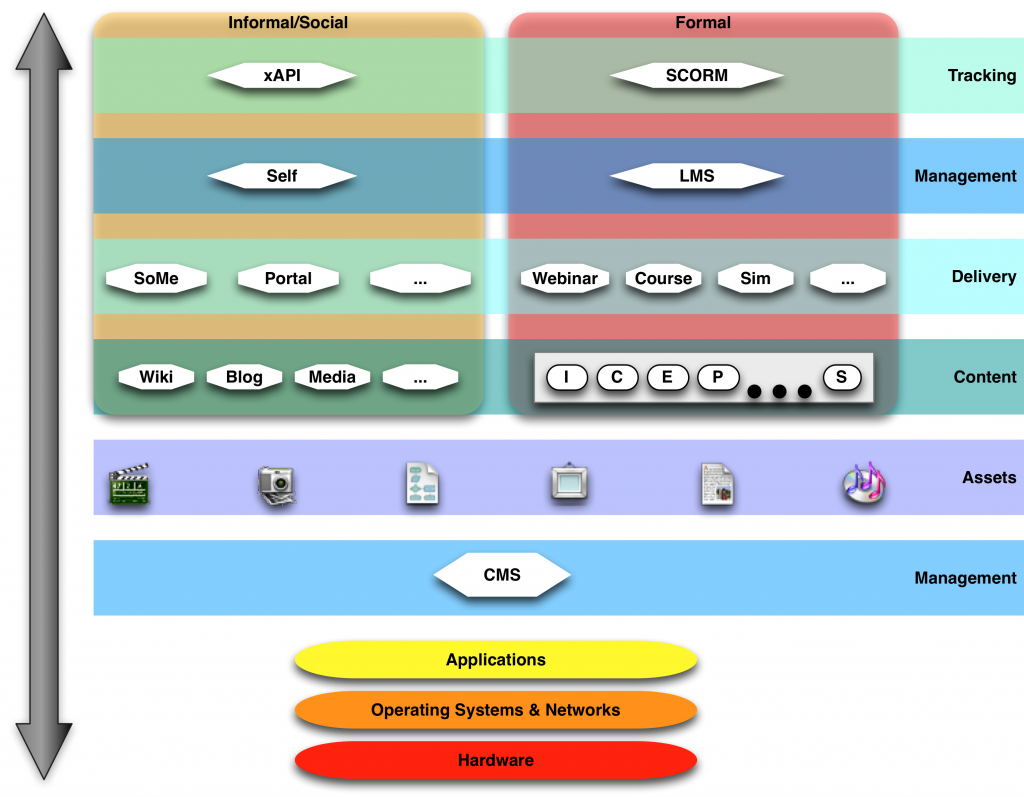
A few years ago, I created a diagram to capture a bit about the technology to support learning (Big ‘L’ Learning).  I was revisiting that diagram for some writing I’m doing, and thought it needed updating.  The point is to characterize the relationship between underpinning infrastructure and mechanisms to support availability for formal and informal learning.

TechNToolsHere’s the accompanying description:  As a reference framework, we can think of a hierarchy of levels of tools.   At the bottom is the hardware, running an operating system and connecting to networks.   Above that are applications that deliver core services. We start with the content management systems, from the delivery perspective, which maintains media assets.   Above that we have the aggregation of those assets into content, whether full learning consisting of introductions, concepts, examples, practice items, all the way to the summary, or user-generated content via a variety of tools.   These are served up via delivery channels and managed, whether through webinars, courses, or simulations through a learning management system (LMS) on the formal learning side, or self-managed through social media and portals on the informal learning side. Ultimately, these activities can or will be tracked through standards such as SCORM for formal learning or the new experience API (xAPI) for informal learning.

I add, as a caveat: Note that this is merely indicative, and there are other approaches possible. For instance, this doesn‘t represent authoring tools for aggregating media assets into content. Similarly, individual implementations may not have differing choices, such as not utilizing an independent content management system underpinning the media asset and content development.

So, my question to you is, does this make sense?  Does this diagram capture the technology infrastructure for learning you are familiar with?

How I Work

31 May 2013 by Clark Leave a Comment

David Kelly posted the following:

Lifehacker has a series called “How I Work. Every Wednesday they feature a new guest and the gadgets, apps, tips, and tricks that keep them going. It‘s a very interesting series that gives you a glimpse into how different people work and solve problems.

After recently seeing  Daniel Pink‘s interview  some colleagues and I thought it would be interesting to answer these questions as well as a fun way to share and get to know each other better.  I invite you to participate as well – I‘ll link other people‘s postings at the bottom of this post.

I decided to join in:

Location

Walnut Creek, CA

Current Gig

Executive Director of Quinnovation and Senior Director of Interaction & Mobile for the Internet Time Alliance.

Current mobile device

iPhone 4 & (original) iPad

Current computer

MacBookPro 13″ (w/ Apple Monitor)

One word that best describes how you work

Interruptedly (and, yes, I made that word up)

What apps/software/tools can’t you live without?

Looking at what’s open or has been recently: Safari, TweetDeck, Mail,  Skype, Reminders, iCal,  Word, Keynote, Notes, OmniGraffle, & OmniOutliner.

I keep up with what’s new with Safari and TweetDeck, maintain communication channels with Mail and Skype, keep myself organized with iCal and Reminders, write with Word and Notes, plan and present with Keynote, and think things through with OmniGraffle and OmniOutliner.

QuinnovationWorldHeadquartersWhat’s your workspace like?

Somewhat compact and crowded.  I moved from a bigger desk to our smallest room to accommodate the changing needs of our kids.  The room also houses a couch that becomes a bed for guests, and some shelves, so there’s not a lot of space. It’s organized for efficiency and effectiveness, not aesthetics.

What’s your best time-saving trick?

To put things into my calendar or my reminder list  now!

What’s your favorite to-list manager?

I struggled after losing Palm Desktop, but finally have settled on Reminders (Apple’s tool), as it synchs across devices seamlessly.

Besides your phone and computer, what gadget can’t you live without?

Definitely my iPad.  It replaces computer on many trips, and serves as a content and interactive device at times when I’m in more leisure than on the go.  If that’s cheating, it’d be a pocket tool kit: usually the Coast micro-tool, or Swiss-Tech Micro-Tech when traveling (no blade). Always need a file, screwdriver, …

What everyday thing are you better at than anyone else?

I’d like to say diagramming, representing models, but I don’t know if that’s ‘everyday’. If not, I’d say taking what ever’s left over in the fridge and making a real meal out of it.

What do you listen to while you work?

Not bloody much.  I can’t listen to most music while working, as the lyrics interfere with my thinking.

Are you more of an introvert or an extrovert?

I’m definitely an introvert, but I’m also a ham (a nice tension, eh?).  So I don’t mind being on stage, but as soon as I’m off I go back to ‘I wonder if someone will talk to me’, and get drained when I’m around too many people.  I work best in small groups.

What’s your sleep routine like?

I work hard to get a regular eight hours,  having read the research. So it’s usually  to bed sometime between 10 and 11, and the house wakes up around 6.  Travel wreaks havoc with that, but caffeine helps.

Fill in the blank. I’d love to see _______ answer these same questions.

Alan Kay or John Seely Brown

What’s the best advice you’ve ever received?

To be myself.

Integrating Meta-learning

29 May 2013 by Clark 2 Comments

There’s much talk about 21st Century skills, and rightly so: these skills are the necessary differentiators for individuals and organizations, going forward.  If they’re important, how do we incorporate them into systems, and track them?  You can’t do them in a vacuum, they only can be brought out in the context of other topics.  We can integrate them by hand, and individually assess them, but how do we address them in a technology-enabled world?  In the context of a project, here’s where my thinking is going:

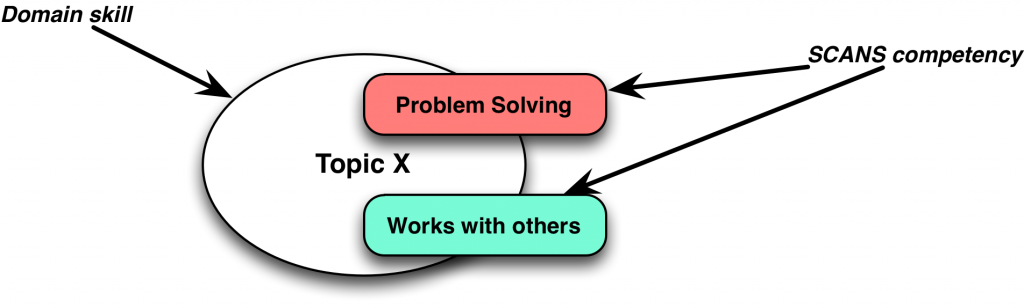
MetaLearningTaggingFirst, you have some domain activity you are having the learner engage in. It might be something in math, science, social studies, whatever (though ideally focused on applied knowledge). Then you give them an assignment, and it might have a number of characteristics: it might be social, e.g. working with others, or problem solving. You could choose many characteristics, e.g. from the SCANS competencies (using information technology, reasoning), that the task entails.  That task is labeled with tags associated with the required competency, and tracked via SCORM or more appropriately with the Experience API.  There may be more than two, but we’ll stick with that model here.

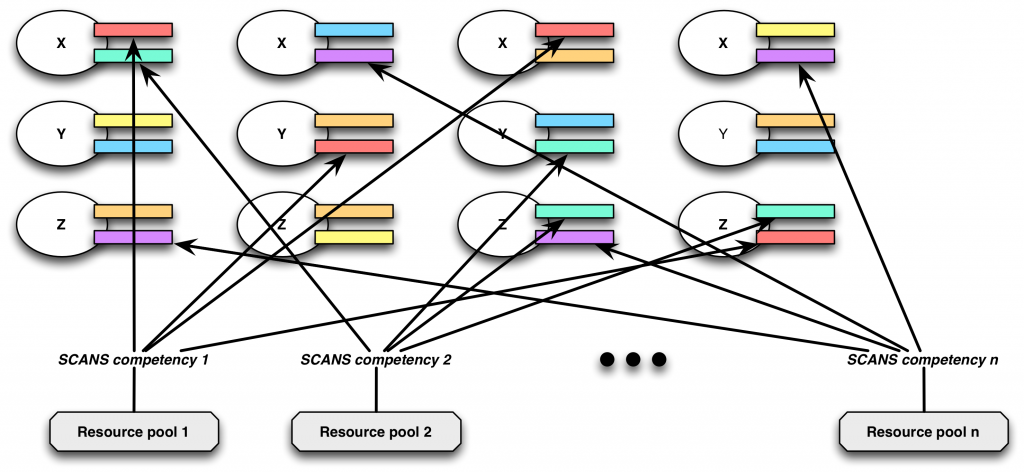
MetaLearningStructureSo, when we then look across topics that the learner is engaging in, and the characteristics of the assignments, we can look for patterns across competencies. Is there a particular competency that is troubling or excelling?  It’s somewhat indirect, but it’s at least one way of systematically embedding meta-learning skills and tracking them.  And that’s a lot better than we’re doing now.

Remember the old educational computer games that said ‘develops problem solving skills’?  That was misleading. Most of those games ‘required’ problem-solving skills, but no real development of said skills was embedded.  A skilled parent or teacher could raise discussion across the problems, but most of the games didn’t.  But they could. Moreover, additional 21C resources could be made available for the assignments that required them, and there could be both programmatic or mentor intervention to develop these.

We need to specifically address meta-learning, and with technology we can get evidence.  And we should.  Now, my two questions are: does the concept make sense?  And does the diagram communicate it?

Extending Learning

23 May 2013 by Clark 9 Comments

At the just concluded ASTD International Conference and Exhibition, on exhibit were, finally, two instances of something that should’ve been obvious. And I’m not alone in having waited.

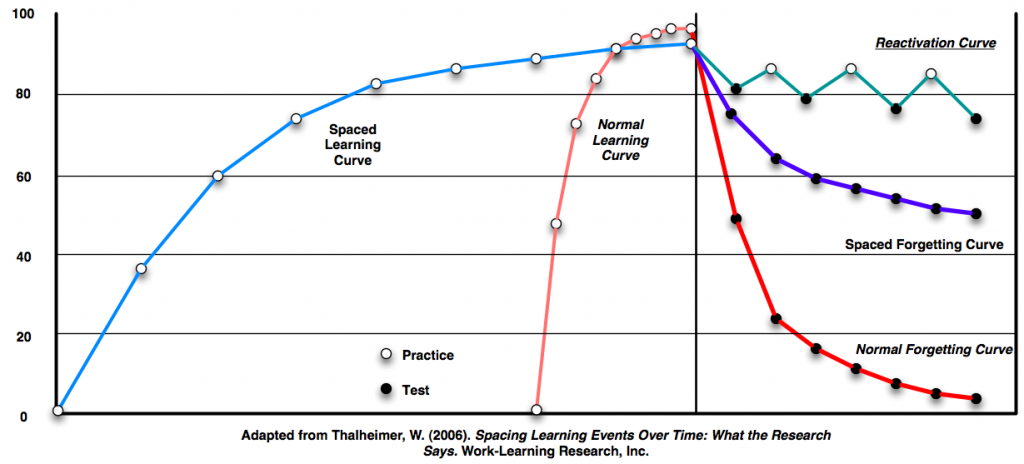
SpacedPracticeSeveral years ago, Dr. Will Thalheimer was touting a ‘learning follow-on’ solution, a mechanism to continue to reactivate knowledge after a learning experience. He’s talked about the spacing effect (even providing the basis for a diagram in Designing mLearning), drawing upon his experience as one of our best proponents of evidence-based learning design. We know that reactivation leads to better outcomes, whether seeing a re-representation of the concept, a new example (ideally in another context), and most usefully, having more practice. I’m not aware of how the solution he was touting at the time, but as we really haven’t seen any significant awareness raising, I’m not optimistic.

However, at the conference were two separate examples of such systems. They worked differently, but that they exist at all is a positive outcome. Both used diagrams (e.g. Ebbinghaus forgetting curve) to show the effects of memory over time, and it’s apt that the problem is real. If we just use the traditional event model, things are likely to be gone a few days later if it’s not immediately put into action. That doesn’t characterize many of our learning outcomes.

The solutions were different, of course. One used mobile technology to provide reminders and access to content. The other used the web. Both basically provided the same opportunity. I didn’t evaluate the relative costs, ease of integration, etc, but having such capability is great. It’s something that folks could arrange for themselves, but as yet I haven’t really seen it, at least not in a systematic way.

They still separate solutions, not integrated, but it’s reason for hope. It’s surprising no one’s baked it into their LMS, but there you go. At least we’re seeing the beginning of awareness, and hopefully we’ll get more.

« Previous Page
Next Page »

Clark Quinn

The Company

Search

Feedblitz (email) signup

Never miss a post
Your email address:*
Please wait...
Please enter all required fields Click to hide
Correct invalid entries Click to hide

Pages

  • About Learnlets and Quinnovation

The Serious eLearning Manifesto

Manifesto badge

Categories

  • design
  • games
  • meta-learning
  • mindmap
  • mobile
  • social
  • strategy
  • technology
  • Uncategorized
  • virtual worlds

License

Previous Posts

  • March 2026
  • February 2026
  • January 2026
  • December 2025
  • November 2025
  • October 2025
  • September 2025
  • August 2025
  • July 2025
  • June 2025
  • May 2025
  • April 2025
  • March 2025
  • February 2025
  • January 2025
  • December 2024
  • November 2024
  • October 2024
  • September 2024
  • August 2024
  • July 2024
  • June 2024
  • May 2024
  • April 2024
  • March 2024
  • February 2024
  • January 2024
  • December 2023
  • November 2023
  • October 2023
  • September 2023
  • August 2023
  • July 2023
  • June 2023
  • May 2023
  • April 2023
  • March 2023
  • February 2023
  • January 2023
  • December 2022
  • November 2022
  • October 2022
  • September 2022
  • August 2022
  • July 2022
  • June 2022
  • May 2022
  • April 2022
  • March 2022
  • February 2022
  • January 2022
  • December 2021
  • November 2021
  • October 2021
  • September 2021
  • August 2021
  • July 2021
  • June 2021
  • May 2021
  • April 2021
  • March 2021
  • February 2021
  • January 2021
  • December 2020
  • November 2020
  • October 2020
  • September 2020
  • August 2020
  • July 2020
  • June 2020
  • May 2020
  • April 2020
  • March 2020
  • February 2020
  • January 2020
  • December 2019
  • November 2019
  • October 2019
  • September 2019
  • August 2019
  • July 2019
  • June 2019
  • May 2019
  • April 2019
  • March 2019
  • February 2019
  • January 2019
  • December 2018
  • November 2018
  • October 2018
  • September 2018
  • August 2018
  • July 2018
  • June 2018
  • May 2018
  • April 2018
  • March 2018
  • February 2018
  • January 2018
  • December 2017
  • November 2017
  • October 2017
  • September 2017
  • August 2017
  • July 2017
  • June 2017
  • May 2017
  • April 2017
  • March 2017
  • February 2017
  • January 2017
  • December 2016
  • November 2016
  • October 2016
  • September 2016
  • August 2016
  • July 2016
  • June 2016
  • May 2016
  • April 2016
  • March 2016
  • February 2016
  • January 2016
  • December 2015
  • November 2015
  • October 2015
  • September 2015
  • August 2015
  • July 2015
  • June 2015
  • May 2015
  • April 2015
  • March 2015
  • February 2015
  • January 2015
  • December 2014
  • November 2014
  • October 2014
  • September 2014
  • August 2014
  • July 2014
  • June 2014
  • May 2014
  • April 2014
  • March 2014
  • February 2014
  • January 2014
  • December 2013
  • November 2013
  • October 2013
  • September 2013
  • August 2013
  • July 2013
  • June 2013
  • May 2013
  • April 2013
  • March 2013
  • February 2013
  • January 2013
  • December 2012
  • November 2012
  • October 2012
  • September 2012
  • August 2012
  • July 2012
  • June 2012
  • May 2012
  • April 2012
  • March 2012
  • February 2012
  • January 2012
  • December 2011
  • November 2011
  • October 2011
  • September 2011
  • August 2011
  • July 2011
  • June 2011
  • May 2011
  • April 2011
  • March 2011
  • February 2011
  • January 2011
  • December 2010
  • November 2010
  • October 2010
  • September 2010
  • August 2010
  • July 2010
  • June 2010
  • May 2010
  • April 2010
  • March 2010
  • February 2010
  • January 2010
  • December 2009
  • November 2009
  • October 2009
  • September 2009
  • August 2009
  • July 2009
  • June 2009
  • May 2009
  • April 2009
  • March 2009
  • February 2009
  • January 2009
  • December 2008
  • November 2008
  • October 2008
  • September 2008
  • August 2008
  • July 2008
  • June 2008
  • May 2008
  • April 2008
  • March 2008
  • February 2008
  • January 2008
  • December 2007
  • November 2007
  • October 2007
  • September 2007
  • August 2007
  • July 2007
  • June 2007
  • May 2007
  • April 2007
  • March 2007
  • February 2007
  • January 2007
  • December 2006
  • November 2006
  • October 2006
  • September 2006
  • August 2006
  • July 2006
  • June 2006
  • May 2006
  • April 2006
  • March 2006
  • February 2006
  • January 2006

Amazon Affiliate

Required to announce that, as an Amazon Associate, I earn from qualifying purchases. Mostly book links. Full disclosure.

We use cookies to ensure that we give you the best experience on our website. If you continue to use this site we will assume that you are happy with it.