Learnlets

Secondary

Clark Quinn’s Learnings about Learning

Search Results for: align

Bethune #DevLearn Keynote Mindmap

26 October 2022 by Clark Leave a Comment

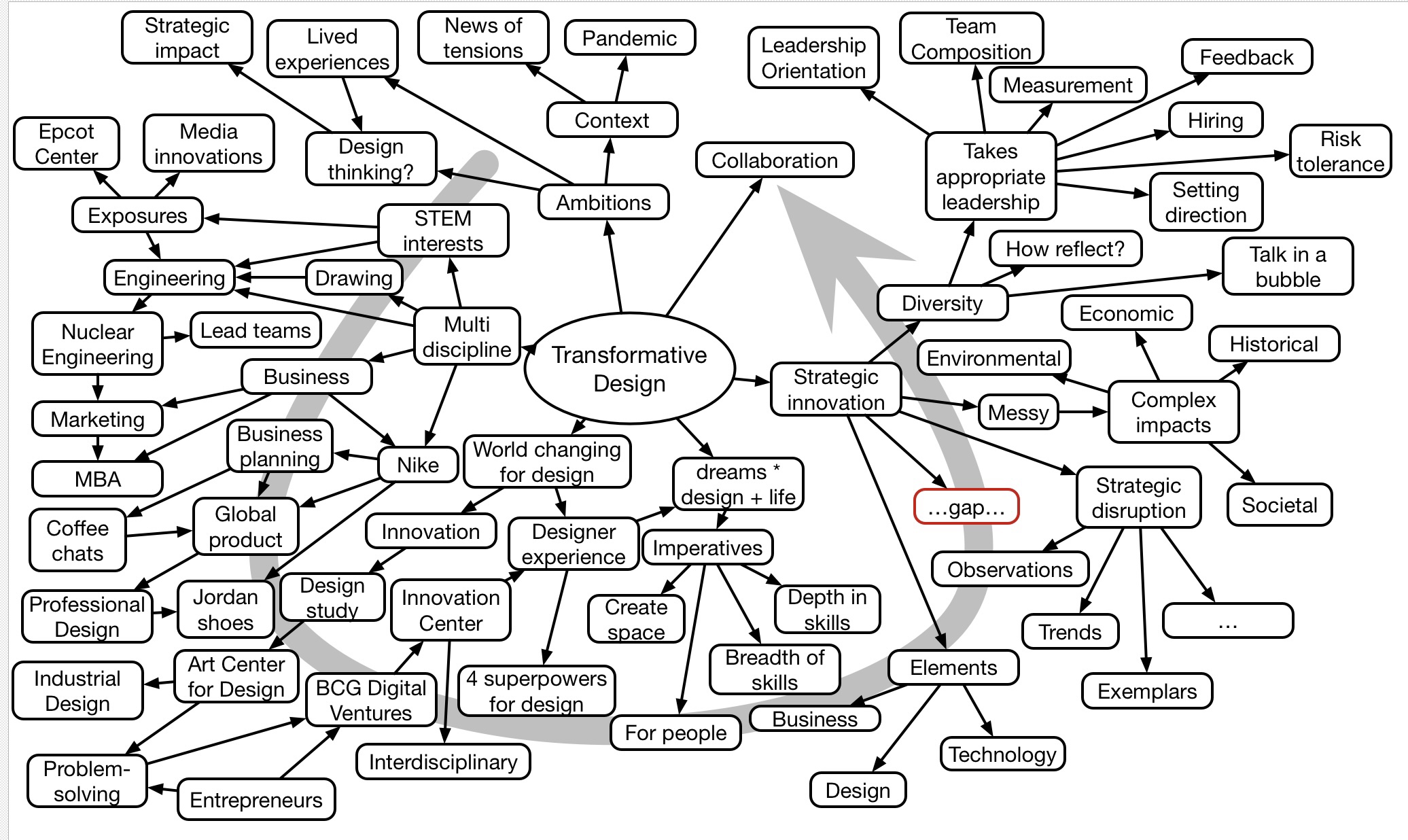
Kevin Bethune kicked off the 2022 DevLearn conference with a personal story about getting to delivering strategic innovation. Talking about interdisciplinary work that has an impact, he ended up laying out factors in leadership to support innovation. (Apologies, I had to take a brief break, so I missed a small bit. Sorry.)

The power of emotion

29 September 2022 by Clark Leave a Comment

Increasingly, we’re seeing that emotion matters. Scientific evidence supports what we intuitively know. Yet, in many cases, our actions don’t support that understanding. At least, in nuance. In particular, our learning designs suffer from trivialized ‘like’ as opposed to useful and effective approaches. We can and should do better to tap into the power of emotion.

Again, I’m using the term ’emotion’ loosely here. While we do care about emotions like joy and grief (though our picture is changing), what we really need to be caring about are non-cognitive elements like motivation, anxiety, and confidence. It’s about designing to appropriately address them: develop motivation, keep a lid on anxiety, and build confidence. Each has it’s elements.

Motivation improves learning outcomes, but requires understanding what makes us interested. We’re driven by a desire to understand the world (c.f. ‘predictive coding‘. Curiosity can assist in developing an interest. Certainly, self-interest plays a role as well, and helping people tune into the positive consequences of a learning experience (or the negative outcomes of not having the requisite understanding) is also useful. Self-Determination Theory (c.f. Deci and Ryan) talks about mastery, autonomy, and relatedness. We can use this to help people connect with others (instructors/peers/experts), give them tasks (autonomy) and support to succeed (mastery).

Anxiety interferes, if it’s too much. While a small amount helps, that’s quickly overwhelming. Given that learning can be intrinsically anxiety-inducing, keeping anxiety to a minimum is important. Making it safe to fail is an important component of this. Psychological safety is an important element in organizational operation, and learning as well.  We can not attach consequences to practice, certainly at first. We can also have the instructor make mistakes as well.

Building confidence is an adjunct here. As people master the skills, at greater and greater levels of challenge (an important component of successful learning experience design), they build confidence. That reduces anxiety, and maintains motivation. We don’t want false confidence, but we can steadily build confidence as we go. Ultimately, we want learners to have sufficient confidence to try out the skills (and succeed) after the learning experience.

There’s lots more that goes into making an experience effective and engaging, but understanding these elements, and how to enact them, is an important component. The power of emotion, properly harnessed, improves learning outcomes (which is what we should be about ;). I’ll be addressing these and more in my workshop Make It Meaningful at the upcoming DevLearn conference in Las Vegas on Oct 24. I’d love to see you there, as we talk about the complement to learning science that combines to achieve those experience goals.

Projects That Didn’t Fly

20 September 2022 by Clark Leave a Comment

I’ve had the pleasure of leading the design of a number of projects that have had some impact. These include a mobile app a company could point to. Also a game that helped real kids. Even a context-sensitive performance support system that was worth a patent. Then, of course, are the projects that didn’t, for whatever reason, see the light of day.  So here are some reflections on a few projects that didn’t fly.

Back in the mid-90s, I was part of a government-sponsored initiative in online learning, and we were looking for a meaningful project. We made a connection to two folks with a small company that taught about communicating to the press. They could’ve come out with a book, but they wanted to do something more interesting. We collaborated on an online course on speaking to the media. I partnered with an experienced digital producer, and backstopped with a university-based media team. We had a comic skit writer, and cartoonists, to augment our resources. The result was technically sophisticated, educationally sound, and engaging both visually and in prose. It never flew, however, as we didn’t partner it with a viable business model. Which was reflective of the times.

Then, at the end of the 90’s, I was asked to lead a team developing an adaptive learning system. The charge was to help learners understand themselves as learners. I had a stellar team: software engineer, AI expert, psychometrician, learning science guru, visual designer, and an interface designer. The model was to do an initial profile, then present you with learning elements (concepts, examples, practice, etc) and update your model based on your performance. There was even a machine learning component to improve the models as we went along. We actually got a first draft up and running (10 elements in the student model), before ego and greed undermined and killed it. The lessons learned, of course, have continued to inform me, including, for instance, my calls for content systems.

Then, around the mid-2000s, I was given the task to devise a content model for a publisher.  They wanted to develop once and populate a variety of business products. Drawing on previous experience, I developed a robust model, which started from individual elements and supplemented and aggregated them in a systematic way. This also ended sadly. In this case, the software side never reached fruition.

There are lots of reasons good intentions can go awry.  In my case, it wasn’t going to be on a lack in the learning design ;). What I’ve learned, however, is that learning design isn’t the only element that matters. There’s vision, and execution, and partners, and more. All are ways in which things can go wrong. Yet, that doesn’t mean we shouldn’t try. It just means that we should, to the extent of our abilities, also try to ensure the success of the other comments. It’s worth exploring projects that didn’t fly so as to see how future ones might.

Small thoughts about Smalltalk

13 September 2022 by Clark Leave a Comment

A couple of weeks ago, The Computer History Museum hosted a panel session on Smalltalk, which I watched via video. Alan Kay (who’s vision for the Dynabook drove Smalltalk) came in via recorded video. Dan Ingall (the technical guru) joined by live video link. Adele Goldberg (who documented and tested it), showed up live. John Markoff, well known Silicon Valley documenter, hosted. All to talk about Smalltalk. It prompted some small thoughts about Smalltalk.

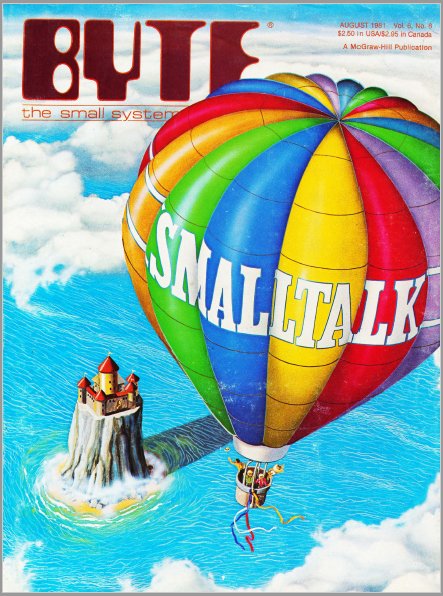
I was a regular Byte magazine reader, back in the day. I had created my own major in Computer-Based Education, and was designing and programming educational computer games. I’d done academic research as part of the degree requirements, so I was aware of the work at Xerox PARC. (In fact, I flunked a job interview there because I didn’t know what ‘protocol analysis’ meant, though it turns out that’s what I’d been doing!) So, when the Byte issue in Aug 1981 on Smalltalk came out (I checked the date), I was enchanted.

Smalltalk is an object-oriented language that is dynamic, in that you can edit and immediately run it again; it’s not compiled. It was also reflective, in that make itself visible and operate on itself, like Lisp. In Smalltalk, you model your world in objects and they communicate by messages. It has windows, icons, and interactions comes from the mouse as much or more than by the keyboard. You can edit the objects while running and they change. While it wasn’t available to me, I was a fan of the concept.  (Machines running Smalltalk were what Steve Jobs saw on his PARC visit that led to the Lisa and then the Macintosh.)

It’s ironic that between then and when I ended up teaching in a school of computer science, I somehow lost that focus.  I’d gone to grad school to get a grounding in cognitive science in just such a place. After a post-doc looking at learner models, I ended up teaching interface design (and researching educational technology). Along the way I got involved in other issues, though I did get involved in HyperCard, which in many ways was Smalltalk Lite(tm ;).

In the talk, besides the enlightenment of the thinking behind it, there was also the practical aspects. While relatively lean, the language did take up memory and as a dynamic machine wasn’t blindingly fast. There apparently were also decisions about pricing and markets that were classic Xerox. Thus, while it was and is a fabulous modeling environment (still in use in a variety of markets), it didn’t take over the world.  When Steve Jobs built the NeXT computer, he took on the object-oriented model of Smalltalk, but used C as the core language for a variety of pragmatic reasons.

In the session, they talked about the vision of Seymour Papert and Logo, and how they wanted more. Alan Kay walked around with a cardboard model of what a Dynabook would look like, and people begged to buy one. Doug Englebart’s work also was an inspiration. It was a glorious flashback to the days when we dreamt bigger than our tech would support. These days, it seems, we’ve reversed that. I’ve heard that computing isn’t living up to the potential we have for digital technology to be an optimal augment for cognition, and I agree. We can do better, and should. So these are some small thoughts about Smalltalk. And get off my lawn!

Test and tune

6 September 2022 by Clark Leave a Comment

Conducting ScienceIt’s easy to believe that if we build solutions according to the principles, what we build will work. Certainly, that’s the case in many instances. But not, I suggest, when we’re talking about solutions for people? Why do we need to test and tune? Because we’re complex.

Materials, such as wood and steel have predictable properties. When you build a deck, you can follow the building codes for what you need to do for fixing posts to the ground, etc. However, people aren’t quite that predictable.

There’s a case to be made that the brain is the most complex thing in the known universe. In fact, we don’t fully know how it works! Thinking, then, that we can achieve a reliable change in the brain with simple mechanisms is kind of naive. We have to understand how the brain works, first, and then for complex changes, we need some detailed analysis and careful specification. However, we’re not done.

Once we’ve built it, we need to test and tune! Any solution isn’t guaranteed to be optimal or even effective, at least initially. Since people are complex, we can’t just design for the average (c.f. Todd Rose’s The End of Average). We can’t follow waterfall models, despite how appealing it is. Assuming we can is a path to boring and ineffective solutions. “If we build it, it is good” isn’t a useful assumption.

You see this in the best approaches. Michael Allen’s Successive Approximation (SAM), Megan Torrance’s Lot Like Agile Management Approach (LLAMA), David Merrill’s Pebble in the Pond, or Guy Wallace’s PACT approach (I’m not even going to try to deal with that acronym) all have iteration as a fundamental component.

You need some metrics, of course. You test against them, and then tune to get closer. The answer to “when do we stop iterating” is not “when we run out of time and money”. If you’re running out of time and money faster than you’re getting to your metrics, you need to explicitly consider some alternatives, like relaxing your goals, or investing more, or (horrors) abandoning where you’ve at. But it’s better to do it consciously!

To do this, we need to build ‘test and tune’ into our practices. We need to allocate time and money to it. Does this mean things will take longer and cost more? Possibly. The tradeoff is that we should be doing less courses overall, once we’re asking questions, and our solutions will be more effective. Going beyond knowledge dump courses that achieve no organizational benefit? I think that’s a fair exchange. I hope you do, too.

Help with breaking up

30 August 2022 by Clark 4 Comments

In a current engagement, we’re faced with the challenge of being given large goals. They can be learning, or performance support, or even just awareness. One of the things we’re wrestling with is how and when to break things up into smaller chunks. To be clear, this is about whether to put it into a separate entity, rather than how to segment within an entity. This isn’t an area of my expertise, I admit. As a consequence, I’ve done some scouring and pondering, and here’re some thoughts and my request for help with breaking up.

My initial reaction is that this is about curriculum. That is, the level above pedagogy: not how to teach, but what to teach. A term which made sense is ‘curriculum mapping‘. Which works for K12, but the advice I found wasn’t helpful in this instance. It seemed to be about iterating, which is good, but I was looking for some research-based principles. We don’t have external standards.

Asking around, my colleagues suggested it’s more like information architecture. I know a bit about information architecture, but not a lot. In general, I take it as organizing around the way users think about the content. Which is good for information, but not necessarily for learning.

Of course, your learning objectives should provide a guide. There should be a path from the learner’s initial state, through enabling objectives, to the final objective. That should define the scope of an experience. If it gets too big, then make one or more of the enabling objectives their own piece. In this case, we’re taking something already created and trying to make sense of it.

Really, I’m fine with that latter, but I just wonder if there are any evidence based principles to guide this thinking. Something besides seemingly sensible breakups. It all seems based upon perception (and iterative testing). However, I wonder if there are metrics, or a principled basis. Hence, my request. I’m asking for help with breaking up. What am I missing? Any pointers?

What’s New at Quinnovation

23 August 2022 by Clark Leave a Comment

Time for an update, as things have been happening, Some over the past year, some more recently. So here’s what’s new at Quinnovation.

So, as I’ve already noted, I was asked to join the Learning Development Accelerator last fall as Editor in Chief of the new LDA Press. That means, practically, serving as both acquisition and development editor. So far, I’m better in the latter than the former. We did publish our first, book, er, mine ;). I’ve also joined as co-0rganizer.

We’re doing some fun things with that. The first is the You Oughta Know series of Wed webinars, introducing people, well, that you oughta know. We’ve had an amazing run of guests. I’ll also be starting up a series of Very Opinionated Tech Takes. Yeah, it’s me going off on various techs, but I will be unpacking my thinking behind the takes. And I have had a number of decades of experience at it… Finally, there’s the forthcoming Learning & Development Conference, where we’re looking to do what we think should be done. That is, a focus on important specifics; we’ve two tracks, one more for beginners and one more advanced. Attendees can choose. We’ve got a good tight faculty, and are expecting a great development experience.

In addition to my LDA duties, I’m still continuing on with Quinovation, of course. That has meant some steady client work since the beginning of the year; including two projects on learning and performance strategy. One is likely to be continuing at least a little while longer. From that one is a topic I’ll be discussing as part of at DevLearn. I’ll also be running a ‘Make It Meaningful workshop there; a full day digging into the principles and tricks of making experiences emotionally engaging. (I’ll also be part of a panel of the Guild Masters.)

I’ve also taken on some other roles via Quinnovation. For one, I’ve been working with an initiative attempting to take K12 STEM into the 21st Century. Yes, there are plenty of efforts in this area, I just happen to be involved in this one that has an approach I’m getting to shape aligned with my perspectives. I’m also now on the advisory board of a startup with a platform for augmenting formal learning programs. Finally, I’ve signed on to assist an established elearning firm improve their approach as part of a growth initiative. All are focusing on applying learning science to make bigger and better impacts. Those are the types of things I can comfortably get behind.

So that’s what’s new at Quinnovation. Reckon I’ll be busier than the proverbial beaver, but that’s preferable to the alternative. Stay tuned!

On blogging

26 July 2022 by Clark 5 Comments

A recent chain of events led to a realization, and then a recognition, and some cogitation. What am I talking about? Well, it comes down to some reflections on blogging. So here’re some thoughts.

It started when my ISP wanted to do his quinquennial (yeah, I had to look it up) OS upgrade on the servers. Ultimately, it led me to review my site, which included my blogroll. Quelle horreur, it was almost completely out of date! Some people I’ve lost touch with, most who aren’t blogging any more or even in our field! In updating it, however, I found that there are many fewer people who seemed to be blogging. Which is interesting, though there are stalwarts in my upgraded blogroll.

There are lots of places people are putting up their prose thoughts. You can sign up for newsletters (I get a few), and many posts appear on LinkedIn. There are also article sites like Learning Solutions magazine and eLearnMag, amongst others. I have avoided having a newsletter;  I don’t like the idea of collecting folks’ email addresses and using it as a communication tool. (Completely contrary to the advice I receive about marketing.) I also don’t want to post just on LinkedIn, though it’s an increasing way people interact. Instead, I will keep posting here, trying to maintain at least one post a week.

There are myriad reasons I want to continue to blog. First, it’s for me. With a commitment of one post a week, it causes me to search for things to think, and then write, about. Not that there’s a dearth (to the contrary!), but there are ups and downs, and it’s good to have a driver. Blogging has caused me to do more than skim, and actually synthesize things (it’s led me to have thoughts on just about everything!). It’s also a place to lob my other way of thinking, diagramming. The practice of writing, of course, is probably good for my books, with a caveat.

The blog allows me to be more personal, doing things like using too many italics, and use more idiosyncratic references and grammar. Of course, it’s not always perfectly reread, so sometimes I have to go edit it after it’s posted! Which isn’t good for books. It also keeps me terse (a problem I’ve had since high school, my AP English teacher was sure I wouldn’t pass the test for that reason, but it actually was a benefit). Maybe too… Which may be good for books; at least mine are mostly pretty short and to the point ;). It’s also allowed me to share interim ideas and get feedback.

So, I find blogging to be valuable. I’ll happily follow the folks that I can that way. (I use Feedblitz as an email aggregator as I prefer email rather than a dedicated reader.) Or happy to come across their posts wherever, and even some newsletters. I appreciate folks who share their thinking in many ways, though I don’t really listen to podcasts nor watch vids, as I can read faster, and I don’t have a commute. Besides, having watched people I care about get taken down the rabbit hole watching vids (my take: doesn’t give you time to pause and ponder), I think I’ll prefer prose.

So those are some thoughts on blogging. I welcome seeing your comments here, on LinkedIn, or any other way you care to share.

Templates as content model extensions

19 July 2022 by Clark 2 Comments

I’ve been touting content models for, well, years now. Interestingly, I’m currently doing some more concrete work on them, from the bottom-up. Instead of looking at top-down implementation of governance and structure, the focus is on guidance for creating resources at scale. Yet the two are related, and I think it’s worth looking at templates as content model extensions.

The notion of content models is that instead of creating full courses, we build content in chunks, and pull them together by rule. Or even more appropriately, deliver the appropriate chunk to the right person at the right time. It’s been happening for web design for years, but for some reason the notion of content management systems lags in L&D. Yes, there are entailments – governance, strategy, engineering – but the alternative is that lingering legacy content that’s out of date but no one can deal with.

That’s the top level focus. Underpinning this, of course, is getting the content right, and that means having some good definitions around the content. I’d done that many moons ago, and in a current engagement it’s reemerging. The situation is that there are a number of people all writing content around this particular initiative, and it’s uncoordinated (sound familiar?). The realization that clients are struggling is enough of a driver to look for a solution.

Without a content management system, as yet, it still makes sense to systematize the resources around a map of the space, ensuring they align to what we know about how people learn and perform. That latter is important, because many times they just need the answer now, not a full course.

What we’ve ended up doing is creating meta-content that tell how to develop content that meets particular needs. With entailments, such as assembling a representative team to determine what’s needed and the labels to use. It also involves drafting and testing these content guides, prior to broader use.

It’s the tactical step of a strategic goal to provide support for people to successfully meet their needs. And, to be clear, to reduce the reliance on the support staff. Leveraging the cognitive and learning sciences, we’re building templates as content model extensions. This is before there’s even the technology support available to be more proactive, but planning for the possible future is part of the strategy.

I’ll be presenting a session on this at the DevLearn conference in October. If you’re interested and going to be there, I welcome seeing you.

Emotion, or motivation, or…

12 July 2022 by Clark 4 Comments

I’ve been promoting the importance of the emotional ‘hook’. Which I was called out on, rightly. I freely admit that the phrase is less than fully accurate. So let’s explore the issue of whether we’re talking emotion, or motivation, or…

As context, one perspective from cognitive science is thinking of our ourselves as comprised of three components. One is cognitive, that is what we think and know. Which is malleable, as we can learn more! A second component is termed affective, that is who we are. Which isn’t malleable; these are our fixed characteristics, certainly personality (e.g. OCEAN/HEXACO). Finally, there’s our conative component. This is our intent: to learn, to act, and arguably what we value. 

This last bit, the conative, is what I suggest we neglect in our learning design. We address the cognitive, and there’s little to do on the affective side, but we too often basically assume that the learner is ready for what we’re presenting. Which I suggest is a mistake. 

There’s considerable evidence that we perform better when we’re engaged. When experiences are motivating, and anxiety is kept to a minimum, and our confidence is built, etc. Further, we can address these. We can help folks see the WIIFM, make it psychologically safe, and provide appropriate levels of challenge with useful feedback. (And we should!) However, too often we don’t.

So I use the shorthand term ‘emotion’ to address this.  I use the term to separate from the cognitive in a shorthand way. The problem, of course, is whether anxiety and motivation are truly ‘emotions’. Effectively, they’re not. My stance, however, is that I can’t be talking ‘conative’ to folks who aren’t aware of that concept!

I also resist just talking about motivation. Anxiety is an issue. So too is confidence. John Keller’ has his ARCS model (arguably the only ID theorist considering the conative aspect, though I don’t know if he uses that term ;). His model incorporates gaining/maintaining Attention, manifesting the Relevance of what’s being learned, building Confidence, and ensuring Satisfaction from the experience. Really, we want an umbrella term for these elements. 

There is the concept of engagement. However, it’s been trivialized. Claims that ‘click to see more’ is more engaging, that points & leaderboards are engaging, etc. have undermined the term. So I avoid it to avoid getting mired in that morass. Instead, I think talking about emotion as a shorthand way to address the non-cognitive. Yet…

I was called out for talking about an ‘emotional hook’ by a very learned client. Rightly so. The question is, do we have a better term? Is there a more appropriate and yet still accessible way ta talk about this? Obviously, I haven’t thought so as yet, but I want to keep learning. So if you’ve a better solution, please do let me know. (Feel free to also say that this approach is probably the only solution, at least for now.) Otherwise, I’ll keep looking for a better approach than emotion, or motivation, or…

I’ll be discussing ‘emotion’ in a session for the Learning Guild’s LXD conference, coming up at the beginning of next month. I’m also presenting a two half-days pre-event online workshop on LXD overall, integrating emotion with science. I’ll also explore ‘engagement’ in a full day face-to-face pre-con workshop at their DevLearn conference in October). Hope to see you at one of these!

« Previous Page
Next Page »

Clark Quinn

The Company

Search

Feedblitz (email) signup

Never miss a post
Your email address:*
Please wait...
Please enter all required fields Click to hide
Correct invalid entries Click to hide

Pages

  • About Learnlets and Quinnovation

The Serious eLearning Manifesto

Manifesto badge

Categories

  • design
  • games
  • meta-learning
  • mindmap
  • mobile
  • social
  • strategy
  • technology
  • Uncategorized
  • virtual worlds

License

Previous Posts

  • March 2026
  • February 2026
  • January 2026
  • December 2025
  • November 2025
  • October 2025
  • September 2025
  • August 2025
  • July 2025
  • June 2025
  • May 2025
  • April 2025
  • March 2025
  • February 2025
  • January 2025
  • December 2024
  • November 2024
  • October 2024
  • September 2024
  • August 2024
  • July 2024
  • June 2024
  • May 2024
  • April 2024
  • March 2024
  • February 2024
  • January 2024
  • December 2023
  • November 2023
  • October 2023
  • September 2023
  • August 2023
  • July 2023
  • June 2023
  • May 2023
  • April 2023
  • March 2023
  • February 2023
  • January 2023
  • December 2022
  • November 2022
  • October 2022
  • September 2022
  • August 2022
  • July 2022
  • June 2022
  • May 2022
  • April 2022
  • March 2022
  • February 2022
  • January 2022
  • December 2021
  • November 2021
  • October 2021
  • September 2021
  • August 2021
  • July 2021
  • June 2021
  • May 2021
  • April 2021
  • March 2021
  • February 2021
  • January 2021
  • December 2020
  • November 2020
  • October 2020
  • September 2020
  • August 2020
  • July 2020
  • June 2020
  • May 2020
  • April 2020
  • March 2020
  • February 2020
  • January 2020
  • December 2019
  • November 2019
  • October 2019
  • September 2019
  • August 2019
  • July 2019
  • June 2019
  • May 2019
  • April 2019
  • March 2019
  • February 2019
  • January 2019
  • December 2018
  • November 2018
  • October 2018
  • September 2018
  • August 2018
  • July 2018
  • June 2018
  • May 2018
  • April 2018
  • March 2018
  • February 2018
  • January 2018
  • December 2017
  • November 2017
  • October 2017
  • September 2017
  • August 2017
  • July 2017
  • June 2017
  • May 2017
  • April 2017
  • March 2017
  • February 2017
  • January 2017
  • December 2016
  • November 2016
  • October 2016
  • September 2016
  • August 2016
  • July 2016
  • June 2016
  • May 2016
  • April 2016
  • March 2016
  • February 2016
  • January 2016
  • December 2015
  • November 2015
  • October 2015
  • September 2015
  • August 2015
  • July 2015
  • June 2015
  • May 2015
  • April 2015
  • March 2015
  • February 2015
  • January 2015
  • December 2014
  • November 2014
  • October 2014
  • September 2014
  • August 2014
  • July 2014
  • June 2014
  • May 2014
  • April 2014
  • March 2014
  • February 2014
  • January 2014
  • December 2013
  • November 2013
  • October 2013
  • September 2013
  • August 2013
  • July 2013
  • June 2013
  • May 2013
  • April 2013
  • March 2013
  • February 2013
  • January 2013
  • December 2012
  • November 2012
  • October 2012
  • September 2012
  • August 2012
  • July 2012
  • June 2012
  • May 2012
  • April 2012
  • March 2012
  • February 2012
  • January 2012
  • December 2011
  • November 2011
  • October 2011
  • September 2011
  • August 2011
  • July 2011
  • June 2011
  • May 2011
  • April 2011
  • March 2011
  • February 2011
  • January 2011
  • December 2010
  • November 2010
  • October 2010
  • September 2010
  • August 2010
  • July 2010
  • June 2010
  • May 2010
  • April 2010
  • March 2010
  • February 2010
  • January 2010
  • December 2009
  • November 2009
  • October 2009
  • September 2009
  • August 2009
  • July 2009
  • June 2009
  • May 2009
  • April 2009
  • March 2009
  • February 2009
  • January 2009
  • December 2008
  • November 2008
  • October 2008
  • September 2008
  • August 2008
  • July 2008
  • June 2008
  • May 2008
  • April 2008
  • March 2008
  • February 2008
  • January 2008
  • December 2007
  • November 2007
  • October 2007
  • September 2007
  • August 2007
  • July 2007
  • June 2007
  • May 2007
  • April 2007
  • March 2007
  • February 2007
  • January 2007
  • December 2006
  • November 2006
  • October 2006
  • September 2006
  • August 2006
  • July 2006
  • June 2006
  • May 2006
  • April 2006
  • March 2006
  • February 2006
  • January 2006

Amazon Affiliate

Required to announce that, as an Amazon Associate, I earn from qualifying purchases. Mostly book links. Full disclosure.

We use cookies to ensure that we give you the best experience on our website. If you continue to use this site we will assume that you are happy with it.